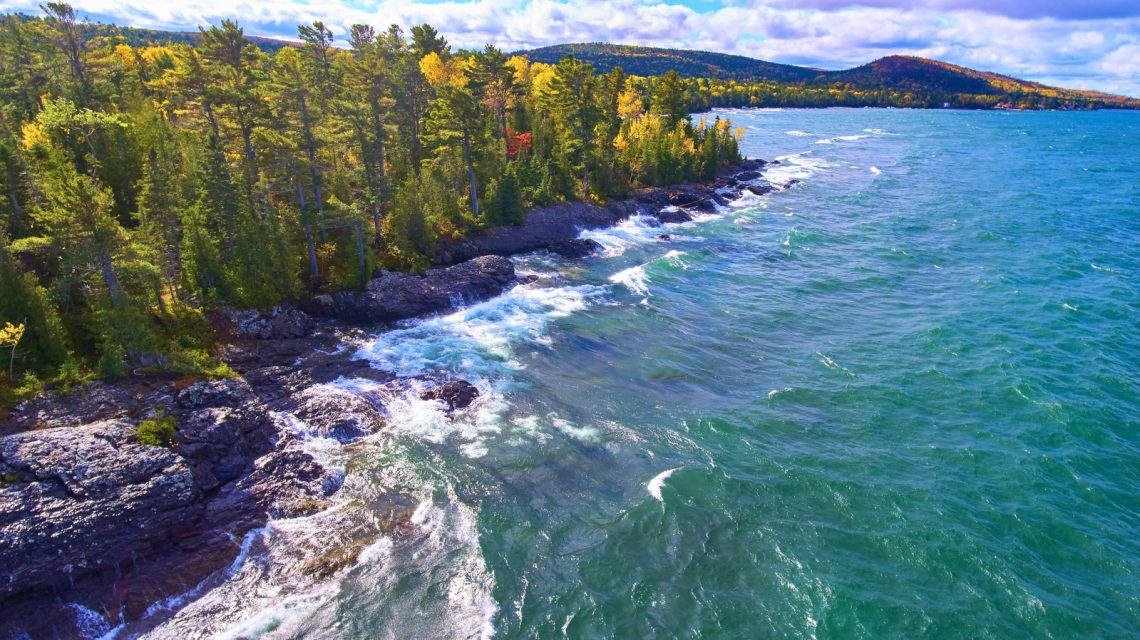
The National Weather Service (NWS) has issued beach hazards statements for all five Great Lakes once more. Many people are trying to enjoy the summer atmosphere before fall takes over officially. However, warnings of dangerous conditions at the lakes’ beaches have now expanded, affecting over 8 million people.
Great Lakes Warnings Details
By 10:30 a.m. Eastern time, various NWS offices had alerted regions in Wisconsin, Minnesota, Michigan, Illinois, Indiana, Ohio, Pennsylvania, and New York. These warnings advise staying clear of the water due to hazardous waves and currents.
The warnings cover areas such as Duluth, Minnesota, parts of Wisconsin, Michigan’s Upper Peninsula, much of Wisconsin’s Lake Michigan shoreline, northeastern Illinois, northwestern Indiana, northern Ohio, northwestern Pennsylvania, and much of New York’s Lake Ontario shoreline. The alerts will mostly last until Wednesday afternoon or evening, although some may end earlier.
Residents are urged to avoid dangerous regions like piers and breakwalls. According to NWS Duluth, life-threatening waves and rip currents are likely. In Cleveland, warnings point out the risk of swimmers being swept away from shore.
Uncommon Timing for Beach Hazards Statements
NWS meteorologist Bryan Jackson explained that while summer months rarely see widespread beach hazard alerts, cooler fall weather often prompts these warnings. A Canadian high-pressure system north of the Great Lakes is causing the hazardous conditions. Strong winds and significant lake currents contribute to the warnings during this season. Rip currents and strong waves are common, largely unbeknownst to beachgoers still inclined to visit during warm conditions.
Current Drowning Statistics
Despite the cold fronts and rough waves usually occurring in winter, the Great Lakes report 73 drownings this year, with Lake Michigan accounting for 41. Dave Benjamin of the Great Lakes Surf Rescue Project highlights these alerts’ importance, noting beaches typically don’t have lifeguards after Labor Day.
Understanding and Surviving Rip Currents
Rip currents are fast-moving water flows perpendicularly leaving the shoreline. If trapped in one, experts recommend staying calm. Although the current moves individuals away from shore, it does not drown them. Swimmers should move parallel to shore to escape, then swim back afterward. Tired individuals should float and signal for help.
Future Conditions
As some alerts end on Monday, others will persist, requiring caution at shores. Jackson mentioned potential concerns in the Mid-Atlantic region due to a developing low-pressure system, which might cause high tides and beach erosion soon.
 Former Cornell Student Sues University Over Alleged Sexual Assault
  Hundreds of Flights Impacted at Major US Airports Over Equipment Failure
  TSA Officers Discover Concealed Knife in Flashlight at Tampa Airport
  Tropical Storm Polo Threatens to Impact Southern California
  Durham’s HEART Program Paves a New Path for Community Response
  Missouri’s Ongoing Abortion Amendment Debate