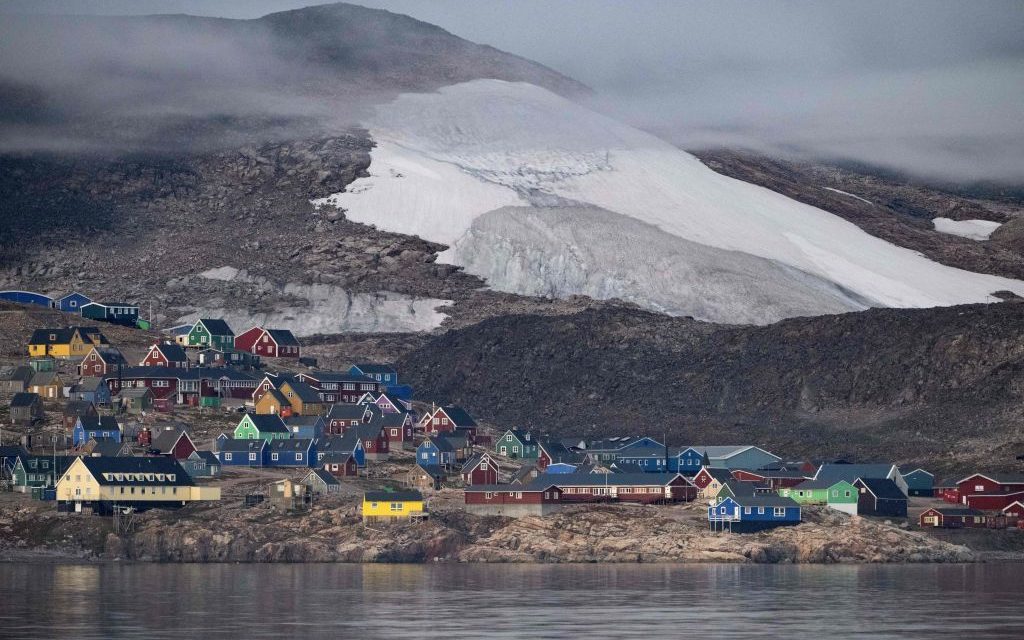
President Donald Trump’s plan to increase the U.S. military presence in Greenland has raised concerns over its impact on traditional hunting activities. Hans Brønlund, the leader of Ittoqqortoormiit, Greenland’s most remote populated community, warns of potential disturbances to narwhals and polar bears, crucial for local hunters.
Concerns Over Wildlife and Hunting
Brønlund’s concerns emerge as Denmark plans to discuss a security agreement with Washington and Greenland. This agreement could see the U.S. creating new defense areas at Mestersvig and Narsarsuaq. He has reached out to Danish and Greenlandic leaders, urging them to involve locals in these pivotal decisions.
Hunting is central to life in Ittoqqortoormiit, a community reliant on wildlife amid declining hunter numbers and climate change. American military expansion could threaten traditional livelihoods by affecting access to hunting grounds and wildlife populations.
Brønlund’s apprehensions center on Mestersvig, about 150 miles from Ittoqqortoormiit, as a potential American defense zone. Increased operations could disrupt narwhals in local fjords and disturb polar bears, impacting the hunters’ ability to sustain their income.
We do not want Americans here near Ittoqqortoormiit. We do not want to be a shield for their country,Brønlund stated emphatically to Greenlandic public broadcaster KNR.
American Interests in Greenland
Brønlund also fears heightened military presence may lead to exploration for oil and minerals, potentially impacting the environment and community autonomy. He criticized decisions made in Copenhagen and Nuuk that exclude residents from meaningful participation.
In a widely shared open letter, Brønlund called for community involvement in decision-making processes regarding military activity that affects their lives directly.
The Security Agreement
The security agreement, signed in September, outlines expanded U.S. military access while emphasizing respect for Greenlandic society, aiming to uphold traditional lifestyles where possible. Yet, its impact on wildlife and hunting requires clear operational definitions and safeguards.
Greenland’s Parliamentary Response
On November 3, Greenland’s parliament, Inatsisartut, approved the security agreement, amid concerns over environmental protections and public consultation. Sixteen lawmakers supported it, none opposed, while seven abstained, indicating uncertainty.
Mimi Karlsen from the Inuit Ataqatigiit party supported the agreement, emphasizing the need to consider traditional hunting livelihoods. Potential effects on natural resources and traffic also require assessment. Karlsen questioned oversight of U.S. military operations, accident responsibility, and environmental cleanup guarantees.
Opposition member Pele Broberg queried the protection level offered by the agreement and doubted complete U.S. accountability for military pollution. Erik Jensen of the Siumut party called for greater public engagement and monitoring, advocating for public meetings and pollution commitments.
Meanwhile, Atassut leader Aqqalu C. Jerimiassen supported the agreement while insisting on scrutinized dialogue with the U.S. He cautioned against assuming continuous benefits from the alliance. The collective governing support included votes from Demokraatit, Inuit Ataqatigiit, and Atassut, along with independent Kim Kielsen.
Denmark to Discuss Agreement
The Danish parliament will engage in a debate starting November 12, with a second reading on November 19. Foreign Minister Lars Løkke Rasmussen plans to brief lawmakers on November 11 at 2 p.m. before the Foreign Affairs and Defence Committee and other councils.
The agreement could allow for increased U.S. military operations at Mestersvig, pending detailed agreements. The environmental impact on wildlife such as narwhals and polar bears remains uncertain due to a lack of specific assessments.
 US Treasury Secretary Relocates Due to Threats
 Iran Strikes Omani Island Base Amid Tensions
 Trump’s Controversial Relationship with Nvidia CEO Amid China Tensions
 Scrutiny on Nvidia’s CEO Raises Questions of Political Motives
 Iran-backed Operatives Charged with Planned Attack on British RAF Base
 U.S. Army Officer Arrested for Espionage in the UK