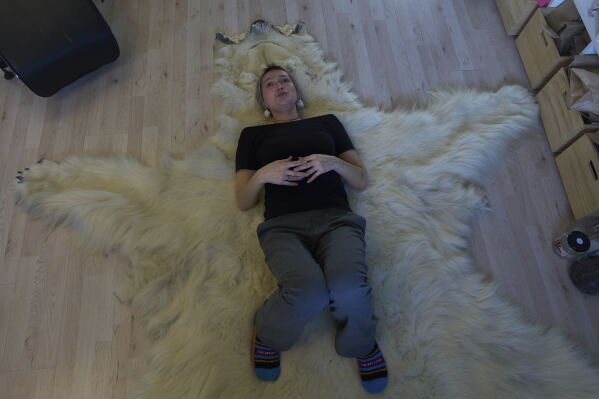
In Nuuk, Greenland, Aviaja Rakel Sanimuinaq sits proudly on a polar bear pelt. Her family hunted the bear and now the pelt is part of her studio, where she practices Inuit ancestral spiritual healing. This movement of reclaiming Inuit traditions and spirituality is growing among Greenlanders.
Sanimuinaq, a shaman with Inuit facial tattoos, uses spiritual healing to help others connect with their ancestors and heal generational trauma. Her studio carries a sign that reads “Ancient knowledge in a modern world.” Surrounded by seal skulls, raven feathers, and medicinal herbs, she emphasizes equality within Inuit culture.
Inuit culture has endured through generations in Greenland, one of Earth’s most remote regions. Traditionally, their religion is animist, believing that every entity possesses a spirit that deserves respect. Researchers Gill and Alistair Campbell highlight this in their travel book, Greenland.
About 90% of Greenland’s 57,000 residents identify as Inuit with most belonging to the Lutheran Church, introduced by Danish missionaries over 300 years ago. Although Greenland is a semi-autonomous territory of Denmark, there is growing support for full independence, a significant issue in recent parliamentary elections.
“We don’t have to walk silenced anymore. That’s the change we see,” Sanimuinaq says, reflecting on the newfound freedom to express their culture.
Traditions like drum dancing and facial tattoos are part of this cultural revival. Asta Mønsted, a professor at the University of California, Berkeley, research focuses on the historical significance of these practices. She notes how missionaries sought to replace these traditions with Christian hymns, viewing them as pagan.
The “qilaat,” or Inuit drum, played a central role in community life, from socializing to resolving conflicts. In drum duels, community members used song and performance to address disputes, often leading to outcast or reconciliation. Despite historical suppression, efforts to preserve this tradition continue.
Facial tattoos, known as “Tunniit,” also hold significant cultural value. Women received tattoos during life events like menstruation or childbirth. However, stigma against tattoos discouraged many from getting them. Shaman Aviaja Rakel Sanimuinaq and her mother, Therecie, share tattoos passed down through generations.
Therecie recalls her grandmother hiding her tattoos to avoid alienation but now feels connected as she meets others proudly displaying their tattoos. She shares, “When I see them, it’s like we have a connection.”
Greenland’s colonial past under Denmark involved abuses including removing children from families for assimilation. Now, the call for independence and global interest in Greenland has encouraged openness about these issues. Some Greenlanders are reconnecting with their Indigenous roots.
Naja Parnuuna, a renowned singer-songwriter, is part of this cultural resurgence. Previously, she felt ashamed of Inuit traditions but now embraces them in her music, encouraging others to value their heritage. Her father, Markus Olsen, a former Lutheran pastor, supports reinstating the Inuit drum in religious services, reflecting on figures like Bob Marley and Martin Luther King Jr.
For Parnuuna, practicing her art led to a greater acceptance of her culture and self-respect. She says, “It’s important to bring that back, so that we can love ourselves again.”
 A Shifting Political Landscape: The Decline of Autocratic Power
  Trump Delivers Warning to Iran, Cuba at UN General Assembly
 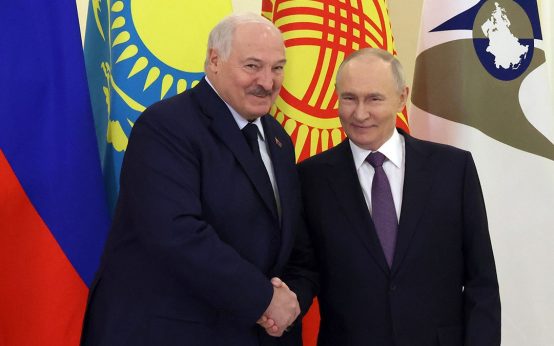 Lukashenko and Putin’s Unique Relationship and Belarus’ Strategic Role
  Alan Ritchson Faces Backlash Over Political Remarks
 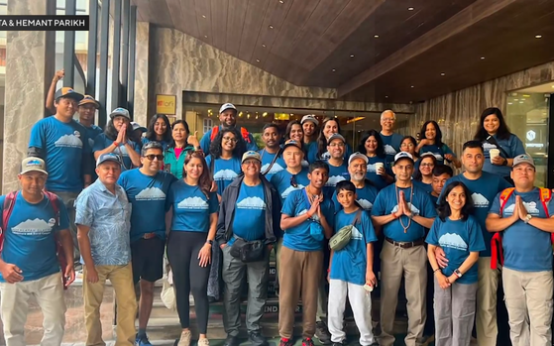 Himalayan Pilgrimage: A Couple’s Narrow Escape and Lingering Questions
  Former CEO Sentenced for Bank Fraud and Sanctions Evasion