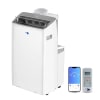
If you need cool air without installing a window AC, a portable air conditioner offers a practical solution. These units function like air conditioners on wheels, cooling individual rooms without permanent installation. This feature is particularly useful for apartment dwellers or those in variable climates. I consulted experts in cooling and appliances to detail essential information about these units and compiled a buying guide along with a list of recommended models for various room sizes.
Our Top Picks for Portable Air Conditioners
We selected units from reputable brands including Black+Decker, Midea, and Whynter. Below are the top choices categorized by need and room size.
Most Powerful Model
The Whynter air conditioner is ideal for rapidly cooling large spaces with precision. As a dual-hose system, it draws in fresh air while expelling hot air outdoors, offering increased efficiency at the cost of slightly more noise and complexity. Its inverter capability makes it more energy-efficient, adjusting speed based on room temperature.
Best Budget Option
This AC unit offers strong performance at a low price, though it lacks features like smart connectivity and a temperature-reading remote. Some users note it is noisy, particularly on lower fan settings.
Best for Small Rooms
Black+Decker provides an excellent portable AC for small spaces up to 350 square feet, such as bedrooms or offices. It features an 8,500 BTU capacity in a compact design and allows adjustment via unit controls or remote.
Best for Large Rooms
The Dreo air conditioner boasts a 12,000 BTU capacity ideal for larger spaces. It includes advanced controls via touchscreen, remote, or app, allowing humidity settings and scheduling features.
Choosing the Right Portable Air Conditioner
Based on expert advice, we determined key features for selecting a quality portable air conditioner.
Important Considerations
- BTUs (British Thermal Units): This measures an AC’s cooling capacity. Higher BTUs mean more power. Experts recommend choosing based on room size, as detailed below.
- Functionality: All selected models feature washable dust filters and extra fan and dehumidifier functions.
- Portability: These units, although over 50 pounds, include wheels to facilitate movement between rooms.
Placement, Maintenance, and Connectivity
Position your portable AC near both a window and an electrical outlet. Regular maintenance involves draining water and cleaning filters to prevent mold and maintain air quality. Some units offer smart connectivity via apps, enhancing control but increasing costs.
Hose Type
Portable units typically use one or two hoses, venting to the exterior. Single-hose models pull and cool room air, while dual-hose models bring in and expel air, offering faster and more efficient cooling at the expense of additional noise and cost. Dual-hose models require more frequent water drainage due to increased condensation.
Understanding BTUs
The BTU rating indicates an air conditioner’s power. A higher BTU matches a device’s ability to cool larger spaces. Estimate your needs by multiplying room square footage by 20.
- Up to 250 sq. ft.: 5,000-6,000 BTUs
- 250-350 sq. ft.: 7,000-8,000 BTUs
- 350-450 sq. ft.: 9,000-10,000 BTUs
- 450-550 sq. ft.: 12,000 BTUs
- 550-700 sq. ft.: 14,000 BTUs
Correct sizing prevents issues. An overpowered unit cools inefficiently, affecting humidity control and increasing wear and tear. An underpowered unit struggles, hiking up energy costs. Additional adjustments apply based on sunlight exposure, room occupancy, and kitchen placement.
Frequently Asked Questions
A portable AC typically stands on the floor with a vent leading to a window. It cools air from inside or outside, releasing cooled air into the room while expelling hot air.
Expert Contributors
This guide incorporates insights from Dr. John McKeon of Allergy Standards and Carl Prouty, a technologist at Abt electronics and appliances. Their expertise ensures accurate, reliable advice.
For more articles on technology, fitness, and lifestyle, follow NBC Select on social media.