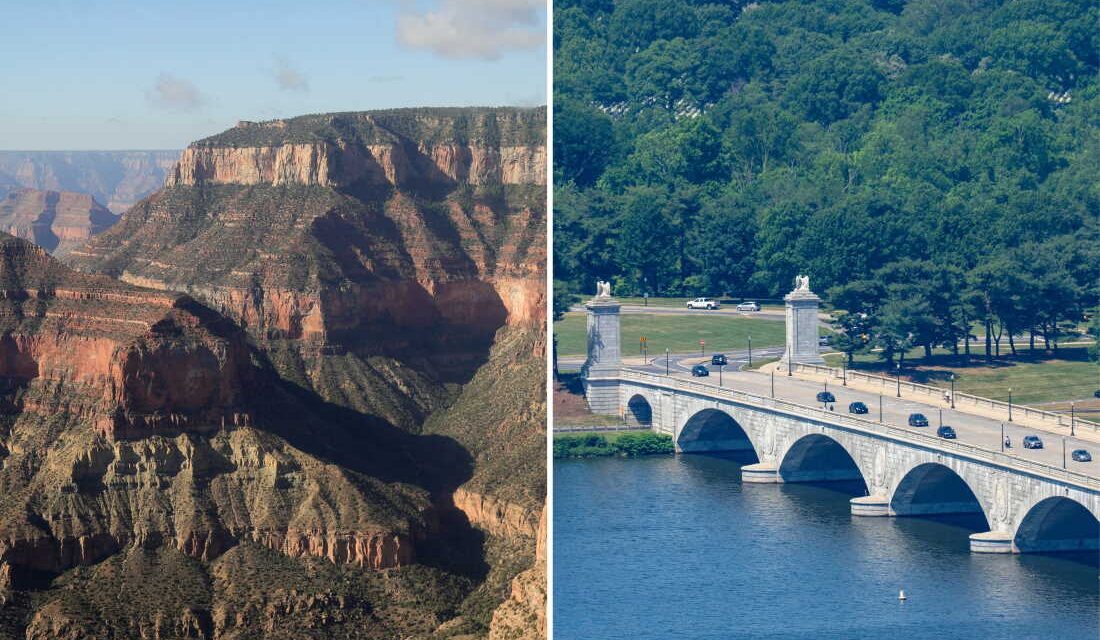
Advocates of historic preservation express concern over proposed changes impacting the protection of sites such as the Grand Canyon and Arlington Memorial Bridge. President Trump’s plan to erect a 250-foot arch exemplifies the potential loss of protection under new regulations. Sixty years have passed since the signing of the National Historic Preservation Act (NHPA) by President Lyndon B. Johnson, intended to safeguard the U.S. heritage.
Brent Leggs, of the National Trust for Historic Preservation, highlights the diminishing role of public-private partnerships in preservation due to government policy changes. The NHPA was originally established to identify and protect historic sites, a measure that enabled over 100,000 landmarks to be recorded on the National Register of Historic Places. Federal entities are mandated to coordinate with local, tribal, and various stakeholders under the Section 106 review to prevent harm to these locations.
Section 106 is vital to the NHPA, requiring federal projects to mitigate their impact on historic sites. Despite its protective role, the process does not halt all developments but often leads to enhanced outcomes by identifying valuable cultural aspects that could be lost. Currently, the regulation faces threats from proposed federal council decisions and legislative changes in the Senate intended to expedite infrastructure projects.
Greg Werkheiser of Cultural Heritage Partners argues the amendments could drastically weaken the NHPA’s protections. The coalition “Section 106 Strong,” now representing a broad alliance, opposes the undermining of this foundational process. Historic preservation gained momentum following the destruction of key sites during urban renewal projects after World War II, inciting public backlash and leading to the development of protective laws.
Proposed statutory changes risk reversing decades of progress, as noted by Valerie Grussing of NATHPO. The regulatory amendments might restrict the reach of Section 106 to significant landscape features and public consultations, further diminishing tribal consultation rights. Current averages show that Section 106 reviews take approximately 16 days, with most confirming no adverse effects.
The NHPA, suffering from politically motivated attacks, now sees defenders boosted by a newly launched $10 million defense fund. Chris Cody, from the National Trust, emphasizes the urgency of this moment in preservation history, with numerous local communities reaching out for assistance.
With President Trump’s controversial projects raising tensions, preservationists remain steadfast. Activists urge the public to recognize the value of sites not only for personal connections but for the broader educational and cultural narratives they contain for future generations.
The Advisory Council on Historic Preservation, with a significant number of members appointed by Trump, recently supported measures threatening the integrity of Section 106. Concerns grow as the Senate considers a bill that could further streamline these processes, limiting public and tribal influence.
NATHPO’s Ira Matt warns against legislative changes that may etch setbacks into law, impacting long-term preservation efforts. Critics argue the Senate bill fails to provide clarity, raising more questions than it answers and potentially escalating future legal disputes.
Werkheiser and others call for continued civic engagement and advocacy to safeguard the right to preserve national history against politically motivated reformations.
 Trump Criticizes Michigan Senate Candidate Abdul El-Sayed
  Congressional Investments in AI Amid Regulatory Inaction
  Opinion Polls and Their Limitations
  Alaska’s Soil and Agricultural Challenges
  Shared Fear of Mass Shootings and Its Impact on Policy Views
  Somali Community Responds to Federal Raid on Rep. Ilhan Omar’s Residence