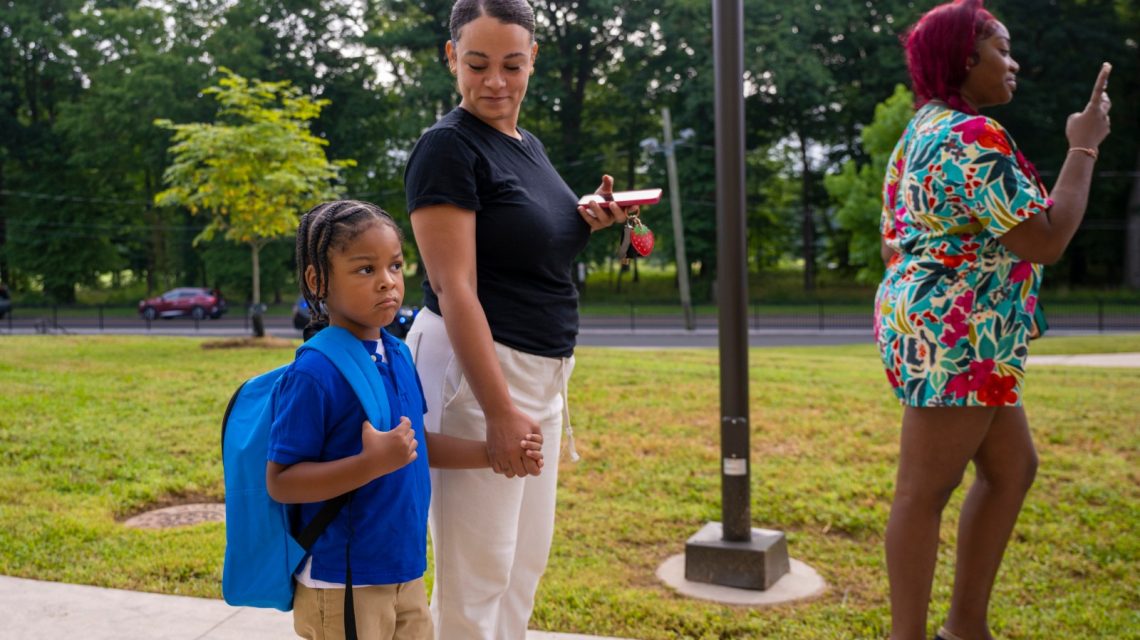
A newly proposed House bill aims to provide millions of workers with additional job-protected leave to engage in their children’s and grandchildren’s educational activities. Florida Democratic Representative Frederica Wilson introduced the Family Leave for Parental Involvement in Education Act on August 31. This bill seeks to amend the Family and Medical Leave Act (FMLA) and federal employee leave regulations, creating a new leave category for parental participation in educational and extracurricular events.
If approved, the bill will enable eligible workers to take up to eight hours of leave every 30 days and up to 48 hours annually for education-related activities. This leave would be supplementary to existing FMLA leave options.
Newsweek contacted Wilson’s office for a statement but did not receive a response by the publication deadline.
Purpose of the New Leave
The proposal would allow eligible employees to attend school conferences or activities organized by educational or community groups. Under the bill, activities covered include:
- Parent-teacher conferences
- Classroom events
- School performances
- Sports activities
- Scouting programs
- Educational meetings
Workers can take this leave intermittently, allowing attendance at various events throughout the year. The bill broadly defines ‘school’ to include elementary and secondary schools, Head Start programs, and childcare facilities. This wide definition means it can benefit parents of young and school-age children alike.
Employer Documentation and Leave Details
Employers can require documentation for the leave requests. Employees generally need to give at least seven days’ notice before taking leave, or as much notice as possible if seven days is not feasible.
The leave would be separate from and additional to existing FMLA leave, so employees would not need to diminish their traditional family or medical leave amounts for attending educational activities.
If employees prefer paid leave, employers can ask them to substitute this time with paid time off, vacation, personal leave, or sick time. If these options are unavailable or undesirable, the leave would be unpaid but still protected.
Eligibility for the Proposed Leave
Eligibility follows existing FMLA rules. The bill specifies that the leave covers activities involving the employee’s child or grandchild. A grandchild is defined as the child of an employee’s child. The benefits also extend to federal employees under the revised Title 5 of the U.S. Code. Federal employees would be eligible for up to eight hours of leave in a 30-day period and up to 48 hours annually for education-related activities.
Millions of Americans, including federal workers and private-sector employees covered by the FMLA, may become eligible for this additional leave.
Is FMLA Paid Leave?
The Family and Medical Leave Act provides job-protected leave but does not require it to be paid. It assures employees can take qualifying leave without job loss and return to the same or an equivalent role.
Potential Republican Support
The Trump administration has emphasized prioritizing parents, but Republican support for the bill remains uncertain, as there are currently no cosponsors. The FMLA enactment in 1993 saw Republican opposition due to imposed employer mandates. Since then, debates have shifted towards paid leave and its funding.
During his presidency, Donald Trump signed a law granting 12 weeks of paid parental leave to many federal employees, separate from the FMLA. In August, an expanded tax-credit initiative was announced for employers offering paid family and medical leave. Treasury Secretary Scott Bessent noted that working families should not have to choose between caregiving and financial stability.
The bill has been referred to House committees for consideration. It requires approval from Republican committee chairs to progress to a full vote, where Wilson will need to gather broader Republican support.
 Left-Wing Journalist’s Criticism of Trump Staffer Sparks Online Reactions
  Challenges Ahead for Both Parties in the 2026 Midterm Elections
  Concerns Rise Over Senator John Fetterman’s Commitment to Duties
  Charlie Kirk’s Legacy: Controversies and Consequences
  AI Safety Concerns and Political Implications
  Potential Closure of Wisconsin Childcare Providers Amid Subsidy Cuts