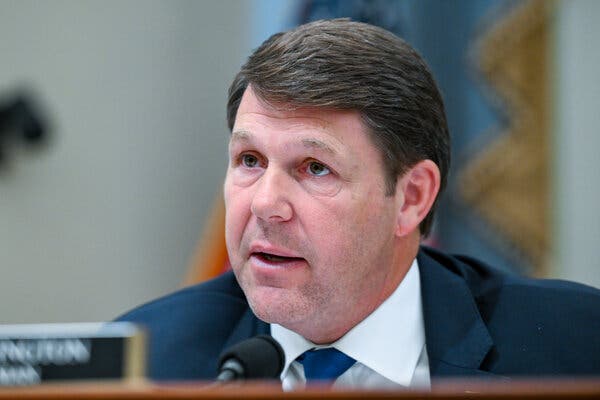
House Republican leaders have put forth a budget proposal aimed at bypassing Democratic opposition to increase military funding and impose voting restrictions. The plan allocates $73 billion in additional military resources amid the conflict in Iran and $12 billion for agricultural support. It also seeks to advance the SAVE Act, which President Trump advocates as a means to strengthen election integrity, but Democrats criticize as voter suppression.
This budget blueprint represents an effort to advance a Pentagon spending request recently submitted by the White House. Democrats have strongly opposed this request and criticized the President’s unauthorized initiation of the war in the Middle East. The plan attempts to revive the stalled SAVE Act, which has faced difficulties in gaining traction in the Senate due to strong Democratic opposition.
Rather than following the traditional bipartisan appropriations process, Republicans are employing a budgetary tactic called reconciliation. This procedure allows them to circumvent a potential filibuster and advance fiscal bills past Democratic resistance. Representative Jodey C. Arrington of Texas, the chairman of the House Budget Committee, highlighted their intention to use reconciliation to address these issues, support military forces, and ensure election integrity.
The approach is fraught with challenges as Republicans face internal divisions and potential political fallout ahead of the midterm elections. Public opinion polls have shown widespread disapproval of the war in Iran, adding to the risks Republicans face in pursuing this funding.
Complicating matters, the reconciliation process itself poses difficulties, as sweeping policy alterations such as those proposed in the SAVE Act are often excluded. This legislation aims to require proof of U.S. citizenship for voter registration, impose new voter identification requirements, and limit voting by mail. Reconciliation bills are typically restricted to provisions directly impacting budgetary matters, complicating efforts to include these significant policy changes.
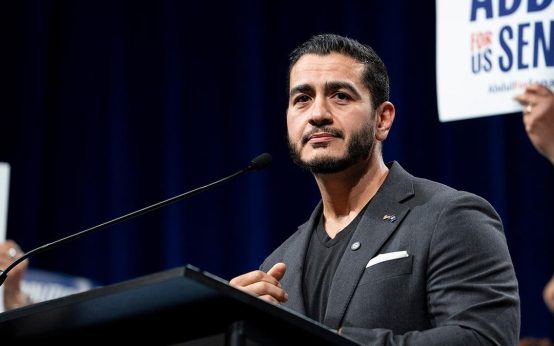 Michigan Senate Nominee Abdul El-Sayed Criticized for Remarks on Reproductive Rights
  Poll Reveals Voter Preferences Between Socialist Democrats and MAGA Republicans
  Challenges of Electing a Female President: Insights from ‘The View’
  Upcoming Concerns and Influence in Health Politics
  Rep. Donalds Distances Himself from Trump as Florida Governor Race Tightens
  Controversy Surrounds President Trump’s Proposed D.C. Arch