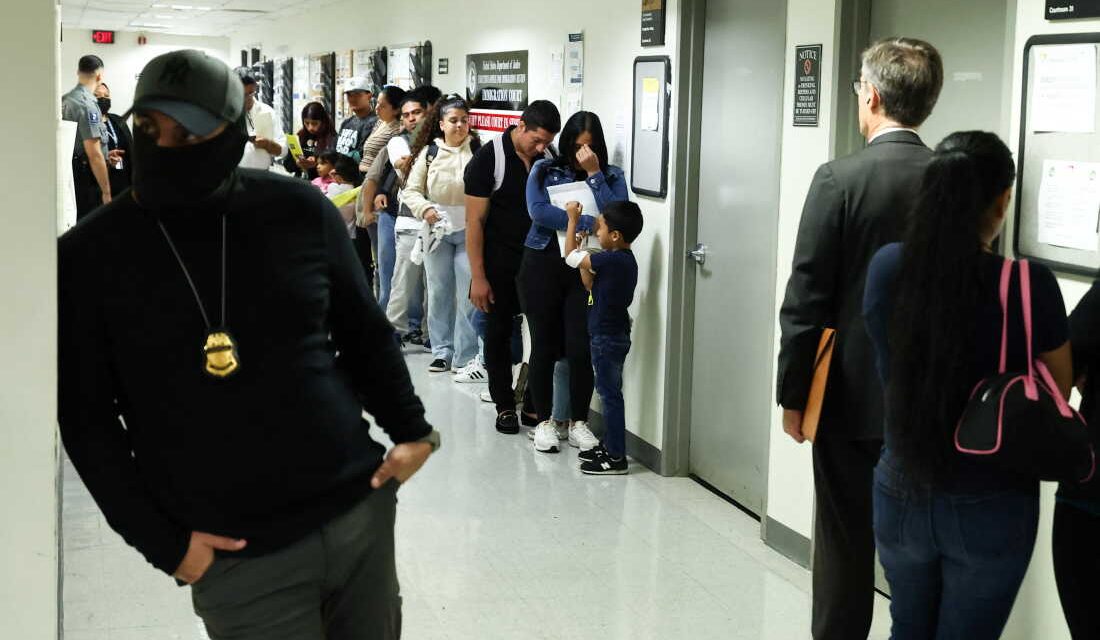
In October 2025, a scenario emerged where immigrants had to line up before their hearings at the New York Federal Plaza Immigration Court. Reports indicate that these immigrants received last-minute notifications about new in-person hearings at unfamiliar courtroom locations. Several immigration attorneys reviewed these notices and shared their observations with NPR, highlighting the broader strategy of the Trump administration aimed at expediting arrests and deportations, thereby limiting due process options.
Immigrants scheduled for upcoming hearings in Maryland’s Hyattsville and Baltimore immigration courts and Virginia’s Sterling court were rescheduled to two buildings: one in Washington, D.C., and another in Falls Church, Va. Neither building had official immigration court setups for in-person hearings. The D.C. location, occupied by the Federal Emergency Management Agency (FEMA), lacked any affiliation with the Justice Department. According to one source, immigrants were informed of the location change mere days before their new appointments, or not at all in some instances.
Kel White, an officer of the D.C. chapter of the American Immigration Lawyers Association, attended a hearing at the Falls Church location. She noted the unusual practice of having an immigrant appear in person in a location before remote judges and prosecutors. These last-minute changes were deemed a violation of regulations set by the Justice Department. People should receive at least ten days’ notice to respond, as per the Justice Department’s guidelines.
Attorneys informed NPR that these notices were primarily directed at immigrants without legal representation. Most immigrants do not have lawyers and risk receiving an “in-absentia order of removal” if they fail to attend scheduled hearings. Such orders allow deportation officers to detain and deport the individuals involved.
Under the Justice Department, the Executive Office for Immigration Review (EOIR) manages 60 immigration courts and adjudication centers. Although EOIR is expanding its number of immigration judges, leading to scheduling adjustments, it did not respond to queries regarding the unexpected court locations’ use or status.
The Trump administration has focused on reducing the backlog of immigration cases, which totals approximately 3.5 million. Recent press releases from the White House touted an “aggressive and successful immigration enforcement overhaul,” which extends to immigration courts.
These last-minute changes contribute to confusion within an already complex immigration court system. White observed hearings held at the Falls Church building of the Executive Office for Immigration Review, usually not a venue for in-person hearings. The location contained two conference rooms where judges and Homeland Security Department attorneys appeared remotely.
Thomas Reyes, an immigration attorney, described one client’s hearing rescheduled multiple times with just eight days’ notice for the Falls Church location, which he mistook for a glitch. Notably, the client had to cross state lines to attend hearings farther from home.
The General Services Administration (GSA), which manages federal facilities, did not comment on DOJ’s use of the building. A “surge” in acquiring space for DOJ’s immigration court operations is underway, but no new buildings or converted leases have been publicized.
A case highlighted an immigrant not notified via mail about their location change, relying instead on the app MigraConnect for tracking court dates. Immigration attorney Lucelia Justiniano recounted similar experiences, emphasizing the precariousness for people unintentionally on track for deportation.
The Trump administration has increasingly issued rapid removal orders within immigration courts. Strategies employed push proceedings faster, including mega master calendar hearings, where large groups are processed, often without legal representation. This approach raised in-absentia deportation orders to record highs while asylum approvals dropped significantly.
These methods largely affect immigrants not represented by lawyers, adding further layers of complications to receiving court notifications and attending hearings. For example, Baltimore’s in-absentia removal rates increased significantly, underscoring systematic pressures against respondents.
Immigration attorney Justiniano emphasized the burdens placed on immigrants, indicating another facet of last-minute venue changes, which compound difficulties faced by those involved in the immigration court process.
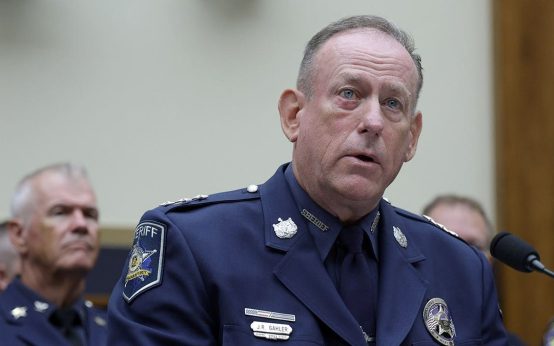 Maryland Sheriff’s Concerns on State’s Sanctuary Law
  DHS Plans to Expand Birthright Citizenship Exceptions
 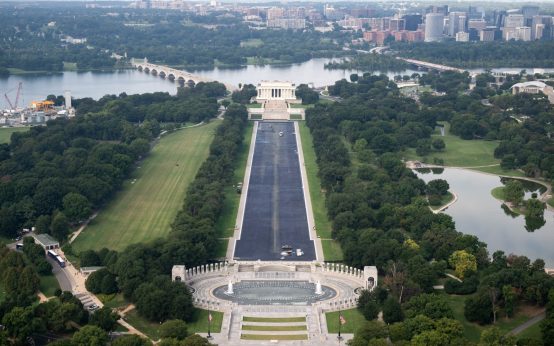 Troubles Persist as Trump Administration Allocates $2.7 Million for Lincoln Memorial Reflecting Pool Algae Issue
  El-Sayed Faces Challenges with Michigan Voters, Linking to Hasan Piker
  Michigan Democratic Senate Hopeful Faces Criticism for Campaign Choices
  Veterans Request Court Intervention on Trump’s Proposed Arch