
A local official in Iowa has spoken out against state legislators after they restricted cities and counties from testing direct cash payments to residents. Mandi Remington, a Democratic county supervisor in Johnson County, criticized what she called state-level ‘ideological wars.’ This decision has been perceived as limiting local government’s capacity to trial poverty-alleviation policies.
Remington wanted to explore the feasibility of providing direct cash payments to low-income residents in her area. However, the initiative was halted. ‘We are supposedly a home rule state, but that’s not what it seems like in practice,’ Remington remarked. ‘I live in a blue dot in a red state, and anything we try to do, which is unusual in the rest of the state, faces immediate pushback.’
Inspired by other successful pilots, like the UpLift program in central Iowa, where 110 families were provided $500 monthly over two years, Johnson County planned a guaranteed income initiative. However, these plans were thwarted when Iowa Republicans passed a bill banning local guaranteed income programs, which Gov. Kim Reynolds signed into law. Proponents argue cash handouts could undermine work ethics and foster dependency.
Remington expressed frustration over the lack of opportunity to evaluate or present evidence for these programs. ‘I have not directly engaged on universal income matters at the state Capitol but have witnessed legislators dismiss public testimonies, labeling the initiatives as ideological without reviewing the evidence,’ she stated.
‘Unfortunately, some of our state leaders are more interested in controlling local government and waging ideological wars than they are in passing policies that help everyday Iowans,’ Remington wrote in an op-ed. Seven Republican legislators joined the opposition to the ban, showing a bipartisan divide on the issue.
The office of Gov. Reynolds did not provide a comment. Iowa is not alone; Republicans nationwide have challenged similar initiatives due to legal, budgetary, and ideological concerns. In Michigan, scrutiny surrounds a taxpayer-funded program for new mothers, while Texas’s Attorney General sued Harris County over its program, leading to a trial freeze by the Texas Supreme Court. Arizona’s Democratic governor vetoed a similar prohibiting bill.
Despite political hurdles, progressive groups counter such restrictions. Adriane Brown from the Economic Security Project, which promotes cash transfers, emphasized the importance of guaranteed income trials, citing their ability to offer stability in challenging transitions.
These programs, originally funded by federal pandemic relief, face sustainability challenges as funds deplete. While Cook County, Illinois, secured ongoing municipal funds post-pilot, most jurisdictions lack sustainable financing without private or federal support. ‘The UpLift program managed to secure non-government funding,’ Remington noted, highlighting widespread financial strains on non-profit agencies and community counterparts.
 Former Army Secretary Dan Driscoll Discusses Military Innovation and Ukraine’s Strategic Role
  U.S. Maritime Blockade and Its Impact on Energy Prices
 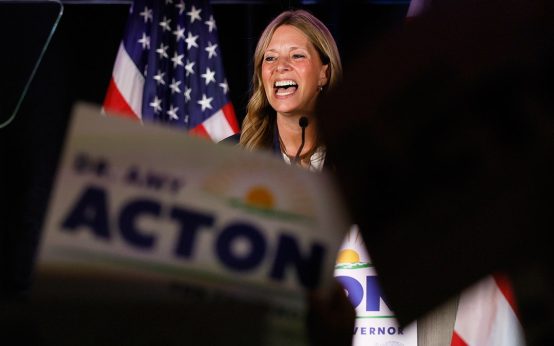 Confrontation at Amy Acton’s Campaign Event in Ohio
  Trump’s Childhood Home Renovated and Sold for Nearly $2 Million
  Bill Maher Criticizes Macklemore and Others Over Comments on Gaza
  Ted Cruz Makes Controversial College GameDay Appearance