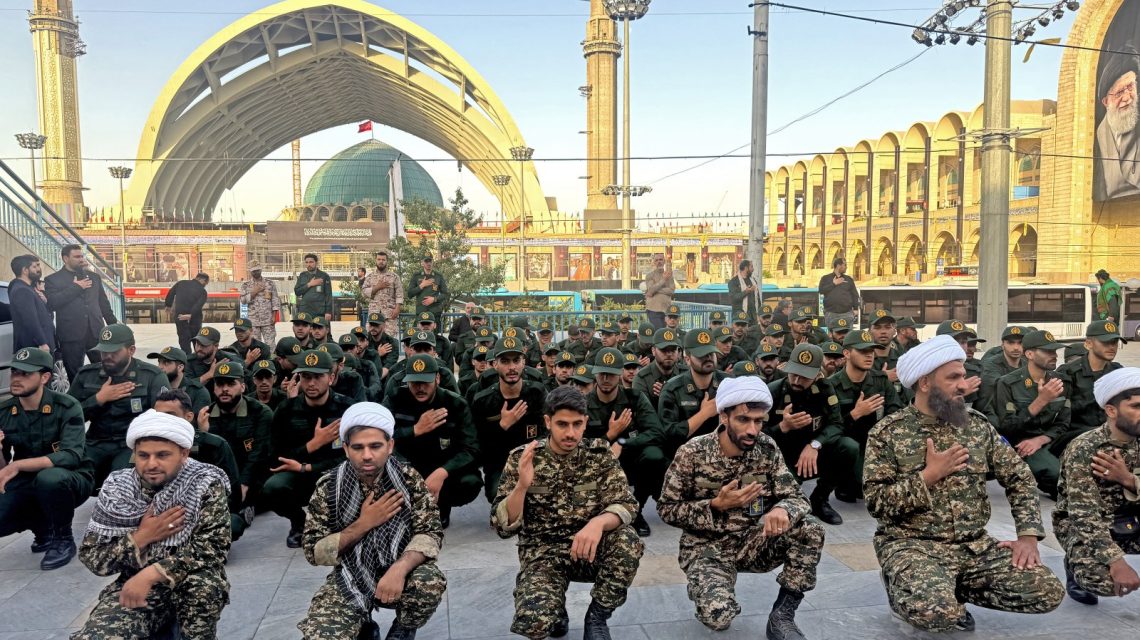
The coffin of former Iranian Supreme Leader Ali Khamenei has arrived at Tehran’s Imam Khomeini Grand Mosalla. This marks the beginning of several days of mourning in Iran and Iraq for the leader of the Islamic Republic since 1989. Khamenei, 86, died following U.S. and Israeli strikes on Tehran on February 28, initiating the Iran War. His burial, initially set for March, was delayed due to the ongoing conflict in the region. Mojtaba Khamenei, Khamenei’s son, has succeeded him, though he hasn’t appeared publicly since.
Ali Khamenei’s funeral is expected to draw up to 20 million mourners from across Iran.
Symbolism and Timing
The ceremonies hold symbolic significance, coinciding with the 250th anniversary of U.S. Independence Day and the Islamic month of Muharram, known for themes of mourning and martyrdom in Shiite Islam. Shiite Muslims honor the martyrdom of Imam Hussein in the 7th century, and Khamenei, tracing his lineage to Hussein, is commemorated with deep reverence. A red flag from Hussein’s shrine draped over his coffin symbolizes resistance and devotion.
Ceremonial Itinerary
Khamenei’s commemoration spans multiple days and cities in Iran and Iraq. His coffin reached Tehran’s Imam Khomeini Grand Mosalla on Friday. At 6 a.m. local time on Saturday, it will be displayed inside the mosque. Farewell ceremonies are scheduled for Friday and Saturday, aligning with the 13th and 14th of Tir in the Persian calendar, and the 19th and 20th of Muharram.
A funeral procession in Tehran will occur on Saturday, followed by another in Qom on Sunday. The final funeral ritual will be next Thursday in Mashhad, coinciding with the martyrdom anniversary of Imam Sajjad. Khamenei will be interred at Imam Reza’s holy shrine.
Logistical Preparations
Iranian media offers extensive coverage of the funeral, focusing on the Ayatollah’s life and framing the ceremonies as defiance against the U.S. and Israel. Iranian President Masoud Pezeshkian describes this moment as a new chapter of unity, while Mohammad Bagher Ghalibaf, Iran’s parliamentary speaker, emphasizes a national resolve.
Tehran’s Imam Khomeini Grand Mosalla has 6,000 water sprinklers set up for crowd comfort. Tehran’s airports will be closed, and private vehicles prohibited, with 700 parking spaces allocated for mourners. Reports state 50 million loaves of bread will be baked, supported by 16 mobile bakeries in the capital.
The Red Crescent and authorities prepare for large crowds, readying 2,500 ambulances, 21 helicopters, 100 drones, and significant medical resources. A national campaign invites citizens to offer lodging to visiting mourners, employing mosques, sports halls, parks, and cultural centers.
International Attendance
IRIB, an Iranian state broadcaster, reports attendance from representatives of over 100 countries. However, not all nations have disclosed attendees. Russia confirms former President Dmitri Medvedev will represent them, reflecting strong Russia-Iran ties, including drone technology exchanges used in Ukraine.
Also attending are Pakistan’s Prime Minister Shehbaz Sharif, Armenia’s Prime Minister Nikol Pashinyan, Tajik President Emomali Rahmon, and Turkey’s Vice President Cevdet Yılmaz. Social media footage shows delegations arriving, including leaders from Turkmenistan, Iraq, Uzbekistan, and Georgia.
China’s delegation will be led by He Wei, a senior lawmaker and vice chairman of the Standing Committee of the National People’s Congress.
 Kentucky Governor Andy Beshear Discusses Tariffs, Faith, and Political Ambitions
  North Korea’s Missile Launches Escalate Tensions
  Sunday Highlights: Lane Kiffin, Nancy Mace, and College Football Drama
  U.S. Plans for Permanent Army Base in Poland Amid Tensions with Russia
  Protesters Rally Against Plans for Kennedy Center
  Nithya Raman: A Passion for L.A.