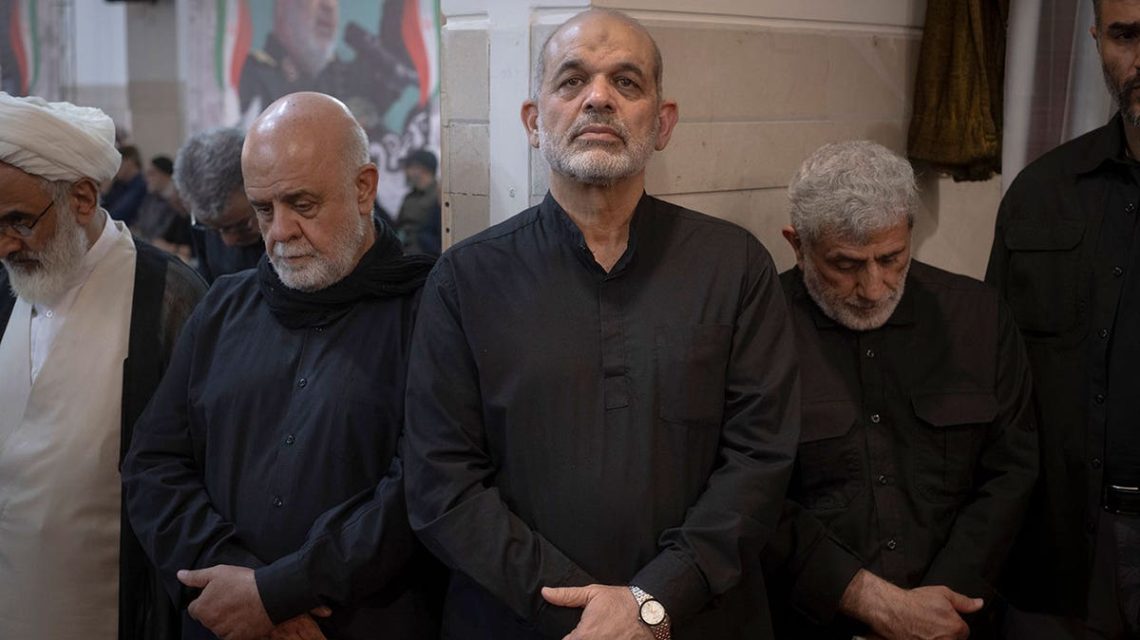
Military appointments in authoritarian states, especially during wartime, provide insight into priorities, perceived threats, institutional allegiances, and leadership anxieties. Iran’s new military and security hierarchy, under Supreme Leader Mojtaba Khamenei, illustrates more than reshaping a war-damaged command structure. It establishes a strategic order aimed at confronting the United States and Israel abroad while maintaining internal stability.
Those promoted are veterans of the revolutionary-security establishment, molded by experiences in war, intelligence, ideological battles, asymmetric warfare, and domestic enforcement. This isn’t a postwar generation seeking reconciliation with Iran’s foes but seasoned insiders rooted in longstanding objectives.
Assertions that changes in leadership have led to substantive regime transformation in Tehran deserve scrutiny. While commanders have perished and new leaders have taken positions, meaningful regime change extends beyond personnel shifts. It requires altering the institutions, ideology, strategic goals, and political relationships that define governance.
“By those measures, the Islamic Republic remains intact. Tehran relies on individuals whose careers were forged in institutions long opposed to Washington and Jerusalem while safeguarding the regime internally.”
Ahmad Vahidi, now leading the Islamic Revolutionary Guard Corps (IRGC), and Ali Abdollahi, appointed as the chief of the General Staff, represent continuity of the revolutionary-security generation initiated with the Islamic Republic’s foundation in 1979.
Kiumars Heydari, elevated to deputy chief of the General Staff, defended Army Ground Forces’ actions during the November 2019 protests, highlighting a blurred line between safeguarding Iran and the Islamic Republic. His statements illustrate the merging of defense roles amid internal repression.
Vahidi’s command of the IRGC is significant for the United States and Israel. Emerging from Iran’s intelligence and extraterritorial operations framework, his historical involvement in global attacks underscores the regime’s reliance on strategies that challenge conventional threats through proxies, missiles, drones, and covert actions.
For U.S. defense strategy, understanding Vahidi’s elevation institutionally is crucial. His background signals Tehran’s expectation of enduring confrontations with the United States and Israel.
Hossein Taeb’s return to command the Basij further solidifies the internal security framework. With experience across the IRGC and intelligence services, his leadership underscores a focus on domestic surveillance and suppression. The Basij plays a crucial role in social mobilization and unrest control.
Tehran’s security strategy, represented by Vahidi and Taeb, aligns external conflicts with internal stability, viewing military setbacks, intelligence breaches, and protests as unified threats to its control. This perspective suggests that Iran is prepared to escalate defensively to project strength and preserve the regime.
Leadership shifts in Iran emphasize a maintained strategic posture rather than transformation. Tehran’s reliance on established leadership mirrors an authoritarian system focused on survival, with a diminishing pool of trusted commanders.
For both Washington and Jerusalem, it’s important to recognize that while individual commanders might change, institutional and ideological consistencies persist. The system these leaders embody remains a fusion of military and ideological objectives, intertwined with national security goals and regime preservation.
The implications are significant. A regime on the defensive might intensify its actions against foreign and domestic challenges, reinforcing the need for strategic caution.
The military restructuring underlines Iran’s resilience but also its vulnerability. The regime’s continued reliance on a revolutionary class reveals a precarious hold on power amid enduring ideological and strategic inclinations.
 British Court Rules Search Warrants Illegal in Investigation of Former Prince Andrew
  Speculation Surrounds Nobel Peace Prize Award
  Russian Strike on Kramatorsk Causes Mass Casualties
  Justice Department Files New Charges Against Nicolás Maduro and Wife
  The Impact of Prolonged Displacement on Ukrainian Refugees
  South Korea Tests First Hypersonic Weapon