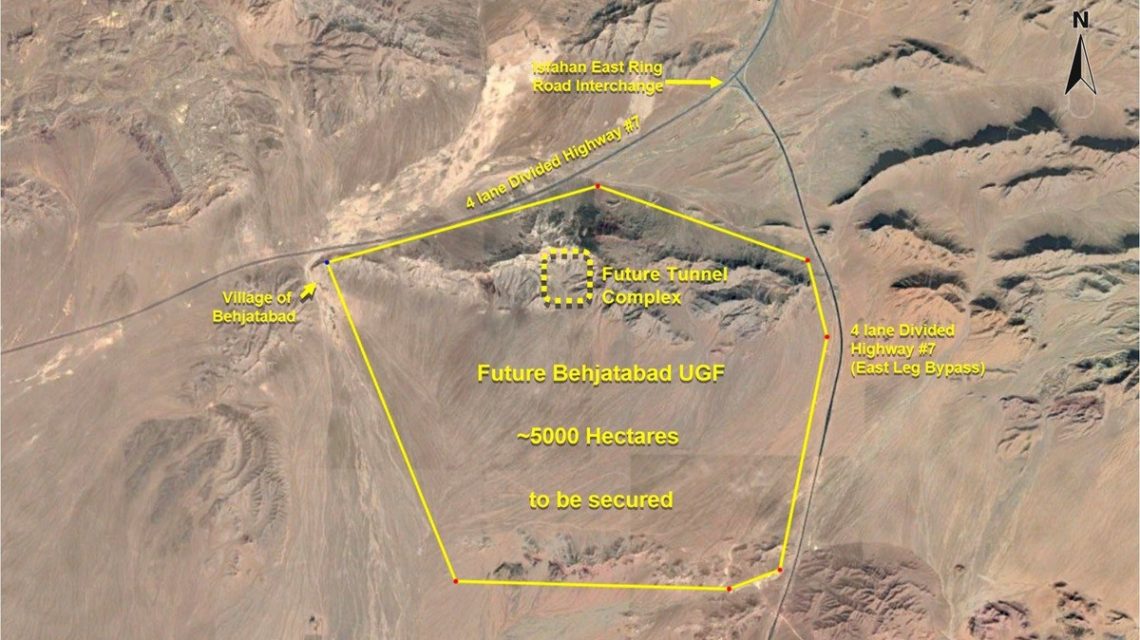
Iran is progressing swiftly at a newly identified location situated between two major nuclear sites. Satellite imagery highlights the construction of a security fence around a deeply buried facility near Behjatabad. This site is centrally positioned between Isfahan and Natanz, two critical nuclear facilities in central Iran, according to experts from the Institute for Science and International Security (ISIS).
The facility lies precisely halfway between the Isfahan nuclear site and Pickaxe Mountain near Natanz, measuring roughly 62 kilometers or about 40 miles in each direction. Natanz is Iran’s largest uranium enrichment facility, previously targeted by the United States amidst the brief conflict in June 2025 and ongoing tensions since February 2026.
Iran has reported a uranium enrichment plant at Isfahan, encompassing several key structures, including a chemical laboratory, a reactor fuel manufacturing plant, and a centrifuge manufacturing workshop. Observers believe it may have an extensive tunnel network, potentially storing much of Iran’s stockpile of highly enriched uranium.
Uranium enriched to 60 percent exceeds what is needed for civilian nuclear purposes, edging close to weapons-grade material. United Nations experts estimate over 970 pounds of 60-percent enriched uranium in Iran’s possession.
The Behjatabad mountain facility, upon completion, is expected to cover 19 square miles. Sam Lair, a research analyst at the Foreign Policy Research Institute, suggests it could be a new missile base for the Islamic Revolutionary Guards Corps (IRGC), resembling other national facilities. However, the exact purpose of the site remains uncertain.
Construction began in December 2025, with visible progress by January of the following year, including a new road linking to an emerging tunnel network. By April 2026, tunnels on the site’s eastern and western edges were taking shape. Satellite images from November 24, 2026, display multiple security checkpoints, a perimeter wall, four active tunnel entrances, and an area potentially used for storing explosives. ISIS analysts noted the unusually rapid construction pace, with a potential nuclear purpose not altogether dismissed.
The U.S. and Iranian officials, including the White House, were contacted for comment on this emerging facility’s developments. Iran has historically constructed sensitive nuclear sites within mountains or deep underground, complicating adversaries’ efforts to detect or disrupt activities. Former U.S. President Donald Trump indicated a willingness to strike sites like Pickaxe Mountain if given the order. Yet he noted the absence of ‘any real activity’ there.
Pickaxe Mountain, also referred to as Mount Kolang, is fortified, located just over a mile from Natanz. Despite Iran’s claim of no nuclear activity, the International Atomic Energy Agency (IAEA) has been denied access, with Iran declaring nuclear plans there since 2020. Deep within the mountain, analysts suggest the site is resilient against even the most destructive bombs, such as the U.S. GBU-57 Massive Ordnance Penetrator. In June 2025, U.S. bombers targeted other Iranian nuclear sites but avoided Pickaxe Mountain.
Construction updates from mid-2025 reveal Iran’s efforts to enhance Pickaxe Mountain’s security, including fortifying entrances and erecting a security perimeter.
 Divisions Over Fossil Fuels Impact COP31 and 2028 Olympics
 Discussion on Political Developments with David Brooks and Jonathan Capehart
 Massive Protest Erupts in Puerto Rico Over Soaring Electric Bills and Living Costs
 Oxfordshire Village Challenges UK Government on Asylum Plans
 NBC Withdraws Anti-Israel Ad from SNL after Backlash
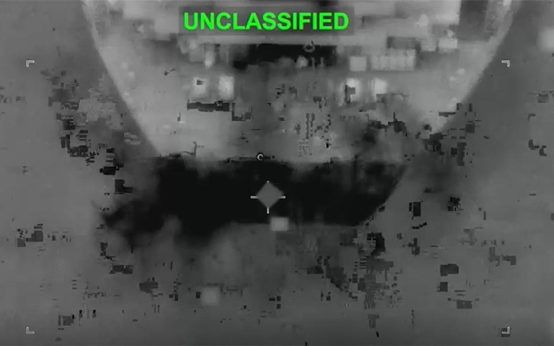 U.S. Military Disables Vessel in Gulf of Oman Amid Iran Tensions