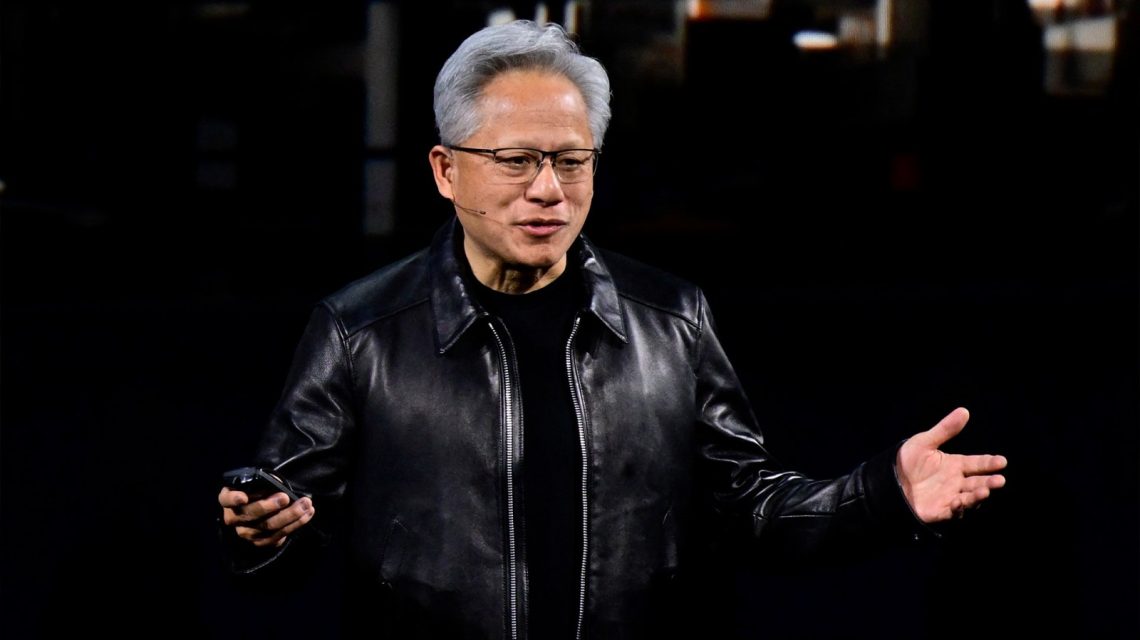
Chinese state media have celebrated Jensen Huang’s reinstatement as CEO of Nvidia, portraying him as a victim of unfounded accusations. Huang returned to Nvidia on a Monday, 11 days after resigning due to an admitted affair and allegations involving a suspected Chinese spy.
The Global Times, a Chinese Communist Party-controlled newspaper, criticized Western media for their coverage of Huang, labeling it a ‘witch hunt.’ They reported his return was met with cheers at the Nvidia headquarters.
The so-called spy allegations are entirely fabricated and are political maneuvers, as reported by the state-run outlet.
U.S. President Donald Trump’s involvement in Huang’s return is under examination. Nvidia confirmed reliance on U.S. government assurances that Huang posed no national security threat. Trump confirmed he gave such assurance to the board.
Nvidia continues to independently investigate reports of Huang being a target for foreign intelligence. Newsweek sought further comment from the company.
Steve Tsang, director of SOAS University of London’s China Institute, expressed Beijing’s happiness with Huang’s return.
What Did the Global Times Say?
The Global Times published several opinion pieces following Huang’s reappointment. Initially, media attention centered on Alice Huang, a former executive at Megaspeed International and a suspected Chinese intelligence operative. Alice Huang had no current role at Megaspeed, the company stated, while also dismissing claims about their supply chain.
Jensen Huang admitted infidelity but did not disclose Alice Huang’s identity publicly, though they were seen together at events. The Global Times criticized media claims regarding ‘Chinese infiltration’ as divisive to China-U.S. relations.
Anti-China narratives persist in American society, and vigilance is necessary. The op-ed likened the media spectacle to Hollywood drama, highlighting the intertwining of the business climate with politics in America.
Even for a giant like Nvidia, the CEO’s fate was impacted by geopolitical and political influences. This incident demonstrates the unpredictability of the U.S. business environment, reinforcing Beijing’s pursuit of technological independence.
Tsang noted that Jensen Huang’s removal might have been a geopolitical miscalculation for China, emphasizing the vulnerability of America’s corporate practices.
How Did Other Chinese Outlets React?
Chinese social media platforms like Sina Weibo trended topics about Huang’s wardrobe change from his signature black jacket. Users noted his less rebellious attire post-reinstatement. Sohu.com referred to his return as ‘returning to the palace.’
Despite Trump’s assurance to CNBC regarding the reinstatement, some concerns about Chinese espionage remained. Senator John Kennedy remarked on the potential risk of national security due to Huang’s alleged connections.
A YouGov poll showed more Republican voters support Huang’s return compared to Democrats, with 43% of Republicans approving his reappointment versus 16% of Democrats. Across surveyed adults, 27% approved, and 32% disapproved.
Public concern over foreign spies targeting U.S. tech companies remained high, with 77% expressing concern. Robert Weissman from Public Citizen criticized Trump’s financial ties with Nvidia, questioning his national security stance when personal investments are involved.
 Concerns Arise Over AI-Powered Toys for Children
 Nvidia’s CEO and the Stock Market Rollercoaster
 Exploring GTA VI: An In-Depth Analysis
 Cybersecurity and Infrastructure Security Agency Lacks Permanent Leader Amid Rising Cyberthreats
 Kevin O’Leary’s Missed Prediction on Jensen Huang’s Return as Nvidia CEO
 The Fragile State of AI: The Impact of Jensen Huang’s Ouster