Recent events have raised questions about the influence of judicial appointments on cases involving former President Donald Trump. U.S. District Court Judge James Boasberg, known for blocking Trump’s deportation efforts concerning Venezuelan migrants, is among those judges facing scrutiny.
In particular, an Obama-appointed judge recently ruled against Trump in a significant case. This judge blocked Trump’s attempt to fire Roger Rogoff, a court-appointed U.S. Attorney for the Western District of Washington. The judge ordered the Department of Justice to recognize Rogoff as the official officeholder.
A White House spokesperson criticized this decision, stating it undermines Trump’s constitutional authority. The spokesperson emphasized that U.S. attorneys typically serve at the president’s discretion.
Judge Stanley Bastian, also appointed during Obama’s administration, issued a temporary injunction reinstating Rogoff. The ruling prevents the Trump administration from considering Rogoff as having been removed legally. This decision sets the stage for a legal dispute about presidential power to dismiss a U.S. attorney appointed by federal judges.
Historically, the 1979 Justice Department opinion and a 2000 court ruling affirmed that presidents hold the authority to remove such U.S. attorneys.
We disagree with the decision and intend to seek an immediate stay and will appeal,
the DOJ Rapid Response account responded.
Conservative legal experts have criticized the ruling on social media. Article III founder Mike Davis condemned the decision, asserting it violates the separation of powers. He accused Bastian of creating a constitutional crisis by reversing the president’s decision to remove Rogoff.
Davis mentioned a misspelling of Bastian’s first name in the order’s text, using it to highlight the perceived flaws in the decision. Other critics anticipate that higher courts will reverse Bastian’s ruling due to its potential conflict with constitutional principles.
Jeff Clark, a vice president at the Oversight Project, expressed confidence that the Supreme Court or the Ninth Circuit will ultimately overturn the decision.
Legal experts, like Brian Nieves from Holtzman Vogel, describe this move as clear judicial overreach. They argue that the judiciary should not control the executive branch.
Historically, the Myers v. United States (1926) case established that the president has the constitutional authority to remove executive branch officials. The Justice Department’s Office of Legal Counsel has maintained this view, affirming that presidential authority extends to prosecutors appointed by federal judges.
Rogoff’s situation adds to several legal challenges concerning Trump’s U.S. attorney appointments. Similar conflicts occurred in New Jersey, Virginia, and New York, testing the boundaries of presidential authority over such appointments.
 Unexpectedly Competitive Senate Race in New Hampshire
  Former U.S. Rep. David Rivera Sentenced to 10 Years for Secret Lobbying
  Protesters File Defamation Lawsuit Against Media Figure Benny Johnson
  Political Shifts Challenge Germany’s Traditional Parties
  Close Race in South Carolina Senate as Democrats Eye Potential Gain
 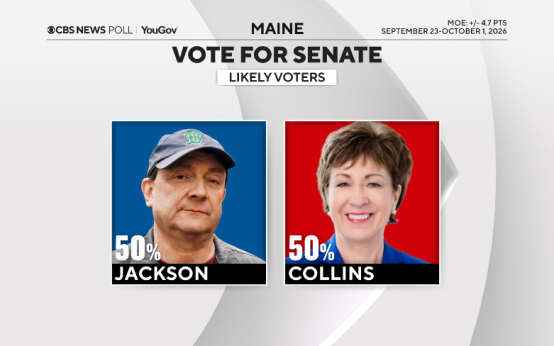 Maine’s Senate Race: A Close Contest