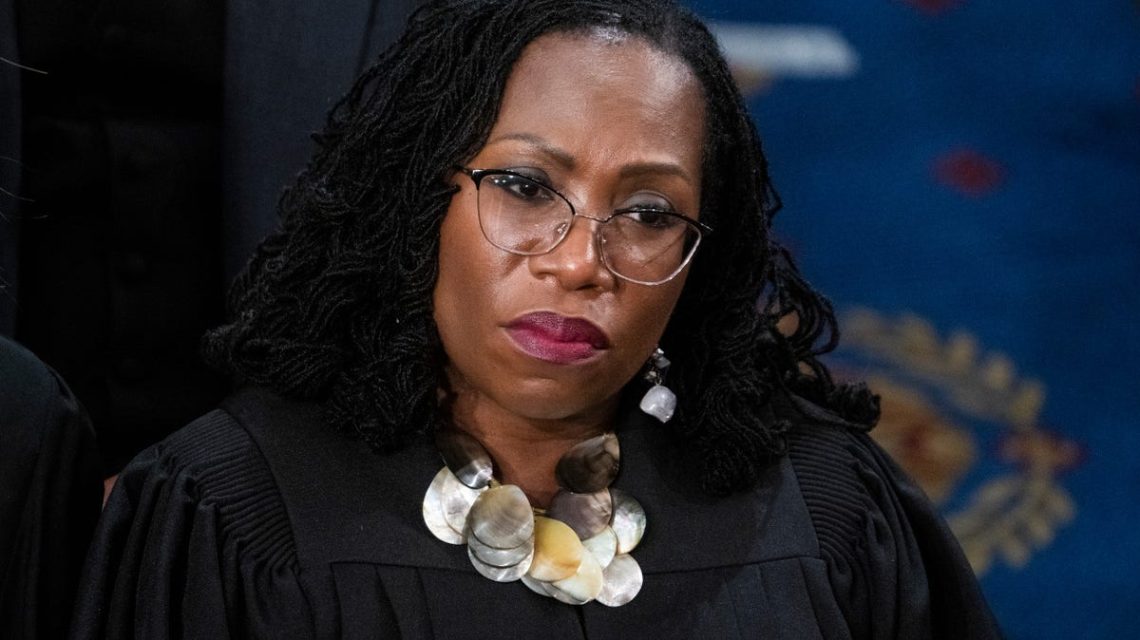
Justice Ketanji Brown Jackson expressed strong opposition to the Supreme Court’s recent decision regarding the Voting Rights Act. The Court used its ruling in a Louisiana gerrymandering case to direct lower courts on interpreting the Act. This decision might undermine prior victories for voting rights advocates.
On Monday, the Supreme Court sent a Mississippi case back to a U.S. District Court for further review. This action follows the ruling in Louisiana v. Callais, which rejected racial gerrymandering based on race. Justice Jackson voiced her dissent, emphasizing that Section 2’s private enforceability was not addressed in Louisiana v. Callais. She questioned the need to overturn the lower court’s decision.
The Supreme Court had previously limited the scope of Section 2, which governs how states draw voting districts impacting minority voters. This ruling affects the case of Louisiana v. Callais. It examined whether Louisiana’s congressional map for 2024, which introduced a second majority-Black district, was an unconstitutional racial gerrymander.
The justices recognized that complying with the Voting Rights Act could be a significant factor in redistricting by states. However, they concluded that Louisiana was not obligated to create a second majority-Black district. They supported a lower court’s decision that had blocked the map’s use.
The Supreme Court’s decision may lead to new legal challenges concerning congressional boundaries. It makes it more challenging for plaintiffs to contest these maps, as proving a racially discriminatory intent is now required.
 Challenges Facing the Supreme Court’s Public Perception
  California Democratic Aide Arrested for Visa Overstay by Federal Authorities
  Experts Doubt Export Ban Will Lower Fuel Prices
  Trump Delivers Warning to Iran, Cuba at UN General Assembly
  Trump Delivers Stern UN Speech on Iran, AI, and Global Security
  Lukashenko and Putin’s Unique Relationship and Belarus’ Strategic Role