
Kansas voters are facing a significant decision: whether to elect state Supreme Court justices or continue with the current system where the governor appoints them. This initiative, driven by conservative dissatisfaction with certain court rulings on abortion, school funding, and the death penalty, aims to reshape the judicial landscape.
Potential Changes and Concerns
If the constitutional amendment passes, supporters hope to secure four conservative, anti-abortion justices on the court by 2033. This change is considered amidst worries that judicial elections in other states have grown more contentious and costly, leading to less impartial courts. For instance, Wisconsin’s Supreme Court race last year exceeded $100 million in spending.
Views and Oppositions
Governor Laura Kelly opposes the measure, citing that gerrymandering and undisclosed financial influences have misaligned the Legislature with the views of Kansas residents. She warns that involving the judicial branch in this dysfunction is concerning.
Republican lawmakers have questioned numerous Kansas court rulings over the years. A district court judge reinstated a grace period for mail ballots this month, previously abolished by GOP lawmakers, leading Kansas Senate President Ty Masterson to call the decision “outrageous,” while urging support for the amendment.
Historical Rulings and Education Funding
Critics also highlight rulings on education funding stretching back to 2004, which have compelled legislatures to increase funding in line with constitutional requirements. Masterson addressed a conservative group, saying electing Supreme Court justices would alleviate pressures on school funding.
Abortion: A Core Issue
The debate intensified following a 2022 public vote supporting the court’s decision on bodily autonomy and abortion access. Efforts to reverse these protections have spurred initiatives to elect justices. Campaign funding is significant, with both sides spending over $12 million. A Nashville nonprofit supports the amendment with $1.7 million, while Kansans for Life spent $87,000 on recent campaign efforts.
Troy Newman, president of Operation Rescue, advocates for voting ‘yes’ to bring an end to abortion rights. In contrast, Planned Parenthood affiliates have contributed $1.6 million to oppose the amendment. Jamie Swan, engaged in door-to-door campaigns, views the proposal as a power scheme.
Electoral and Global Perspectives
The proposal’s proponents reject the notion that electing justices will allow wealthy donors to control the court. Elizabeth Patton from Americans for Prosperity argues that democracy, despite imperfections, remains the best system.
Across the U.S, twenty-two states elect Supreme Court judges, with governors appointing them in twenty-six. Kansas previously elected justices until a 1958 amendment shifted appointments to a nominating commission. Legislative involvement is absent in this process, though voters decide every six years via yes-or-no ballots if justices remain.
Conservative voices point out that no justice has been removed this way, implying a lack of accountability. Governor Kelly’s appointments have included justices who have contested long-standing abortion laws. State Senator Mike Thompson sees the current system as lacking effective opposition to incumbent judicial decisions.
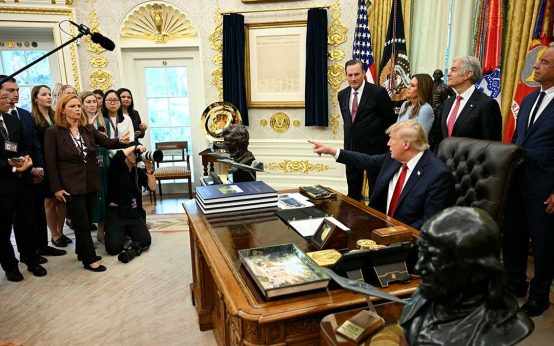 Legal Battle Over Media Ban at White House
 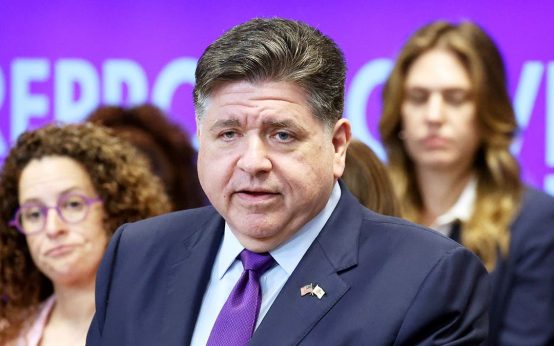 Governor Pritzker Addresses Hasan Piker Controversy
 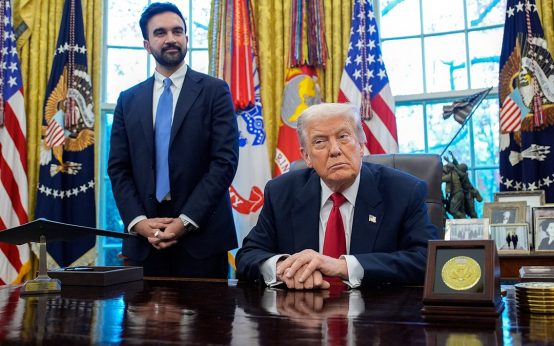 Trump and NYC Mayor Mamdani: Political Divides and Collaborative Efforts
  Rep. Jared Golden Endorses Mike Lawler for Reelection
  Seattle Protects Nonmonogamous Relationships from Discrimination
  Democratic Lawmakers Criticize Trump’s $5,000 Payout Promise