Asian markets had a varied performance on Monday. In Japan and South Korea, benchmarks fell due to the selling of artificial intelligence-related shares. However, this was balanced by gains in other stocks.
U.S. futures moved higher and oil prices saw an increase. They remained close to the levels from before the Iran conflict started in late February. Over the weekend, U.S.-Iran tensions rose. Iran launched drone and missile attacks on Bahrain and Kuwait as a response to new U.S. airstrikes. This added to global economic uncertainties.
Stock Performance
Tokyo’s Nikkei 225 decreased 1% to 68,704.70 after a 4.2% drop on Friday. SoftBank Group fell 5.9% following a 12.5% decline previously. In South Korea, the Kospi dropped 2% to 8,246.50. It was down 5.8% on Friday. Samsung Electronics saw a 6% fall, and SK Hynix, a memory chipmaker, decreased by 4.5%. Meanwhile, Taiwan’s Taiex gained 1.1%, bouncing back from a 3.6% fall on Friday.
Japan’s and South Korea’s markets have experienced an upswing owing to demand for tech components used in AI. Recent concerns over AI valuations have trimmed these gains.
Regional Markets
Hong Kong’s Hang Seng rose 2.1% to 23,153.89. The Shanghai Composite index increased by 0.2% to 4,034.08. Australia’s S&P/ASX 200 saw a rise of 0.4% to 8,798.00. India’s Sensex showed little change.
Wall Street Impact
On Friday, worries over AI affected Wall Street. However, shares ended mixed. The S&P 500 fell less than 0.1% to 7,354.02. The Nasdaq composite, heavy on technology, decreased 0.2% to 25,297.62. The Dow Jones Industrial Average fell 0.1% to 51,876.11. Micron Technology’s shares fell 6.7%, Intel was down 3.4%, Nvidia dropped 1.6%, and AMD fell 2.1%.
Oil and Currency Markets
Early Monday, Brent crude, an international standard, increased 0.7% to $73.27 a barrel. Benchmark U.S. crude gained 0.8% to $70.02 a barrel. Before the conflict started, Brent crude sold for about $72 a barrel.
The U.S. dollar rose to 161.81 Japanese yen from 161.71 yen. The euro remained steady at $1.1386.
ING commodities strategists Warren Patterson and Ewa Manthey noted the risk in the oil market from the U.S.-Iran tensions. They mentioned increased concerns about the safety of ships in the Strait of Hormuz after recent attacks. Optimism about a quick recovery in Persian Gulf supplies might be misguided, highlighting potential risks.
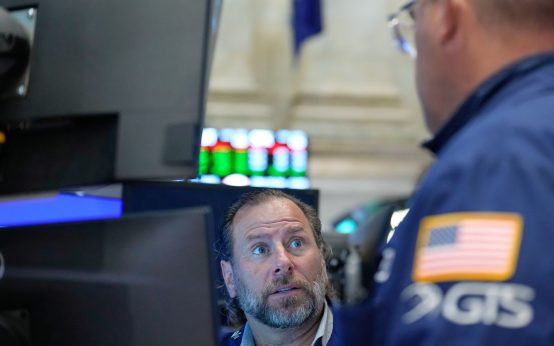 Wall Street Sees Relief Amid Oil Price Drop and Resilient Stocks
  Maximize Savings with New Interest Rate Hikes
  Maximizing Returns with Short-Term CDs
  Debate Over Mortgage Accessibility Continues Amid Lender Standards
  Maximize Savings with the Right Interest-Bearing Account
 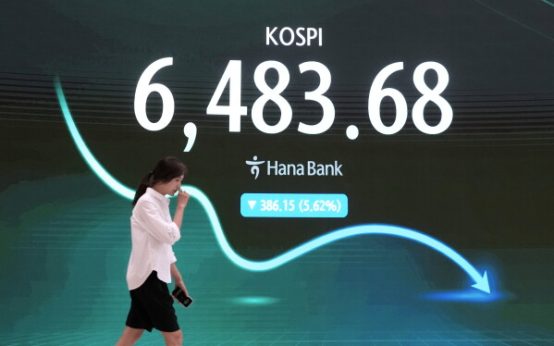 Wall Street Dips as AI Stocks Decline