
The mayor of Nagasaki criticized nuclear weapons on Sunday, calling them the “absolute evil” during a commemoration of the 81st anniversary of the United States’ atomic bombing of the southwestern Japanese city. Shiro Suzuki condemned the growing support for nuclear deterrence and urged the Japanese government to adhere to its post-war non-nuclear principles.
The anniversary coincides with Prime Minister Sanae Takaichi’s review of Japan’s defense policy, which aims to further strengthen the military’s offensive capabilities. Speculation has risen on whether Takaichi, who supports nuclear deterrence, might allow nuclear weapons into the country, contravening the third non-nuclear principle.
Suzuki argued that while some nations believe possessing nuclear weapons deters potential attackers, the bombings of Hiroshima and Nagasaki show humanity’s potential to cross the line. “Nuclear deterrence theory is extremely dangerous and fragile. Nuclear weapons are not a ‘necessary evil,’ but an ‘absolute evil,’ and cannot coexist with humanity,” Suzuki stated. He called on leaders of nuclear-armed and nuclear-dependent nations to recognize that increased reliance on deterrence elevates the risk of nuclear war.
“You must face the reality that the more you depend on nuclear deterrence, the higher the risk of nuclear war grows,” Suzuki warned.
The United States bombed Nagasaki on August 9, 1945. By the end of that year, 70,000 people were killed, following the Hiroshima bombing three days earlier, which resulted in 140,000 deaths. Japan surrendered on August 15, 1945, ending World War II and nearly half a century of aggression in Asia.
Representatives from over 90 countries attended the ceremony at Peace Park on Sunday, observing a minute of silence at 11:02 AM, the time a B-29 dropped a plutonium bomb called “Fat Man.” Suzuki specifically addressed the Japanese government, insisting it uphold Japan’s pacifist Constitution, attend the upcoming review conference for the Treaty on the Prohibition of Nuclear Weapons, and remain committed to the three non-nuclear principles.
Prime Minister Takaichi, present at the ceremony, reiterated her policy of adopting a “realistic and pragmatic” approach to achieving a nuclear-free world. Like in Hiroshima, she remained ambiguous about the three non-nuclear principles, only stating that Japan currently maintains the policy. Takaichi did not reference the Treaty on the Prohibition of Nuclear Weapons, which Japan has not signed due to its reliance on the U.S. nuclear umbrella.
She later told reporters that Japan’s policy is to work within the Non-Proliferation Treaty framework, and that the government will decide how to approach the treaty based on what is most effective for national security and advancing nuclear disarmament.
Survivors have expressed frustration and criticized the Japanese government’s support for nuclear deterrence as insincere. Concerns about possible easing of non-nuclear principles by Takaichi have led to protests from hibakusha survivors in Hiroshima and Nagasaki. The number of survivors has decreased to 91,105, around a quarter of the original total, with an average age over 86 years. Survivors fear that memories will fade, as the youngest were too small to clearly remember the attack.
 Challenges and Future Plans for the Canadian Army
  China’s State Visit and the Implications for Trade and Military Growth
 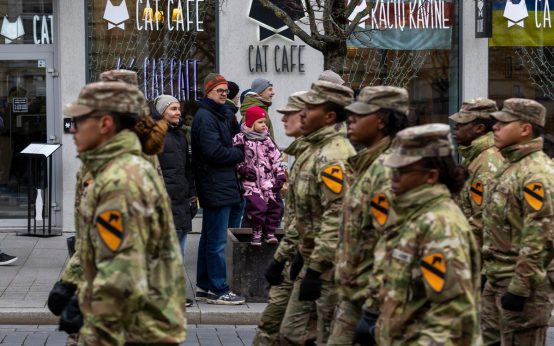 Russia Criticizes U.S. Base and Nuclear Plans in Lithuania
  Trump’s Influence in Latin America: Political Wins and Strategic Moves
  Flávio Bolsonaro’s Strategic Decision in U.S. Visit
  Russian Scientist’s Death Raises Concerns Over Plague Exposure