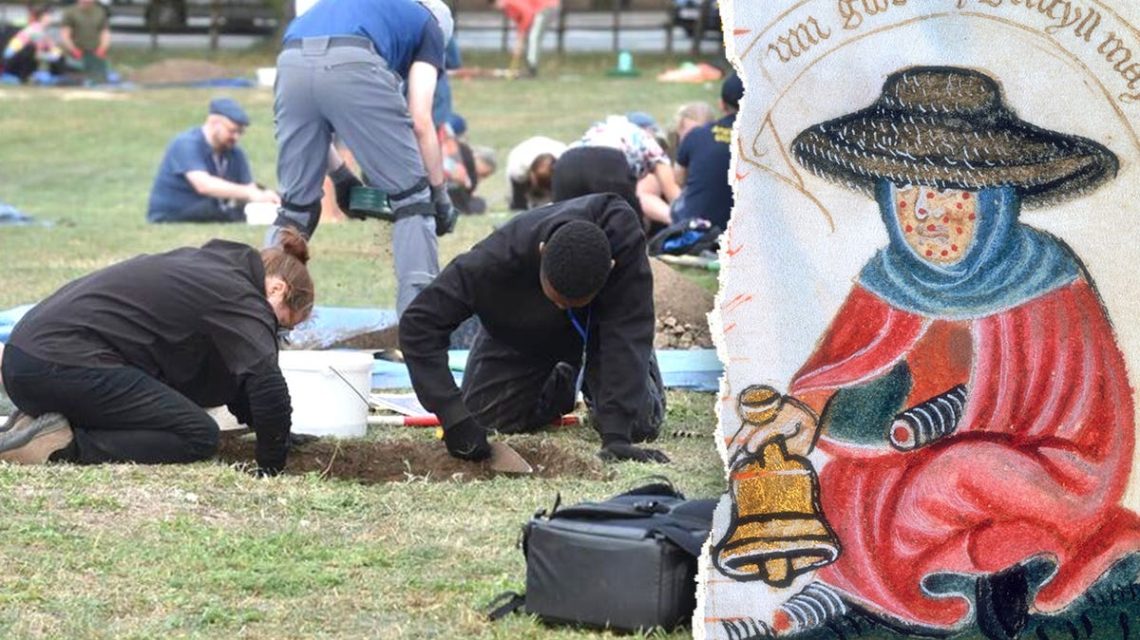
Archaeologists in England have uncovered new findings at one of the country’s earliest medieval leprosy hospitals. This discovery comes years after leprosy significantly impacted communities across Britain. The recent excavation took place on South Common in Lincoln, a historic city approximately 140 miles north of London. This site was once the location of the Hospital of the Holy Innocents, established between the late 11th and early 12th centuries.
Archaeological Excavation Insights
During a three-day excavation led by the British television program “Time Team,” archaeologists discovered remnants of medieval walls and potential living areas. The hospital functioned for nearly 500 years, accommodating up to 20 leprosy patients at a time. New remains of the medieval leprosy hospital have been uncovered, continuing last year’s findings when volunteers unearthed walls, building surfaces, and artifacts associated with the former facility.
This time, researchers found small, square features that might have been individual living quarters or enclosed yards for patients. These structures have not been previously excavated, providing unique insights into the hospital’s history.
A Glimpse into Medieval Life
“You’d need to have resources to get in here,” said Professor Carenza Lewis of the University of Lincoln.
The findings offer a rare view into how medieval leprosy patients might have lived, including financial aspects of receiving care. Historical documents suggest the hospital held up to 20 patients, who may have resided in separate structures with small yards. Professor Lewis explained that these curtilages were likely small buildings with individual yards, reminiscent of private care homes today.
Leprosy, or Hansen’s disease, is a chronic bacterial infection affecting the skin, nerves, and eyes. Though it can cause disfigurement if untreated, it is curable with antibiotics and still exists today.
Continued Research and Discoveries
This excavation is part of a three-year research initiative by Anglia Ruskin University, aiming to understand more about those who lived, worked, and died at the medieval hospital. Tim Taylor, creator of “Time Team,” emphasized the significance of the site in revealing more about Lincoln’s archaeological past. He noted that the site offers an opportunity to uncover a fascinating part of Lincoln’s history.
The findings follow a similar discovery in York, where a sinkhole revealed remains of one of northern England’s largest medieval hospitals. These remains are believed to belong to St. Leonard’s Hospital, dating back to the 12th or 13th century.
 Bob Woodward Reveals Former Confidential Sources in New Memoir
 Reactions to National Anthem Renditions and Controversies
 Public Spaces and Reading Habits
 Missy Mazzoli’s Journey to the Metropolitan Opera with ‘Lincoln in the Bardo’
 A Journey Along Historic Route 66: Capturing the Legacy
 Michael Che’s Controversial Comedy Special Draws Attention