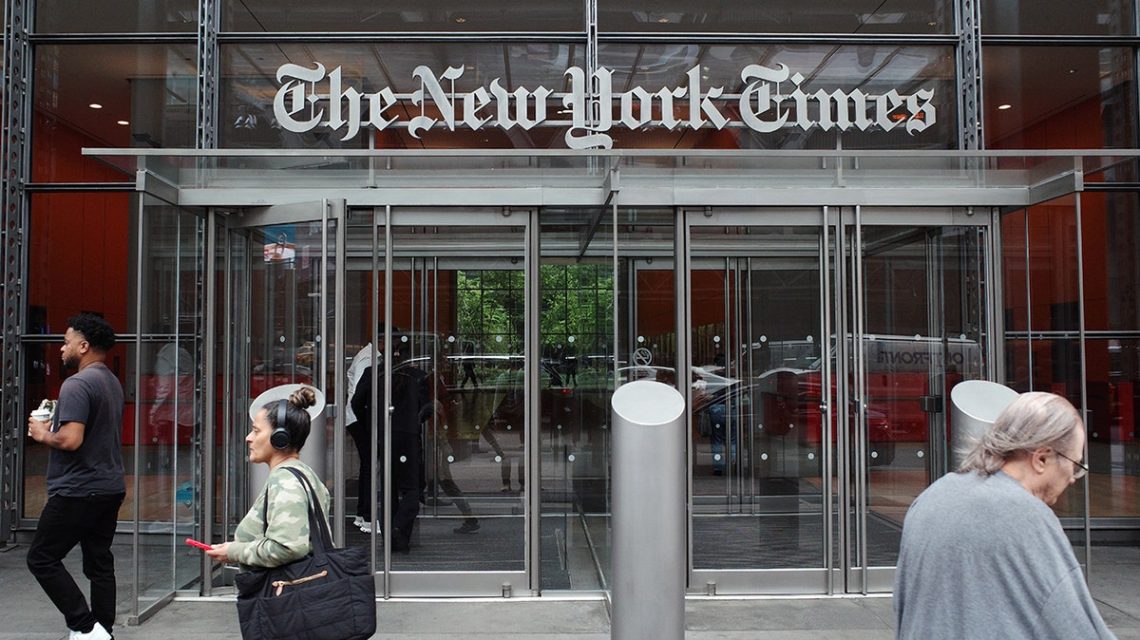
The New York Times has drawn criticism for its portrayal of the American Israel Public Affairs Committee (AIPAC), a U.S.-based organization targeted by anti-Israel supporters. Recently, the House of Representatives voted on a bill proposed by Rep. Thomas Massie, R-Ky., that aimed to cut aid to Israel. Although the bill did not pass, it received significant support from Democratic lawmakers, ending in a 103-98 vote. Massie was the only Republican supporting the measure.
In its coverage of the vote, the Times noted a trend among Democrats to reject donations from AIPAC, which historically contributes to both Democrats and Republicans who support the U.S.-Israel alliance. One such Democrat is Rep. Seth Moulton, D-Mass., who has pledged not to accept AIPAC contributions as he runs for Senate. The Times described AIPAC as a “hard-right pro-Israel lobbying group,” a description that sparked debate.
The New York Times raised eyebrows with its characterization of the pro-Israel lobbying group AIPAC. (Michael M. Santiago/Getty Images)
AIPAC, founded in 1954, states its mission is to foster strong U.S.-Israel relations and supports candidates from both parties who back this alliance. Prominent Democrats often spoke at AIPAC’s annual Policy Conference, which has not convened since the COVID-19 pandemic. Figures such as Senate Minority Leader Chuck Schumer, Sen. Cory Booker, D-N.J., Rep. Hakeem Jeffries, D-N.Y., and then-former Vice President Joe Biden have participated in the past.
On social media, critics questioned the Times’ description of AIPAC. Commentary Magazine editor John Podhoretz and New York Post columnist Karol Markowicz voiced their disagreement, arguing that depicting AIPAC as “hard-right” misrepresents its diverse makeup. California Post opinion editor Joel Pollak and Jewish Insider’s Josh Kraushaar also challenged the Times’ characterization.
AIPAC has become a prominent focus of anti-Israel progressives. Claims that AIPAC unduly influences U.S. politics are prevalent, despite its American roots run by pro-Israel U.S. citizens. Currently, alignment with Israel has dwindled among Democrats, whereas Republicans largely maintain support. This shift is expected to influence the 2028 presidential elections, particularly among the Democratic Party’s progressive base.
The Times and AIPAC declined to comment on the controversy. The evolving political landscape post-October 7 has spotlighted these dynamics. As political lines shift, AIPAC remains a pivotal figure in discussions on U.S.-Israel relations.
 Far-Left Groups Allegedly Organize Protests in Austin
  Michigan Senate Nominee Abdul El-Sayed Criticized for Remarks on Reproductive Rights
  Poll Reveals Voter Preferences Between Socialist Democrats and MAGA Republicans
  Challenges of Electing a Female President: Insights from ‘The View’
  Upcoming Concerns and Influence in Health Politics
  Rep. Donalds Distances Himself from Trump as Florida Governor Race Tightens