The election season often brings intense policy discussions and personal attacks. However, November’s midterms have seen instances criticized as crossing the line. Key battleground races have highlighted vicious personal attacks on candidates’ characters. Below are some of the notable incidents from this election cycle.
Ohio Campaign Ad Controversy
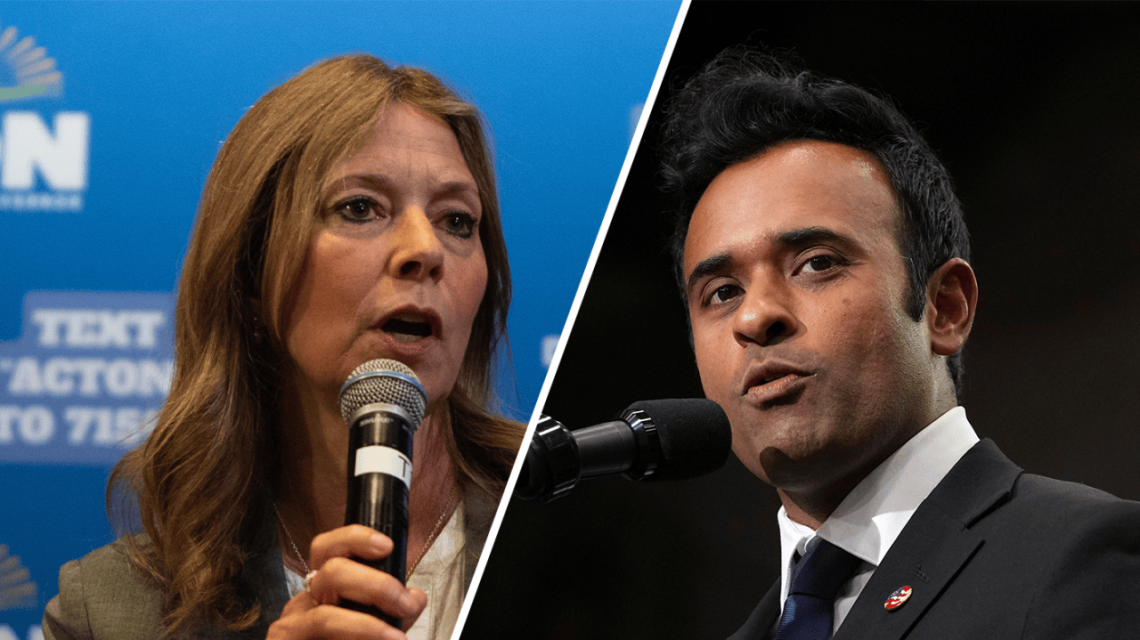
Ohio Republican gubernatorial candidate Vivek Ramaswamy released a controversial ad involving his opponent’s estranged mother. In this ad, Donna Arthur called her daughter, Democratic candidate Amy Acton, a ‘liar’ and urged voters to oppose her. Acton’s brother labeled the ad as a new low. Acton had previously shared her history of abuse by her stepfather during an interview in 2019. Despite criticisms, including from both Democrats and some Republicans, Ramaswamy’s campaign maintained its stance. President Trump supported Ramaswamy, advising him to persist with his campaign strategy.
Bigotry Claims in Georgia
Senator Jon Ossoff of Georgia labeled his Republican opponent, Rep. Mike Collins, a ‘bigot’ due to past social media posts containing antisemitic messages. These accusations arose during a debate in Atlanta. Collins’ connections have been scrutinized for sharing offensive content online. Ossoff accused him of glorifying insensitivity, specifically referencing a video shared by Collins depicting racially insensitive behavior.
Attacks on Masculinity in Texas
In Texas, Democratic Senate nominee James Talarico faced critiques regarding his masculinity. The GOP circulated nicknames mocking his past veganism. Stephen Miller, a former aide to Trump, suggested Talarico was transgender. Talarico turned these attacks around by promoting merchandise branding the label as a fundraising tactic.
Exchange in Maine
Tensions were high during the Maine Senate debate when Democratic candidate Troy Jackson told incumbent GOP Sen. Susan Collins to ‘shut up.’ After being accused by Collins of organizing a protester, Jackson refuted the claim and stood by his comment. The Maine Republican Party condemned his conduct.
Anti-Trans Attacks in South Carolina
President Trump used a derogatory term to describe Annie Andrews, the Democratic candidate in South Carolina’s Senate race. The attack via Truth Social labeled Graham, the Republican incumbent, as favorable, while disparaging Andrews. Despite these comments, Andrews focused on her campaign’s focus on local economic issues.
Accusations in Michigan
Former Rep. Mike Rogers of Michigan accused Democratic Senate candidate Abdul El-Sayed of connections with the Muslim Brotherhood. El-Sayed disavowed these allegations, emphasizing his pride in being American. Rogers faced backlash for implicating possible family ties to terrorism during a debate. El-Sayed challenged him to make his stance clear.
Online Mockery of Michigan Democrat
Rep. Haley Stevens was mocked online for a pep talk she gave before Michigan’s Senate primary. El-Sayed, her opponent, faced sexism accusations for comments allegedly derogatory toward Stevens. Despite the dispute, El-Sayed won the Democratic nomination, and Stevens offered her support.
 Industry Leaders Concerned Over New Chief of Staff Appointment
 Democrats Achieve Historic Midterm Wins in Red States
 Georgia Voters Make Historic Choice with Keisha Lance Bottoms
 Democratic Challenges to Bipartisan Electricity Cost Deal
 La Shawn K. Ford Prevails in Illinois’ 7th Congressional District Race
 Progressive Strategy in New Democratic House Majority