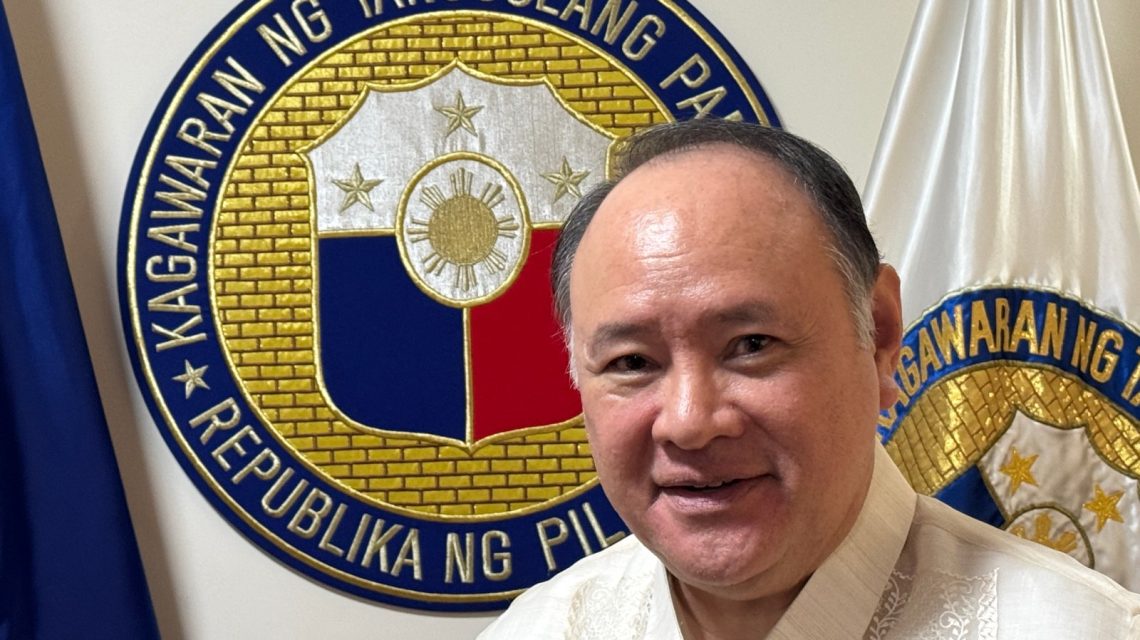
A decade after the Philippines achieved an international legal victory against China regarding its maritime territory, the nation aims to bolster its defenses and alliances against ongoing Chinese expansion. In Manila, the Secretary of National Defense, Gilberto Teodoro, emphasized the Philippines’ commitment to counteract China’s actions in the South China Sea.
Despite the July 12, 2016 ruling that rejected China’s broad claims in the South China Sea, tensions continue. Conflicts have arisen between Chinese forces and those of the U.S., with whom the Philippines shares a treaty. China faces accusations of wanting to occupy and militarize the tiny atolls, sandbanks, and islands in the area.
The Philippines plans to expand its presence, according to Teodoro. “We must resist attempts to occupy our exclusive economic zone,” he stated at Camp General Emilio Aguinaldo. He added that the goal is to prevent further Chinese advances in the South China Sea.
Teodoro also highlighted efforts to create a coalition to enforce the legal ruling. This involves building a credible deterrent posture, similar to strategies employed by other countries, including Japan.
“We are building the coalition to enforce the ruling,” Teodoro explained, emphasizing the coalition’s objective to stop China’s expansion not only locally but throughout the region.
China, however, denies any aggression and accuses the Philippines of provocations. The Chinese embassy advocates managing differences through dialogue, not “sensationalism.” Despite China’s rejection of the 2016 ruling under the United Nations Convention on the Law of the Sea (UNCLOS), there have been no additional territorial seizures since.
South China Sea Dispute
Scarborough Shoal, approximately 140 miles from the Philippines and 540 miles from China, remains a focal point. China has maintained control since 2012, but recently removed a temporary structure after pressure from the Philippines, claiming it served research purposes.
Teodoro is under Chinese sanctions, banned from visiting China. He expressed indifference, focusing on resolving issues arising from China’s presence.
The defense relationship with the United States remains strong, despite any perceptions of fluctuating U.S. commitment under former President Donald Trump.
“I’m very confident,” Teodoro said, citing large military exercises and extensive defense cooperation.
The Philippines aims to strengthen ties with “convergence partners” such as Japan, Canada, Australia, and New Zealand to support collective security interests.
Global Supply Chains and Defense Spending
Teodoro stressed the importance of international partnerships, including the Pax Silica initiative, which aims to secure global technology supply chains. The Philippines views this cooperation as critical, not confrontational.
The nation intends to increase its defense budget from 1.6 to at least 2 percent of GDP. This funding is crucial given the Philippine archipelago comprises 7,600 islands with a military force of 160,000. Modernization efforts, including the acquisition of drones, are a priority.
Complicating the situation is the Philippines’ reliance on China for essential goods and elements in its defense supply chains. Teodoro called for a gradual reduction of this dependency, while addressing China’s destabilizing actions through various means.
In all efforts, he emphasized patience and resilience. “We have to play the Chinese game, which is the long game,” Teodoro said, referencing the strategy advised by Deng Xiaoping.
 Challenges and Future Plans for the Canadian Army
  China’s State Visit and the Implications for Trade and Military Growth
  Russia Criticizes U.S. Base and Nuclear Plans in Lithuania
  Trump’s Influence in Latin America: Political Wins and Strategic Moves
  Flávio Bolsonaro’s Strategic Decision in U.S. Visit
  Russian Scientist’s Death Raises Concerns Over Plague Exposure