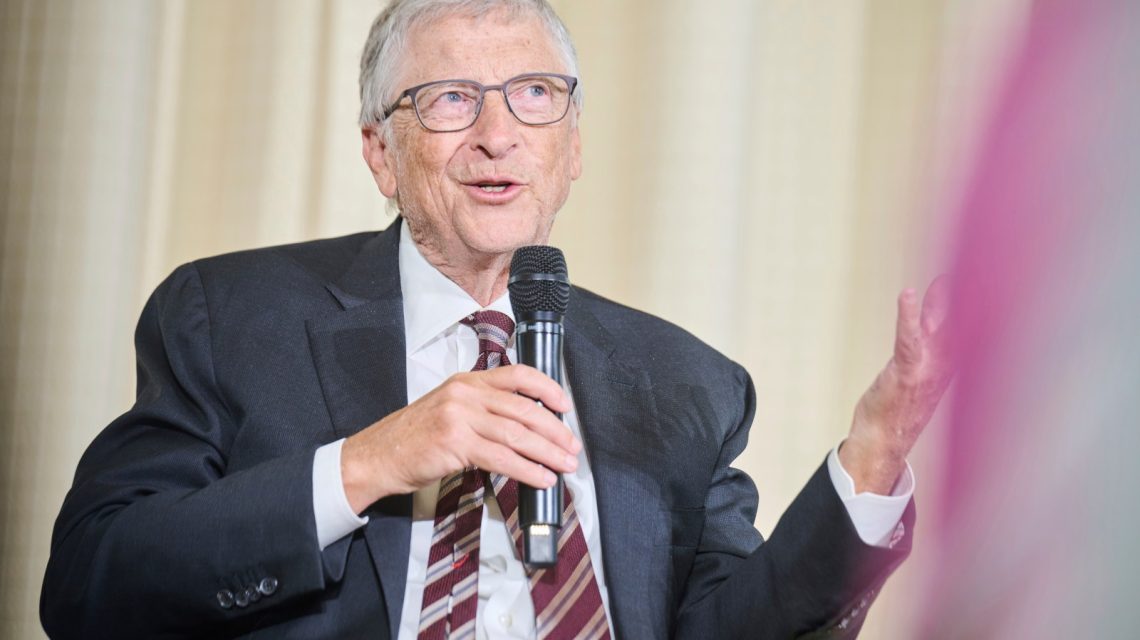
Microsoft co-founder Bill Gates is alerting the public about the swift progress of artificial intelligence (AI) and the need for substantial safeguards. He spoke with CNN’s Anderson Cooper, emphasizing the importance of public involvement in AI’s future development. Gates highlighted both the potential benefits and significant risks posed by AI, urging for more openness in addressing these issues.
Gates expressed worries about risks such as cyberattacks, bioterrorism, and psychological and social impacts. He found the absence of strong safeguards surprising. Gates dismissed the idea that limiting data centers would impede AI development, noting that companies could establish them elsewhere. He stressed the necessity of including diverse perspectives in discussions about AI and its impacts.
Gates’ statements followed a lengthy essay he published, claiming that the world is entering a tumultuous period due to AI’s integration into various fields like law, customer service, medicine, software, and manufacturing. He stopped short of advocating for a complete halt to AI development but expressed support for a global agreement to manage its advancement, although he acknowledged that economic and geopolitical competitions might render such agreements difficult. His proposals included taxing AI similarly to payroll taxes and reserving specific jobs for humans.
This address marks a shift in Gates’ focus. While he has praised AI’s ability to enhance healthcare, scientific research, and productivity, Gates now warns of serious costs to accompany its benefits if governments do not establish protective measures. He warned leaders of potential consequences such as rising unemployment, social disruptions, and declining public trust.
Gates Outlines Three AI Risks
Gates detailed three significant risks posed by AI. First, job displacement across various industries, notably affecting entry- and mid-level positions and young professionals. He claimed that AI’s influence on the job market is unprecedented in human history.
Secondly, Gates warned of AI enabling greater harm through cyberattacks, fraud, disinformation, deepfakes, and bioterrorism. Lastly, he expressed concern about AI potentially stunting children’s development and replacing human relationships through AI companions.
After Gates’ comments, Congressman Greg Casar of Texas highlighted his legislative efforts to introduce an AI token tax aimed at preventing massive unemployment.
Proposed Actions to Address AI Concerns
Gates urges governments to act promptly to manage AI’s rapid growth. He calls for new institutions to oversee its risks, with particular attention to AI systems that threaten national security, cybersecurity, or public safety. To combat AI-driven job losses, Gates proposes taxing AI tokens and robots. This revenue could support retraining workers and bolstering social safety nets. Also, certain roles could be reserved for human workers, especially where human judgment and interaction are crucial.
Oren Etzioni, a computer science professor at the University of Washington, commended Gates’ analysis but disagreed with some solutions. While Etzioni supported taxing robots replacing workers, he questioned taxing AI tokens, suggesting it measures usage, not job displacement. He cautioned that slowing U.S. AI development through taxes might disadvantage the nation. Instead of new agencies, current agencies could establish fitting policies to address AI’s risks if tackled urgently.
Gates compared AI’s impact to nuclear technology, stating that it has both negative and positive aspects coexisting on a scale much larger than nuclear energy or weapons. He believes shaping AI positively remains within reach.
 U.S. Army Prepares for New Challenges Amid Emerging Threats
  Congressional Investments in AI Amid Regulatory Inaction
  Amazon Unveils New AI Gadgets: Bee Frontier and Bee Eclipse
  Confusion Surrounds Starlink Restrictions in Ukraine
  A New Approach to Artificial Intelligence Regulation
  AI Errors: Responsibility and Implications