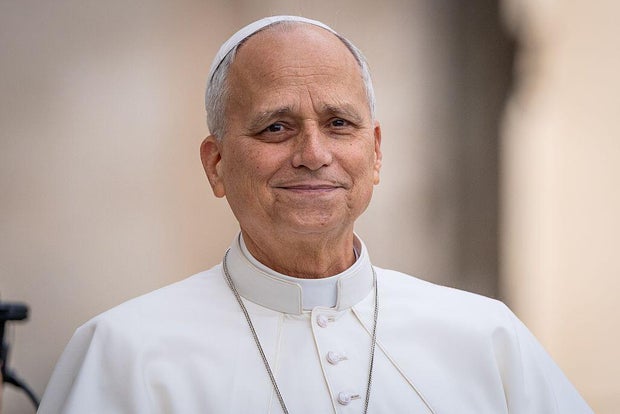
Pope Leo XIV made history as the first pope to vote in a U.S. election. The Vatican confirmed that the American-born pontiff submitted his mail-in ballot for the upcoming midterm elections from his native Chicago.
The pope, previously known as Cardinal Robert Prevost, emphasized his belief in civic participation. The Vatican press office stated that he exercised his voting rights as a U.S. citizen whenever eligible. Additionally, during his residence in Peru, he participated in elections there, underscoring the importance of democratic involvement.
Leo XIV’s vote was initially reported by the Chicago Sun-Times. The Will County clerk’s office confirmed the pope’s mail-in ballot request from his New Lenox address on October 3.
Currently recovering from lung cancer surgery, Pope Leo XIV plans a trip to South America next month. His brother, John Prevost, was recently in Rome with parishioners from St. Jude’s, a parish in New Lenox where Leo previously spoke in 2024 while still a cardinal.
During a recent general audience at the Vatican, Leo encouraged followers to engage actively in societal issues, urging them to challenge indifference. He highlighted the role of faith in addressing injustice and discrimination.
According to the Illinois State Board of Elections, Leo XIV has voted in five primary elections since 2000, alternating between Democratic and Republican ballots. His voting records show participation in every general election since 2000 except for 2020 and 2022.
While living in Democratic-heavy Cook County, the pope requested Democratic ballots in 2008 and 2010. After relocating to more conservative Will County, he requested Republican ballots in subsequent primaries. General election ballots do not require party preference.
 Public Transit Tips and Political Update
 The Fading Illusions of Campaign Season
 Gov. Hochul Plans to Address Wage Freeze Amid Job Losses in New York
 The Rise of Betting Markets in Politics
 North Korean Unit Linked to $6 Billion Binance Hack
 Ossoff and Warnock: The Future of Democratic Politics