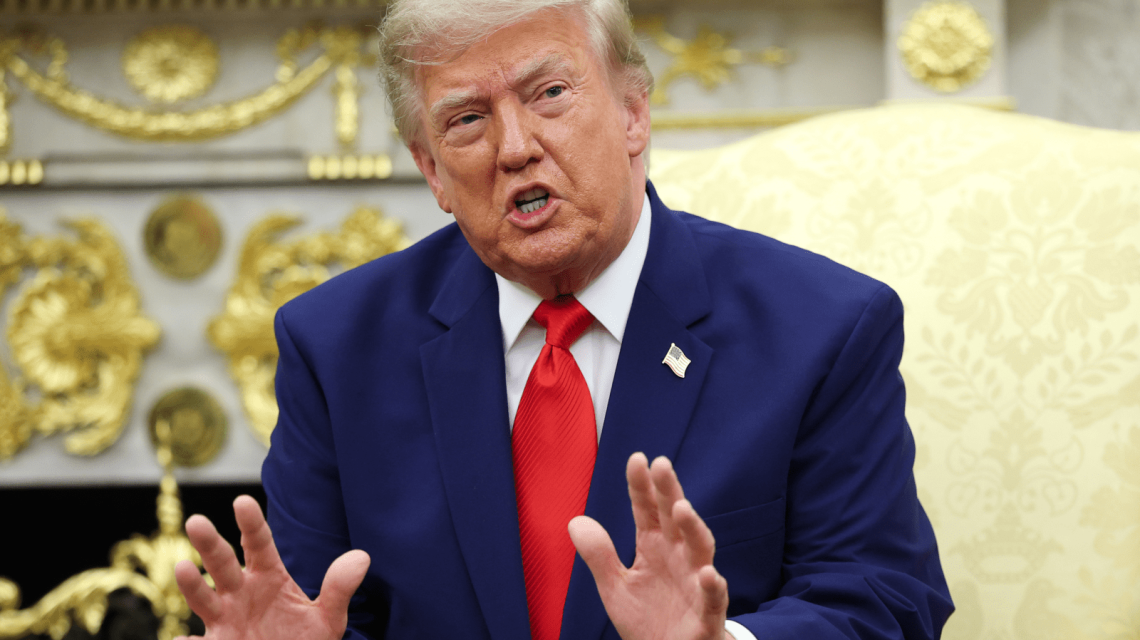
With three months remaining before the November 3 midterm elections, polling data shows President Donald Trump facing a difficult political environment. Compared to when he returned to office, Trump now confronts tougher conditions.
Polling Data and Approval Ratings
Data from the Civiqs rolling online tracking poll, which includes 120,580 responses from registered voters, indicates Trump’s approval is underwater in every swing state. This suggests that even minor shifts in voter sentiment could determine control of Congress in November.
A Newsweek analysis compares Trump’s approval rating on July 30, 2026, to January 20, 2025, his first day of his second term. Net approval is calculated as approval minus disapproval. The White House cites Trump’s 2024 election victory as evidence of public support.
National and State-level Trends
Nationally, Trump’s approval rating stands at 36 percent, with 59 percent disapproving, resulting in a net approval of -23. State-by-state, Trump performs best in Republican areas but remains underwater in Democratic strongholds and battleground states key to the midterms.
Since January 2025, several states have shifted from positive to negative net approval. States traditionally leaning Republican have seen major declines in support. younger voters, independents, and postgraduates are among Trump’s weakest demographic groups.
Demographic Insights
Brett Loyd, cofounder of the Independent Center, notes Trump’s standing could challenge Republican candidates. While dissatisfaction with Trump does not guarantee Democratic support, it signifies potential difficulties for the GOP.
Compared to Joe Biden ahead of the 2022 midterms, Trump’s numbers are slightly weaker. While Biden had a net approval rating of -19, Trump’s current net rating is -23, a decline from his performance before the 2018 midterms (-10).
Demographics Breakdown
Among voters aged 18 to 34, only 22 percent approve of Trump’s performance, with 72 percent disapproving. Approval stands at 29 percent among those aged 35 to 49 with 63 percent disapproving. Independents show 28 percent approval and 64 percent disapproval. Women disapprove by a margin of 65-to-30.
Postgraduates give Trump a 24 percent approval rating, while non-college graduates show a narrower split of 39 percent approval to 55 percent disapproval.
Regional Variations
Trump’s strongest numbers are in Wyoming, North Dakota, and West Virginia. However, these states have also witnessed significant support erosion since his second term began.
For example, Kentucky saw a 28-point decline. These Republican states are showing voter frustration due to political conflict rather than a shift towards liberalism.
Swing States
In battleground states like Arizona, Georgia, Nevada, and Florida, Trump is underwater. These areas were previously more favorable when he took office, showing a consistent trend of declining support.
Persistent Challenges in Blue States
Democratic-leaning states like Hawaii and Vermont continue to show low approval ratings for Trump, indicating entrenched opposition.
Middle Ground States
Indiana and Nebraska are among states that hover near the line between positive and negative approval, indicating that state-level margins have become tighter.
White House Perspective
White House spokesman Davis Ingle emphasizes progress on jobs, inflation, and housing affordability, claiming that President Trump has achieved more for the American people than any other president, with the administration viewing this as merely the beginning.
Future Implications
Loyd advises interpreting approval ratings alongside other political indicators, suggesting similarities to the 2018 midterms when Republicans lost the House, albeit with differences due to post-2020 gerrymandering that offer Republicans some insulation.
 Concerns in U.S.-China Relations Ahead of Summit
  German Chancellor Friedrich Merz Vows to Continue Amid Election Losses
  Nikole Hannah-Jones Reflects on School Choice and Its Impact
  Republican Senator Criticizes Trump’s $5,000 Check Proposal
  Trump’s Approach to Iran at the United Nations
  Trump’s Triumphal Arch Controversy