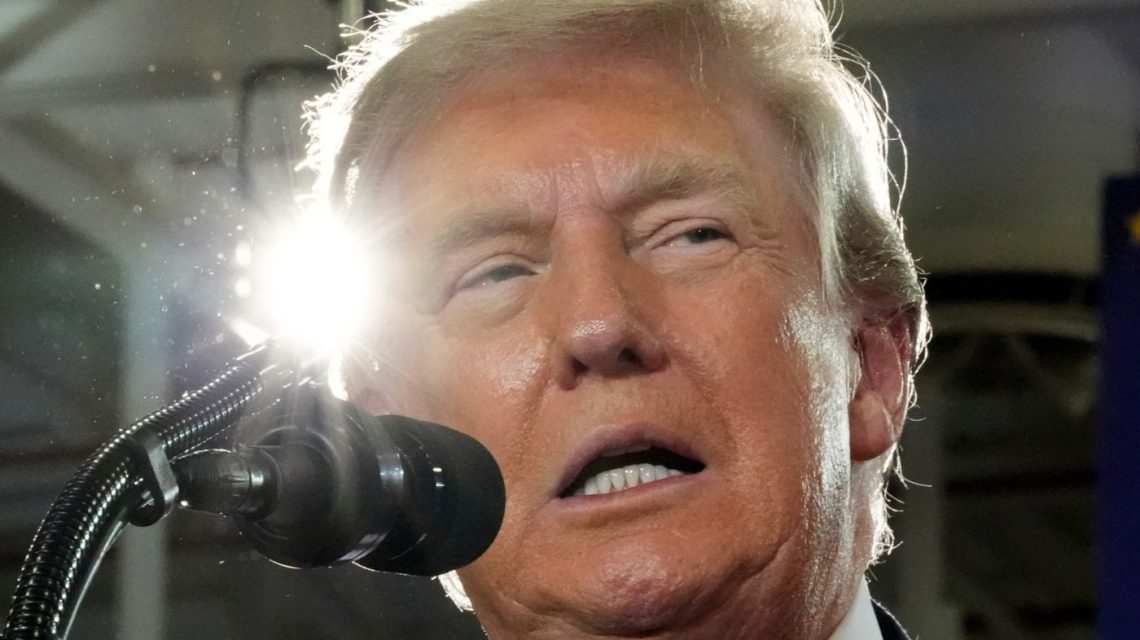
President Donald Trump appeared at General Motors’ proving ground in Milford, Michigan, on July 27, 2026. Despite declaring Detroit’s auto industry as ‘thriving,’ recent job cuts and losses paint a different picture.
Trump’s speech congratulated Republicans in Washington for the auto industry’s supposed success. However, tariffs imposed by the administration resulted in over 60,000 job cuts since 2025 and more than 3,300 layoffs at General Motors last year alone. Ford executives previously sought relief due to these tariffs’ impact on the F-150 sales, a long-standing best-seller.
After rolling back tax credits for electric vehicles, Stellantis reported a loss of $26.3 billion. This was its first significant financial setback in several years. Many in the industry question Trump’s understanding of ‘thriving,’ especially those affected by these tariffs.
Impact on Detroit’s Auto Industry
Trump told GM employees he had supported them more than past generations. However, a 3.5% decline in manufacturing jobs suggests otherwise. Employees experience firsthand the effects of tariffs deemed illegal by the Supreme Court this summer.
Trump remains attached to this policy, leaving voters to reflect on its broader economic impact. Public disapproval of these tariffs has increased steadily, with many expressing strong opposition.
Political Ramifications for Republicans
For Republicans, Trump’s bold defense of tariffs poses political challenges. Marc Short, a strategist and former Vice President Pence’s chief of staff, noted the adverse reflection of these trade policies on the party.
Navigator Research data shows rising disapproval among non-MAGA Republican and independent voters, with many responding to Democratic messaging on increased consumer costs. A majority find Democratic arguments about affordability persuasive.
Ongoing Controversy
The decision to highlight tariffs in Detroit raises questions about the administration’s strategy. Trump’s actions are perceived as a significant political misstep. Critics argue that such policies reveal a disconnect with workers directly affected by the economic downturn.
Democrats aim to highlight these issues in upcoming elections, hoping for a shift in public sentiment. The November elections offer an opportunity for voters to express their stance on these policies.
This analysis reflects Max Burns’ expert insight, who leads Third Degree Strategies.
 GOP Candidates Call to End Iran War Amid Rising Fuel Costs
  Trump Administration Seeks to Influence NIH Grantmaking
  Protests in Austin: Analyzing the Coordination Behind Anti-ICE Demonstrations
  Controversy Surrounds Inglewood Mayor Amid Allegations
  White House Launches Trump TV Amidst Press Dispute
  Media Organizations Sue Trump Administration Over Press Access