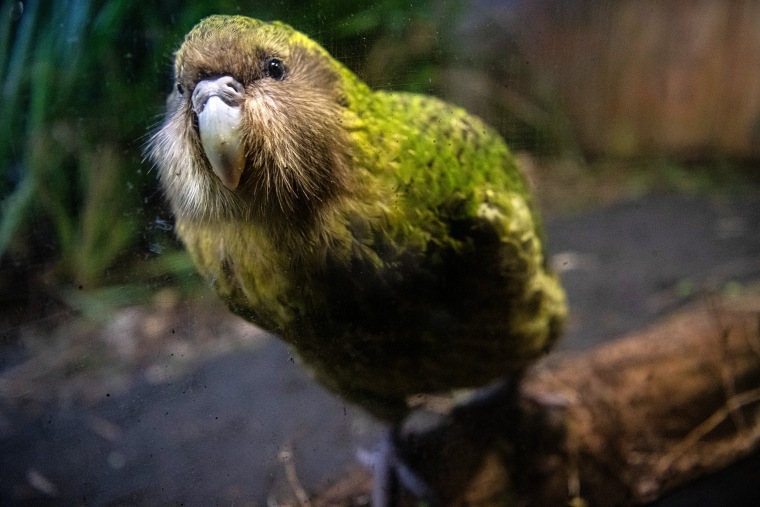
Officials in New Zealand are celebrating a significant increase in the population of one of the world’s most endangered parrot species, the kakapo. A record 90 chicks have been added, raising the total number of these unique parrots to 325, as noted by the New Zealand Conservation Department in a recent announcement.
The kakapo chicks, all of which were bred this year, have reached an age of 150 days, marking their independence. This achievement is crucial because each kakapo is vital to the survival of the species. The kakapo, a flightless bird native to New Zealand, is known for its green plumage, large gray beaks, and unique, waddling walk, which makes them vulnerable to predators.
A kakapo male can weigh up to 9 pounds, making them the heaviest parrot species. They are also among the longest-living birds, with lifespans reaching up to 90 years. Despite these impressive traits, kakapos remain critically endangered, according to conservation experts.
Deidre Vercoe, who manages the Department’s kakapo recovery operations, said the birth of 90 chicks in a single season is a pivotal moment. “In the program’s early years, it took 16 years to achieve that number. This increase is noteworthy, especially with a four-year gap between breeding seasons,” Vercoe stated. She also highlighted the significance of surpassing 300 birds, a milestone last achieved 75 years ago.
The Kakapo Recovery Programme, which began in 1995, started with merely 51 birds, including only 20 females. Conservation efforts have faced challenges, such as low genetic diversity, infertility, and hatching issues. Each kakapo is equipped with a radio transmitter to monitor movement and activity.
Kakapo numbers declined rapidly after humans arrived in New Zealand, largely due to hunting, predators, and habitat destruction. Initially losing the ability to fly because of the lack of ground predators, the introduction of animals like cats and rats devastated their population. Today, kakapos are primarily found on small, predator-free islands.
The birds’ diet includes the berries from Rimu trees, which only fruit every two to four years, affecting kakapo mating and population growth. Tāne Davis from the recovery group emphasized that the program is assessing methods to reduce intensive management and promote natural breeding.
For many of this year’s chicks, the next milestone will be receiving names on their hatch day anniversaries next year. Some 2026 chicks will remain unnamed to symbolize the shift towards a more natural recovery process. Vercoe predicts that the gap before the next breeding season may be only two years, with the team already planning for the future.