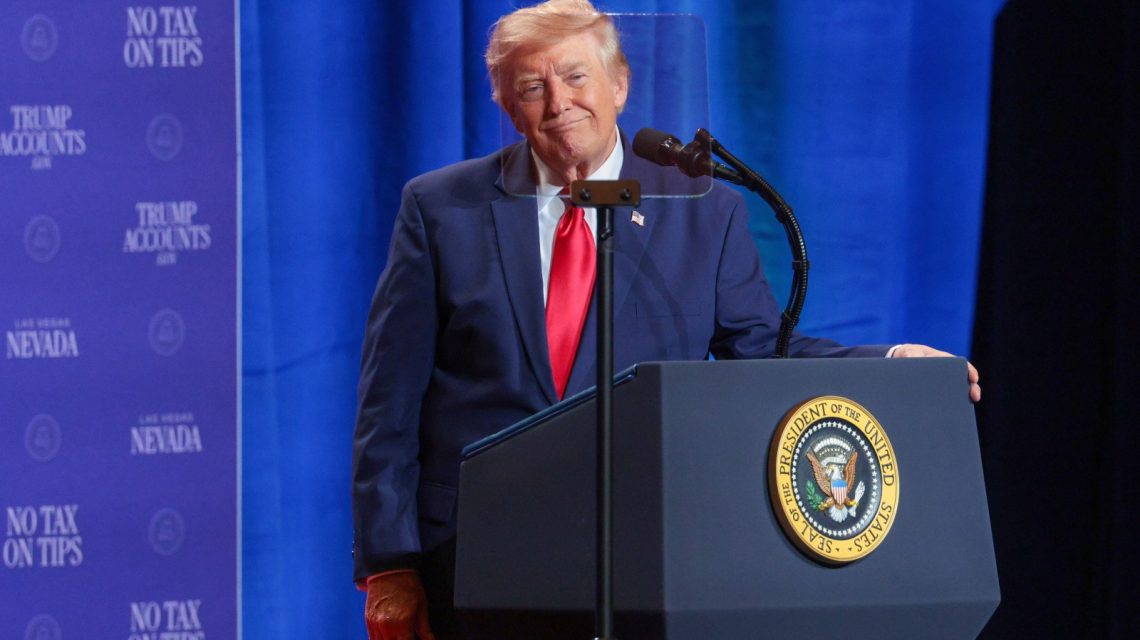
Trump’s Approval Declines Among Republicans
President Donald Trump’s net approval rating among Republicans has dropped by 8 percentage points over the past month. The Financial Times/Focaldata poll highlights growing dissatisfaction with the economy and increasing living costs. The survey, conducted with 1,913 registered voters from August 7-10, shows 55 percent disapprove of Trump’s presidential performance. His net approval rating, indicating the gap between approval and disapproval among Republicans, decreased by 8 percentage points from the previous month.
More than half of registered voters feel financially worse since Trump’s return to the White House in January 2025. Specifically, 53 percent of voters are in a worse financial state, including 57 percent of independents and nearly 25 percent of Republicans. The poll’s margin of error stands at plus or minus 2.9 percentage points.
Economic Concerns Intensify
Economic issues remain a significant concern as the midterm elections approach. Republicans face challenges as dissatisfaction grows over inflation, rising household costs, and the broader economic situation. A July report from Pew Research Center found increasing unease among Republican voters, with 28 percent believing Trump’s policies worsened economic conditions, up from 18 percent in January. Additionally, 19 percent anticipate the economy deteriorating over the next year. Despite these concerns, 69 percent still approve of Trump’s job performance.
Voter Frustration in Polls
The Financial Times/Focaldata poll reinforces concerns about Trump’s handling of economic issues. Among registered voters, 64 percent disapprove of his management of inflation and living costs, with almost seven in ten independents and about a third of Republicans echoing this sentiment. Nearly two-thirds believe the economy is headed in the wrong direction.
Republican Critique of Trump’s Messaging
Representative Don Bacon, a Nebraska Republican, criticized Trump’s communication regarding economic struggles on CBS News’ Face the Nation. He stated that Trump fails to convey understanding of voters’ financial pain, highlighting continued affordability issues. Bacon also criticized tariff policies, blaming them for contributing to higher consumer prices. Trump’s request for voters to accept higher fuel costs due to the Iran conflict adds to the discourse.
White House Defense of Economic Record
White House spokesman Kush Desai responded to the survey’s findings. He emphasized the administration’s efforts in reducing drug prices, reshoring jobs, and cutting taxes. Desai argued that many economic challenges stem from the previous administration and highlighted achievements including lowering consumer prices.
Midterm Election Challenges
As midterms approach, the latest survey indicates Democrats have a 44 percent to 39 percent lead over Republicans among voters. Recent data shows inflation at 3.4 percent in July, alongside a decline in consumer sentiment and real wages. With economic issues at the forefront, Republicans face the challenge of defending Trump’s record while addressing ongoing voter concerns.
 Former ABC News Correspondent Admits Network’s Liberal Bias
  Calls for Senator Mitch McConnell to Update Public on Health
  Diplomatic Efforts to Resolve Gaza Ceasefire Stalemate
  Minneapolis Mayor Draws Online Mockery for Dance
  DOJ Investigates Mamdani Amid Rising Antisemitism Concerns
  Trump’s East Wing Addition: From VIP Hosting to National Security