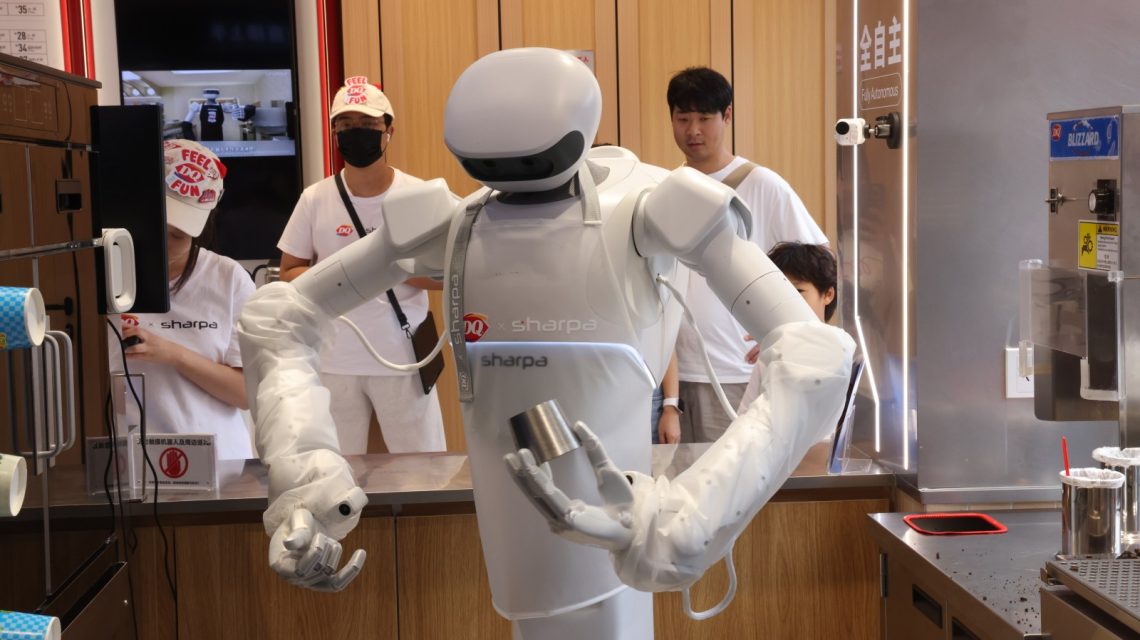
For years, technology transformed the restaurant experience with the introduction of touchscreens and automated systems. You would enter, touch, customize, pay, and wait for your order, with counters resembling airport gates rather than customer service points. However, a shift is emerging. Major restaurant chains in America are embracing the revived importance of personal interaction.
McDonald’s, Burger King, Wendy’s, and Starbucks are focusing on hospitality and customer experience. After years of steering ordering towards kiosks, apps, and automation, Burger King, for instance, found some drive-through customers preferred leaving rather than conversing with bots. It’s not a backlash against technology; AI may actually be heightening the value of human service.
The Counter Becomes Premium Again
McDonald’s provides a clear example. The company announced the McDonald’s > NEXT strategy, deploying its AI-enabled ArchIQ system for efficiency. Alongside, it introduced the “People > NEXT” initiative to empower workers with enhanced hospitality skills. The Make It Golden program aims to elevate food and hospitality standards.
Major restaurant chains are understanding the distinction between restaurant tasks and hospitality. AI can efficiently handle predictable tasks while hospitality begins once unpredictability surfaces.
Charan Nukathoti, creator of the AI-powered Savor Scout service, noticed this boundary. His product scans menus and reviews to match diner preferences but redirects users to human service when allergies are involved.
Nukathoti highlights AI’s limitation: it can’t gauge the day-to-day realities in a restaurant, like shared fryers or staff changes. This realization led chains to focus again on human interaction for the unpredictable elements.
AI’s strength lies in processing vast amounts of information, yet restaurants require immediate responses to dynamic, real-world situations like ingredient changes or customer complaints.
The Best AI May Be the AI You Never Meet
Starbucks follows a similar path, investing in AI alongside initiatives to amplify human interactions. The Green Apron Service emphasizes personalized customer service, while AI, such as Green Dot Assist, supports employees behind the scenes by organizing orders and handling inquiries.
Starbucks emphasizes AI’s role as discreet, enhancing the human connection. Positive sales growth supports the effectiveness of this dual strategy, where technology quietly aids yet does not overshadow personal interaction.
Dan Jin, from the Rochester Institute of Technology, researches the division between human and tech roles in hospitality. Successful automation hinges on distinguishing predictable tasks from those requiring human empathy.
Routine tasks like order forecasting are apt for automation, whereas issues like allergies require human understanding and intervention. Customers expect genuine solutions beyond speedy service.
Nobody Actually Wants to Abolish the Kiosk
While hospitality holds renewed importance, automation remains a valued asset. Kiosks streamline browsing without delaying lines and apps remember orders. AI reduces chaos and enhances efficiency, such as McDonald’s goal of boosting restaurant-level efficiency.
Burger King doesn’t intend to eliminate AI entirely. Trials include voice AI in drive-throughs, adjusting to ensure customers have access to human interaction if preferred.
Jin clarifies the divide: automation isn’t an either-or stance of technology acceptance or rejection. While customers might use apps for coffee orders, they desire personal acknowledgment for special occasions or concerns.
Automation becomes intrusive if it obstructs guests’ goals, leading to them managing systems rather than enjoying service.
Hospitality After the Machine
The future of restaurants involves more automation meshed with vital human interaction. AI predicts inventory, streamlines orders, resolves mundane tasks, and helps avoid bottlenecks, while humans ensure quality service through judgment and understanding.
Nukathoti mentions that synthesizing information is AI’s forte, but verifying real-world details is best handled by humans. In many cases, AI’s primary benefit may lie in connecting you to the right person promptly.
Technology may lead us to a traditional service model refreshed by the latest advancements.
 Living with Alzheimer’s: A Young Man’s Journey
  Sunday Screencaps: Transitioning from Summer to Fall and Showcasing Reader Contributions
  Finding the Perfect Sports Bar Experience
  Tomato Paste May Enhance Cognitive Function, Spanish Study Indicates
  PepsiCo CEO Critiques U.S. Snack Volume and Market Changes
  Pet Camp at Humane Indiana Educates Kids on Animal Care