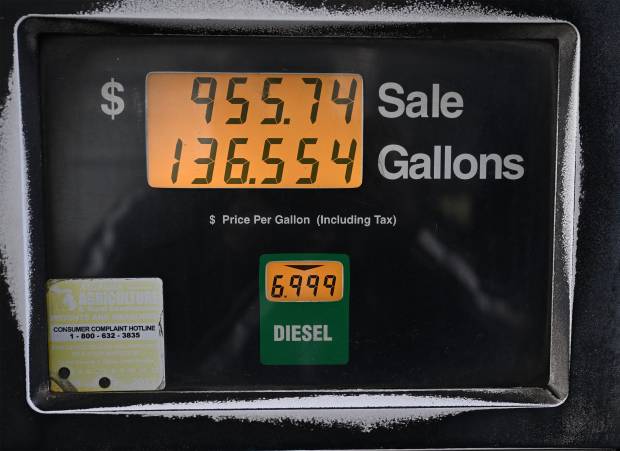
In Breezewood, Pennsylvania, the TravelCenters of America truck stop is a key rest point for truck drivers. It offers various food items like hot dogs and cheese curls. However, a pressing concern here has been the rising cost of diesel fuel. Recently, prices soared to $6.79 a gallon, marking an increase of 16 cents in two weeks. This rise impacts drivers who frequent the nine diesel fueling lanes at the stop.
The trucking industry plays a crucial role in facilitating the consumer economy. Nearly 1 million trucks exit the Pennsylvania Turnpike annually, transporting goods worth approximately $818.6 billion. Nevertheless, not all drivers are equally affected by fuel price hikes. Fleet carriers often benefit from negotiated fuel deals. In contrast, owner-operators face significant costs at the pump.
According to Lewie Pugh, executive vice president of the Owner-Operators Independent Drivers Association, 52% of truck drivers operate single rigs. Small businesses dominate the industry, and many lack the volume or buying power needed to secure fuel discounts.
Before the U.S. attack on Iran in February, diesel fuel in the Atlantic region cost $4.10 per gallon. By October 26, that price had risen by 58% to $6.49. This marked a 10-year high and was nearly 150% higher than the previous year’s average of $2.61. Regular gasoline prices also climbed around 44% to $4.26 per gallon.
“Everybody’s going to pay for it,” said Chris Garner, an owner-operator affected by diesel prices. Garner frequently drives refrigerated trailers transporting frozen goods. Challenges facing him and other truckers include rising diesel costs and their effects on take-home pay. Fortunately, contract provisions sometimes help offset the increased expenses.
With diesel approaching $8 per gallon, Garner and others have become more frugal in fuel use. He attempts to maintain a slower driving pace to conserve fuel despite the resulting financial struggles.
Additionally, some truckers face delayed fuel surcharge payments. These reimbursements often arrive 30, 60, or even 90 days after the original fueling date. When they do, price increases have usually outpaced the compensation. Attempts to stabilize prices, such as those made prior to President Trump’s waiver on Russian diesel, haven’t succeeded.
Some trucking firms have faced dire financial stress. Between September 18 and October 21, 16 carriers filed for bankruptcy. While diesel prices might be a factor, other economic trends also likely contribute.
Owner-operator Xavier Crippen, working for Amazon, anticipates diesel prices to hit seven dollars before declining. He compensates for higher costs by maximizing driving time, stretching federal hours limits to increase earnings.
Another driver, Michael Smith, embarks on full-time vehicle transport to sustain income after a job loss. He opted against western routes due to extreme diesel prices.
In Westmoreland County, Pennsylvania, trucker Junior Jen experiences similar financial strain. A year ago, a fill-up cost him $1,000; now it costs $1,500. Independent trucker Tyrone Davis faced a significant dip in earnings this year.
Grant Lee, traveling from Baltimore to Canada, voiced concern over the longevity of many truckers’ careers if the trend continues. Ezalden Alzokari, from Detroit, expressed surprise at the almost twofold increase in fueling costs from $500 to $955.74.