
In Des Moines, Iowa, Paul Grinvalds, aged 68, has run 114 marathons across all 50 states. Yet, even he struggles with temperatures above 60 degrees Fahrenheit (15.5 Celsius) when racing. Most marathon runners face similar challenges; their bodies cannot efficiently cool during such exertion, especially as the climate heats up.
“Marathoners are often stubborn,” says Grinvalds from West Des Moines, Iowa. Even with temperatures in the 50s F (10 C), he finds conditions a bit warm.
Ignoring heat warnings in pursuit of running goals can prove a painful experience.
These conditions also pose significant risks. As climate change raises global temperatures, caused largely by fossil fuel combustion, marathon organizers are taking action. They are adjusting race dates, starting times, and offering runners options to shorten their races.
A significant change is planned for the Twin Cities Marathon in Minneapolis-St. Paul. Starting in 2027, the race will shift from its usual early October schedule to later in the month to avoid higher temperatures. This decision follows a 2023 cancellation due to extreme heat and humidity and record-high starting temperatures in 2025 around 70°F (21°C).
“We’ll take a 39-degree start over a 70-degree start,” said Ed Whetham, the race director.
In Sioux Falls, South Dakota, marathon organizers moved their event from August to September. Other marathons, like the Air Force Marathon in Ohio and the Long Beach Marathon in California, adjusted their start times to earlier in the morning.
Los Angeles marathon participants in March were given the choice to complete 18 miles and still receive a finisher’s medal. Less than 5% opted for this, and only a small number of participants required hospital treatment.
Ed Whetham described the 2023 Twin Cities Marathon cancellation as “devastating,” prompting a thorough weather pattern analysis. Holding the race later in October increases the chance of cooler conditions, although there is a risk of wintry weather.
Global temperatures continue to rise. July was the warmest recorded month in the contiguous U.S. The World Meteorological Organization forecasts a likely global temperature increase of more than 1.5 degrees Celsius by 2030 compared to the 1800s. According to Climate Central’s study, optimal conditions for marathons may become rare.
Andy Pershing of Climate Central notes that this warming affects opportunities to exercise outdoors, challenging sports and physical activity in general.
Jessica Murfree, leading a lab at the University of North Carolina-Chapel Hill, suggests organizers of sports events must adjust scheduling due to unpredictable weather.
Running a marathon in warm, humid conditions carries unique challenges; preventing overheating is difficult when pushing one’s body for hours. The University of Oregon’s Chris Minson states that the optimal temperature for a marathon is around 50 degrees (10 C). The body struggles to regulate temperatures effectively above these levels, especially in humid conditions that hinder sweat evaporation.
Athletes can improve their heat tolerance with consistent practice in warm weather conditions. This has led some runners, like John Seals of West Des Moines, to train during midday heat and even use saunas for heat acclimatization, preparing for strenuous ultramarathons.
However, taking precautions remains essential to safely run in heat. Douglas Casa of the Korey Stringer Institute highlights the importance of pacing adjustments during warmer races to prevent overheating.
Efforts to ensure runner safety during marathons continue to be a priority, as adjusting to a warming climate remains critical.
The Associated Press provides detailed coverage of climate and environmental changes, supported by financial contributions from multiple foundations. AP maintains full editorial independence over content.
 Chicagoland High School Football Teams’ Week 7 Results
  Collapse of Hawaii’s Holei Sea Arch Highlights Nature’s Impact
 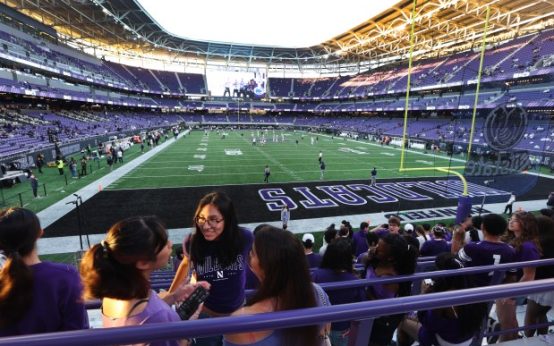 An Inside Look at Northwestern’s New Ryan Field
  NCAA’s Protocol Failures and the Virginia Tech vs. Pittsburgh Game Controversy
  Broadcaster Fired Over Teen Tweets: A Closer Look
  Rethinking Youth Sports: Prioritizing Health and Enjoyment