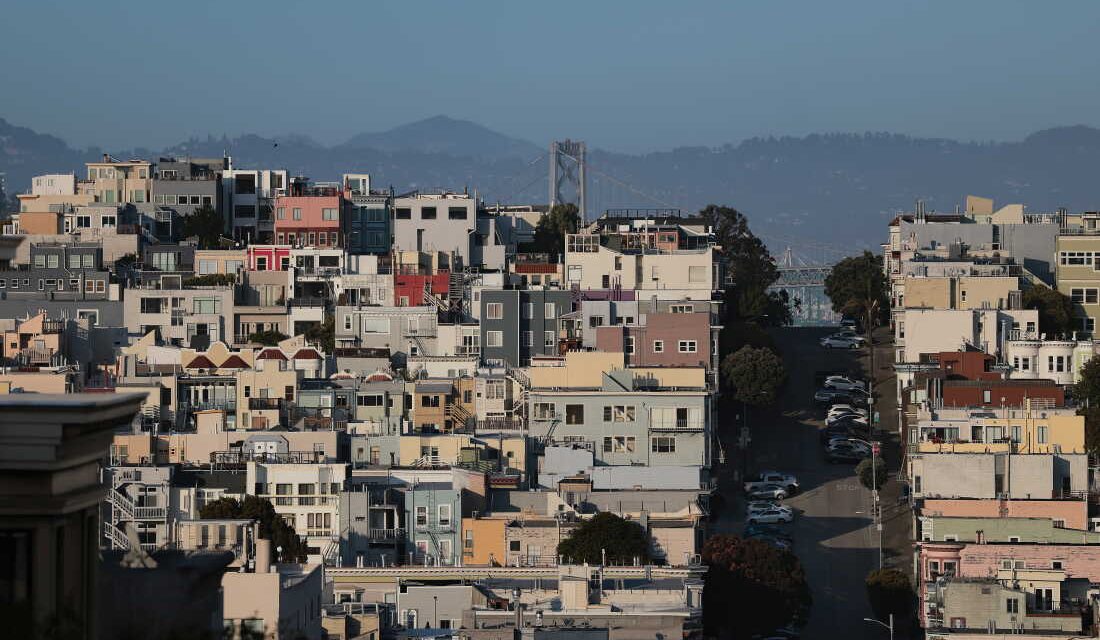
San Francisco’s North Beach neighborhood on June 29 appears vibrant as home prices and apartment rents soar, driven by an AI boom introducing new wealth to the city.
At the start of June, Collin Russell, aged 30, found himself in San Francisco. Russell and his wife returned to the city after two years away for his graduate studies. Upon return, Russell faced a daunting housing market. His timing coincided with heightened demand in San Francisco’s real estate sector. Touring properties in affluent areas like Presidio Heights, Russell remarked on the difficulties of finding a suitable two-bedroom home within budget despite a solid tech investment banking salary.
San Francisco’s housing market is experiencing renewed activity due to the AI industry’s growth. Companies like Anthropic and OpenAI are expanding, generating increased wealth. This surge in demand follows a pandemic-related slump, pushing home and rental prices upwards. Concerns arise about potential displacement, reflecting past tech booms and enduring housing shortages. Previous market pressures have displaced many unable to bear rising costs.
Record-setting sales and a ‘mansion shortage’
During Russell’s condo tour, numerous prospective buyers viewed the modern three-bedroom unit priced at $2 million. Real estate agent Paul Kitchen from Compass brokerage termed the property an entry-level option for families in the current market. Compass brokerage data indicates a 25% rise in San Francisco’s median home sales price over the past year. Bidding wars increasingly define the market, with some listings attracting up to 50 offers.
Kitchen noted that bidding wars incur emotional costs for prospective buyers. Top-end competition is fierce, with cash offers over $25 million often outbid. The demand, paired with housing stock shortages, has been labeled a ‘mansion shortage.’ In June, 44 home sales exceeded asking prices by at least $1 million. Kitchen and others observe that such price spikes concentrate in upscale neighborhoods but anticipate a broader impact.
AI executives, typically in their mid-30s to early 40s with young families, contribute to demand spikes. Homes are sought immediately, especially with impending school enrollment deadlines. While confined now to select locales, historical patterns suggest ripple effects extending beyond the Bay Area.
Renters also face bidding wars
The influx of AI-driven affluence is influencing San Francisco’s rental market. Young professionals earning high salaries compete in a rental arena where $10,000 monthly payments are feasible. Ally Alessio, 27, and Aidan Cahill, 31, experienced challenges transitioning from San Diego to San Francisco. Time-sensitive searches resulted in rapid listings engagement, with hundreds of contacts appearing within hours.
Alessio recounted that search efforts occasionally led to increased rental bids surpassing initial prices. This rental market competitiveness mimics homebuying dynamics. Quickly seizing opportunities, Alessio and Cahill secured a two-bedroom unit without prior physical visitations. Their monthly rent, $5,200, seems more like a mortgage payment.
In the city’s Mission District, Alex Brenner, 29, faced similar rental challenges. Open house visits sometimes included long queues, adding to the stress. Brenner adjusted expectations, securing a sizable one-bedroom unit after intending to find a two-bedroom to accommodate work-from-home needs.
Brenner observes difficulty in affording local rent despite working in healthcare fields, illustrating contrasts between industries fueling economic momentum. San Francisco’s pricing surge impacts even residents in rent-controlled conditions, limiting mobility for employees like teachers and nonprofit workers.
Luxury housing expansion across the U.S.
San Francisco’s AI wealth contributes to national luxury housing trends apparent over the past decade. Analyst Jonathan Miller from New York reports increased activity in ‘super-luxury,’ $50 million-plus home sales, now occurring more frequently than ever.
Miller portrays San Francisco’s augmented real estate market as akin to Manhattan’s, where costly one-bedroom apartments reflect location value rather than inherent property elements.
Miller’s analysis acknowledges San Francisco’s anticipated ‘repricing’ due to the AI industry’s economic influence, further divorcing property prices from conventional metrics.
 Insights from Whistleblower Tyler Shultz on the New Documentary
  Former OpenAI Engineer Linked to Saudi Royalty Faces Espionage Charges
  Managing Microsoft Teams Status in Remote Work
  Rising Property Taxes Create Challenges for U.S. Homeowners
  Animal Cruelty Verdict for Canadian Tourist and Political Developments in International and U.S. Politics
  Early Research Suggests Bans Aren’t the Solution for Social Media Issues