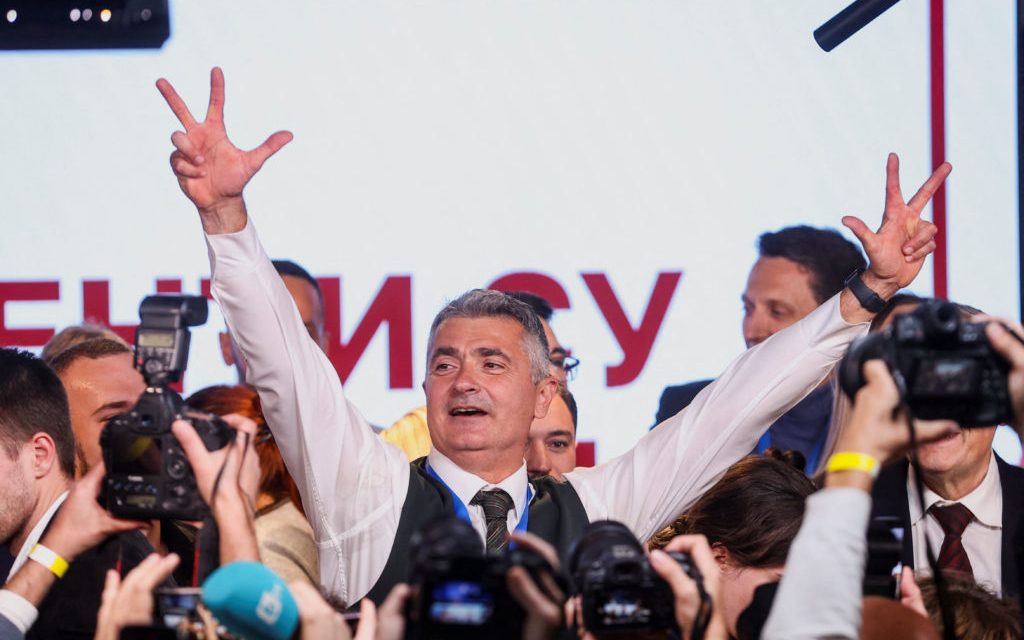
On Sunday, Serbia’s long-standing leader, Aleksandar Vucic, admitted defeat in a significant election. This event marked a turning point as he, along with his right-wing party, faced a diverse student-led opposition. For over 14 years, Vucic had wielded nearly absolute power, receiving backing from Russian President Vladimir Putin. He had dismissed the student movement as a foreign-led conspiracy against his leadership.
The election excitement was palpable, highlighted by a high voter turnout and rising tensions. The competition involved Vucic’s right-wing Serbian Progressive Party and university students, who accused the government of corruption and undermining democracy.
Serbia had 6.4 million voters casting ballots for the 250-member Parliament. Vucic, acknowledging the results, stated that the youth-backed Students’ List expected to secure between 135 and 140 seats, while his own SNS party would acquire approximately 105 seats.
The Students’ List has won,” Vucic informed his supporters, blaming independent media and foreign interferences for the defeat.
Celebrations Erupt in Belgrade
Vucic reported his party obtained about 1.7 million votes, while the Students’ List garnered around 2.2 million. In Belgrade, the streets erupted as supporters of the opposition celebrated by honking horns and chanting.” Aleksandar is gone,” they proclaimed, referencing Vucic.
In central Belgrade, people quickly dismantled the setup of Vucic supporters who had been occupying the area for over a year. The outcome came soon after the polls closed, following a tense day of voting.
Police presence was significant, with anti-riot squads and special vehicles stationed throughout the city. Groups of men dressed in black were visible at various locations.
Vucic’s Fall: Sparked by Protests
Vucic sought to transition into Serbia’s prime minister role after serving as president for nearly two full terms. His resignation from the presidency preceded his campaign. His support had dwindled following a 2024 incident that left 16 dead.
The collapse of a train station canopy in Novi Sad, tied to high-level corruption allegations, ignited widespread youth protests. These protestors attributed the disaster to systemic corruption and mismanagement.
Dijana Hrka, whose child was among the victims, expressed relief during the Belgrade celebration. “Now I expect accountability,” she stated, amidst emotional scenes.
Despite dissent, Vucic maintained significant backing among some Serbian voters. His supporters perceived him as a capable leader fortifying the nation against global uncertainties.
An Energetic Student Movement
The student movement, leaderless by design, presented an unprecedented challenge to Vucic. Previously, he had consistently overwhelmed fragmented opposition forces. The Students’ List, created by university students, featured candidates such as experts, athletes, farmers, and artists instead of students.
The approach aimed to disrupt Vucic’s centralized power and foster national unity. Their campaign highlighted a non-partisan strategy to rejuvenate Serbia’s economy and democracy. The students engaged rural and traditional Vucic supporter areas by traveling on foot and bicycles.
The new movement’s success resembled recent youth-driven political change in Hungary, where a Vucic ally lost to a pro-European government. Such political movements resonate as youth across Europe express dissatisfaction with existing leadership.
Election Scrutiny by EU
Election monitors anticipated about 70% voter turnout, a figure unprecedented since 2000 in Serbia. Long voting queues were reported domestically and in Serbian international communities.
Some in the diaspora voted during the night, adhering to local Serbian voting hours. Past Serbian elections faced irregularities, heightening EU scrutiny of this election in the candidate nation for EU membership.
Independent monitors, both local and international, observed numerous voting irregularities, including ballot photography suggestive of voter manipulation. Concerns were raised about election safety, with instances of detention, media control, surveillance, and cyberattacks on activists.
Earlier local elections witnessed journalistic and activist violence. The previous parliamentary election in 2023 resulted in fraud allegations and subsequent protests.
A free press is essential for democracy. Support responsible journalism and civil dialogue.
 Bomb Threats on European Planes and Cruise Ship Spur Security Alerts
 Pope Leo XIV’s Historic Vote in the U.S. Elections
 Mother and Daughter Killed in Suspected Grizzly Bear Attack in British Columbia
 Evaluating Temporary Protected Status for Long-Term Crises
 Melania Trump Honored with Ukraine’s Order of Princess Olga
 Canadian Resistance to Trump’s Lake Renaming Effort