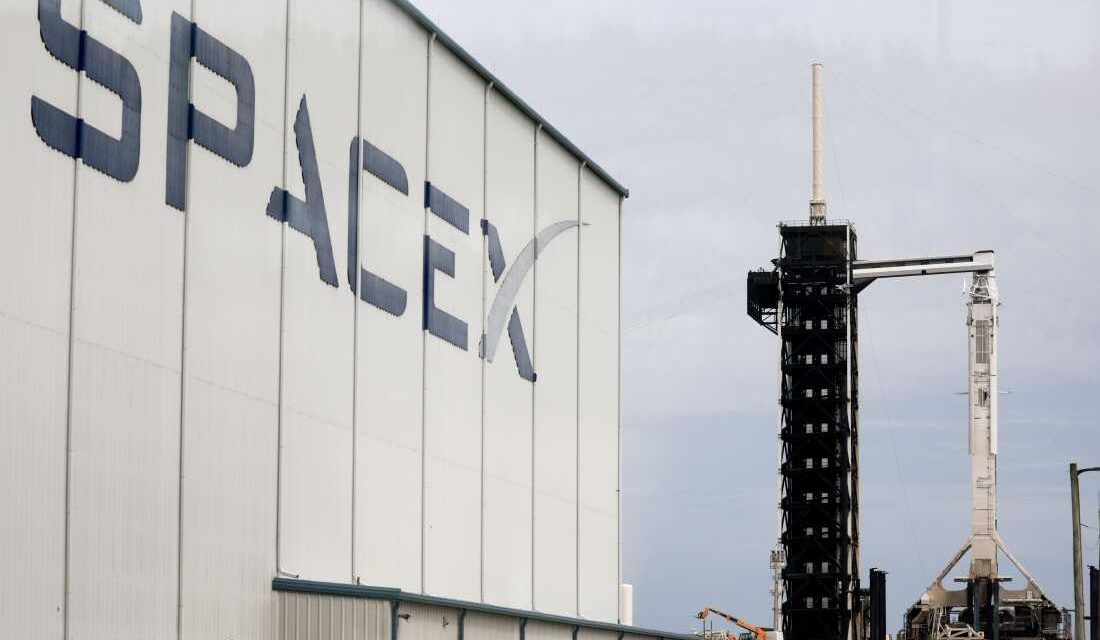
SpaceX is gearing up for another launch attempt at NASA’s Kennedy Space Center in Cape Canaveral, Florida on September 9, 2024. Controlled by Elon Musk, the company aims to go public in what may be the largest public listing ever.
SpaceX has filed financial data to potentially achieve the biggest initial public offering (IPO) in history. Although the exact amount is undisclosed, reports suggest SpaceX targets an $80 billion raise. This could surpass Saudi Aramco’s $29 billion mark in 2019. Such a listing could value SpaceX over $1 trillion, positioning it among the world’s top companies.
This IPO might significantly boost Musk’s wealth, potentially making him the first trillionaire. Musk possesses 85% of SpaceX’s voting power, as outlined in recent documents.
SpaceX’s IPO and the AI Sector
SpaceX’s IPO has been anticipated for some time. Confidential paperwork was filed earlier this year with the U.S. Securities and Exchange Commission. This event might signal a significant year for Wall Street, with expected listings from OpenAI and Anthropic, known for ChatGPT and Claude, respectively. Such listings will make powerful tech companies accessible to public investors, with SpaceX being a prominent name.
SpaceX dominates the space launch market, with reusable rockets and its Starlink satellite internet service. Last year, it merged with xAI, Musk’s AI venture.
SpaceX invests heavily in future plans, spending $12.7 billion on data centers and construction, and another $3 billion on developing the Starship rocket. Despite these investments, SpaceX faced a net loss of nearly $4.3 billion in the first quarter on $4.7 billion in revenue.
The Opportunities and Risks of IPOs
IPOs offer public investors a chance to own shares in major companies, raising funds for those entities and their pre-IPO backers. Analysts hope SpaceX’s IPO might rejuvenate a slow IPO market.
However, there are risks for potential investors. Post-IPO, companies often experience share price underperformance relative to the broader market. Franco Granda, a research analyst from PitchBook, notes the increased scrutiny from regulators and the public once a company goes public. This might challenge current valuations.
SpaceX and Elon Musk’s Influence
Since founding SpaceX in 2002, Musk aimed to establish a Mars colony. The company revolutionized the rocket industry with its reusable first stage, saving significant costs. SpaceX has secured contracts for defense satellites, commercial payloads, and astronaut missions, dominating the launch industry.
According to Brycetech, SpaceX accounted for 85% of all launches last year, surpassing countries like China and Russia. However, Tim Farrar of TMF Associates points out that most of SpaceX’s revenue comes from Starlink, with $11.4 billion earned from connectivity in 2025. Farrar questions a trillion-dollar valuation, suggesting it relies heavily on belief in Elon Musk rather than current business metrics.