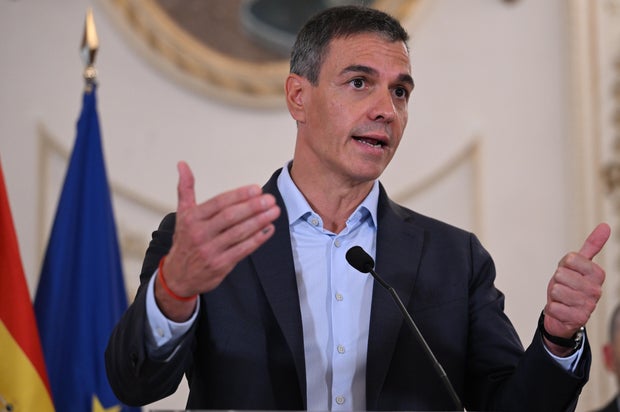
On November 28, Spanish voters face a pivotal decision in a snap election. This vote may result in Spain, a major European nation, moving to the political right. Socialist Prime Minister Pedro Sánchez seeks to hold onto power as public unrest grows over issues like housing, immigration, and corruption.
Prime Minister Sánchez, an influential leftist leader in Europe, often countered former President Trump on global matters. He challenged Trump’s NATO spending directives, wrote an opinion in The New York Times supporting migration, and connected with American progressive figures such as New York City Mayor Zohran Mamdani.
Domestically, Sánchez confronts a rising threat from the center-right People’s Party, led by Alberto Núñez Feijóo, and the nationalist, anti-immigration Vox party, headed by Santiago Abascal. Together, these parties could establish the most right-oriented Spanish government since the end of Francisco Franco’s dictatorship in 1975.
Housing Crisis
Housing issues are central in this election. Skyrocketing rents and property values have incited widespread fury. On the same day Sánchez met with Mamdani in New York, 87-year-old Maricarmen Abascal faced eviction from her Madrid home of over 70 years. Her landlord intended to more than triple her rent to $1,900 (1,650 euros).
Abascal’s forced removal, during which she was taken out on a stretcher, led to nationwide demonstrations. Although her landlord eventually allowed her to return at a reduced rate, Abascal passed away two weeks later in a hospital.
In reaction, Sánchez implemented emergency housing measures attempting to limit rent hikes. Yet, these initiatives failed in parliament, prompting Sánchez to call the snap election. As protests continued, Sánchez accused the PP and Vox of rejecting protections for vulnerable renters. The PP contends Sánchez had ample time to solve the housing crisis and pledges to construct one million homes. Lowering living costs and combating corruption drive their campaign.
Immigration and Other Contentious Issues
Immigration has also emerged as a divisive topic, following a mass migrant influx in Ceuta, a Spanish territory in Africa, in July. Earlier this year, the Sánchez administration offered legal status to numerous undocumented immigrants, igniting debate.
The far-right Vox party seeks to leverage unease over immigration, advocating mass deportations and prioritizing Spanish nationals for public resources. Hugo Marcos-Marné, a political scientist from the University of Salamanca, noted Vox’s growth stems largely from perceptions about immigration, not from significant changes or figures.
The PP has similarly pushed for stricter immigration controls. Corruption scandals surrounding Sánchez’s associates and family members have also marred his campaign. Additionally, the administration’s credibility suffered following two deadly train accidents this year.
Vox’s ascent is fueled by anti-gender backlash, authoritarian nostalgia, and anti-elitism against mainstream parties, according to Marcos-Marné.
History and Future of Spain’s Political Climate
Spain traditionally resisted far-right populism, partly due to its past under Franco. While polling suggests the center-right PP leads Sánchez’s Socialist party, it might miss a parliamentary majority. Their need may arise for Vox’s backing, which is polling at about 18%. The PP’s previous reluctance to align with Vox subsides as they now form coalitions at the regional level.
“Research indicates Spain’s radical-right was more stigmatized due to the Franco dictatorship,” said Marcos-Marné. He also noted the Popular Party’s ability to attract votes from both the center-right and radical-right.
Sánchez hopes that concerns over a far-right-leaning national government will mobilize left-wing voters. “The PP and Vox pose real threats to various groups in our nation,” Sánchez stated, warning of setbacks in women’s, workers’, and migrants’ rights if they gain seats.
The outcome affects not only Spain but also European Union dynamics, given that Spain is the sole major EU country under leftist governance.
 Scrutiny on Socialist Candidate Darializa Avila Chevalier over Past Tweets
 Democratic Shift in State Attorneys General: Implications for U.S. Legal Landscape
 Strengthening Democracy Through State-Level Investments
 State Budget Challenges Under Democratic Leadership
 Understanding Trump’s Role in the Nvidia Affair and Other Key Issues
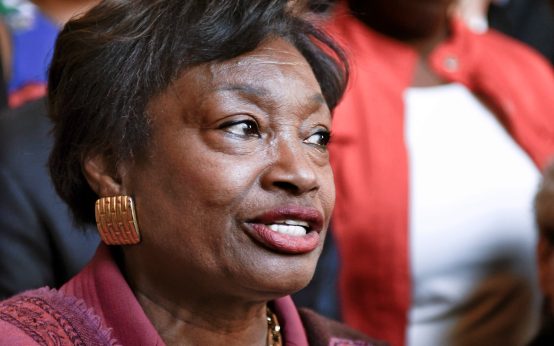 The Legacy of Andrea Stewart-Cousins: New York’s Trailblazing Senate Leader