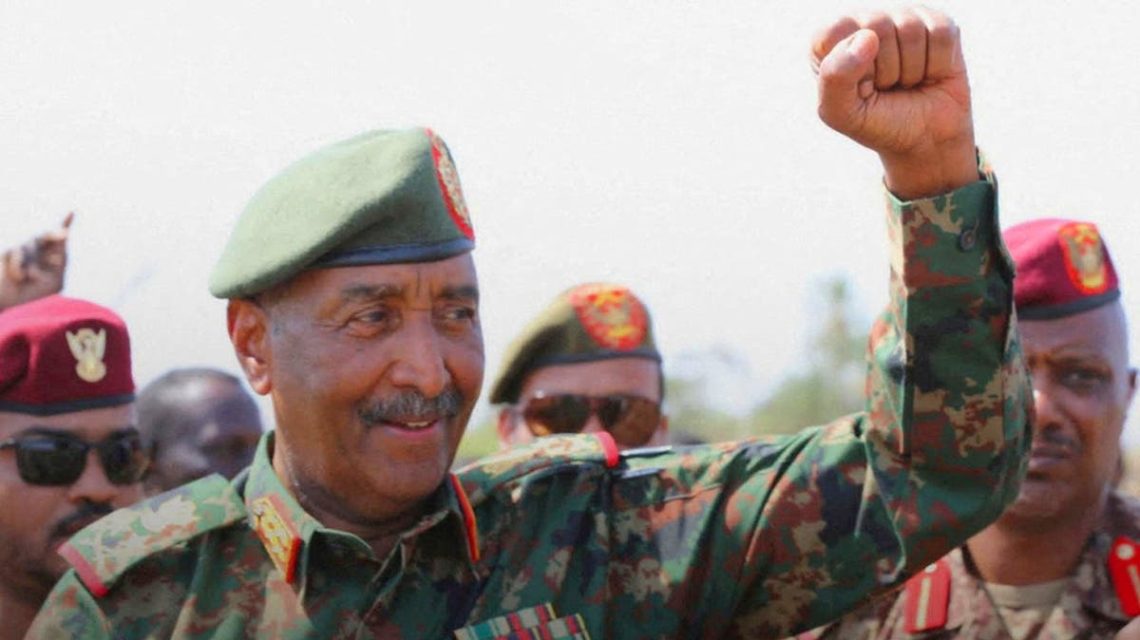
Sudan’s military leader, Gen. Abdel Fattah al-Burhan, has resisted a U.S.-supported effort for a ceasefire after the U.S. withheld his visa for the U.N. General Assembly. This decision highlights a growing conflict over the Sudanese war, which is now a major humanitarian disaster and a regional power struggle reaching the Red Sea.
The Trump administration’s decision to block Burhan’s visa came amid talks for a 90-day humanitarian truce. Burhan responded strongly from Khartoum, rejecting any bargaining or submission, insisting he needed no visa or anyone’s permission to speak his mind.
While the State Department accuses Burhan and the rival Rapid Support Forces (RSF) of not committing to a truce, Dr. Amjad Farid Al-Tayyib, an advisor to Sudan’s Transitional Sovereignty Council, insisted Sudan did not dismiss the U.S. proposal but had submitted technical comments.
“Neither the Sudanese Armed Forces nor Rapid Support Forces represent legitimate governance,” State Department spokesman Tommy Pigott stated.
Farid claimed the visa denial undermined efforts to advance diplomatic processes. However, the State Department stated its focus is on wider diplomatic efforts with Egypt, Saudi Arabia, and the UAE.
External actors have become key players in Sudan’s struggle. The RSF and SAF have reportedly received backing from regional powers, adding complexity to resolving the conflict.
A U.N. mission documented atrocities committed by both sides, indicating the RSF might be responsible for more severe crimes. U.N. Secretary-General spokesman Stéphane Dujarric emphasized that the focus is on facts and violations.
Foreign powers have fueled Sudan’s war both militarily and economically. A UK assessment claimed foreign support for the RSF and SAF continues despite denials from countries like the UAE.
The U.S. is seen as focusing its diplomatic efforts via external pressure and negotiations to end the conflict. Secretary of State Marco Rubio lamented the role of foreign actors in perpetuating Sudan’s conflict.
Sudan, described as strategically significant due to its location and resources, suffers deeply from regional power struggles exacerbated by foreign influences.
The U.N. stressed the need for a halt to hostilities and a credible political process. Diplomatic talks involving major powers and the African Union aim to address the crisis, aiming for a peaceful resolution.
 Google Earth Images Reveal Destruction in Gaza
  DHS Warns Migrant Caravan Heading to U.S.-Mexico Border
  Adam Brody and Hollywood’s Political Climate
  International and Domestic Investigations Unfold
  Counterpressure, Not Concessions, Crucial for Russia-Ukraine Conflict
  Ukraine’s Capital Faces Increasing Frontline Challenges