
The Supreme Court issued a key decision supporting state laws that restrict transgender female athletes from joining girls’ and women’s sports teams. The 6-to-3 ruling, affecting laws in West Virginia and Idaho, extends to 25 other states with similar regulations.
The ruling has significant consequences for athletes in school and collegiate sports across the country. The decision reflects a broader national trend spearheaded by the Trump administration, which has advocated for restrictions on transgender athletes’ participation in sports. This directive included the withdrawal of federal funding from schools allowing transgender athletes to compete in girls’ and women’s sports.
There has been widespread interest in these cases, attracting attention from Olympians and elite athletes. Many submitted legal briefs supporting either side. Earlier this year, the International Olympic Committee decreed that transgender athletes could not participate in women’s categories at the Olympics without genetic testing. This decision coincides with similar measures by the N.C.A.A. barring transgender women from competing in women’s sports.
Two specific cases brought this issue to the Supreme Court. Becky Pepper-Jackson, a high school student from West Virginia, and Lindsay Hecox, a college student from Idaho, challenged their state’s laws. Each law mandates that sports team participation for girls be determined by ‘biological sex,’ defined at birth.
The Supreme Court’s ruling highlights a clear ideological divide. The conservative majority supports states setting eligibility criteria based on biological sex, impacting the landscape of women’s and girls’ sports nationwide.
 Kentucky Governor Andy Beshear Discusses Tariffs, Faith, and Political Ambitions
  Sunday Highlights: Lane Kiffin, Nancy Mace, and College Football Drama
  Lane Kiffin’s Return to Ole Miss: Controversy and College Football Drama
  Chicago Bears’ Potential Move to Indiana: A Closer Look
  The Future of College Sports: Protecting the Collegiate Model
 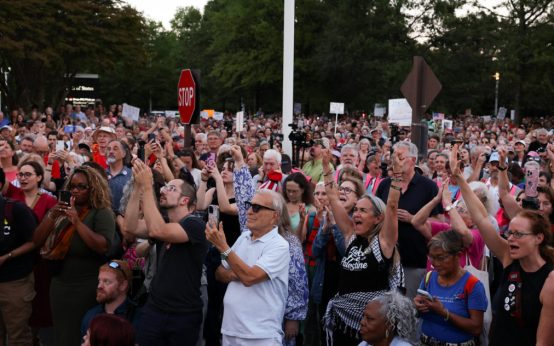 Protesters Rally Against Plans for Kennedy Center