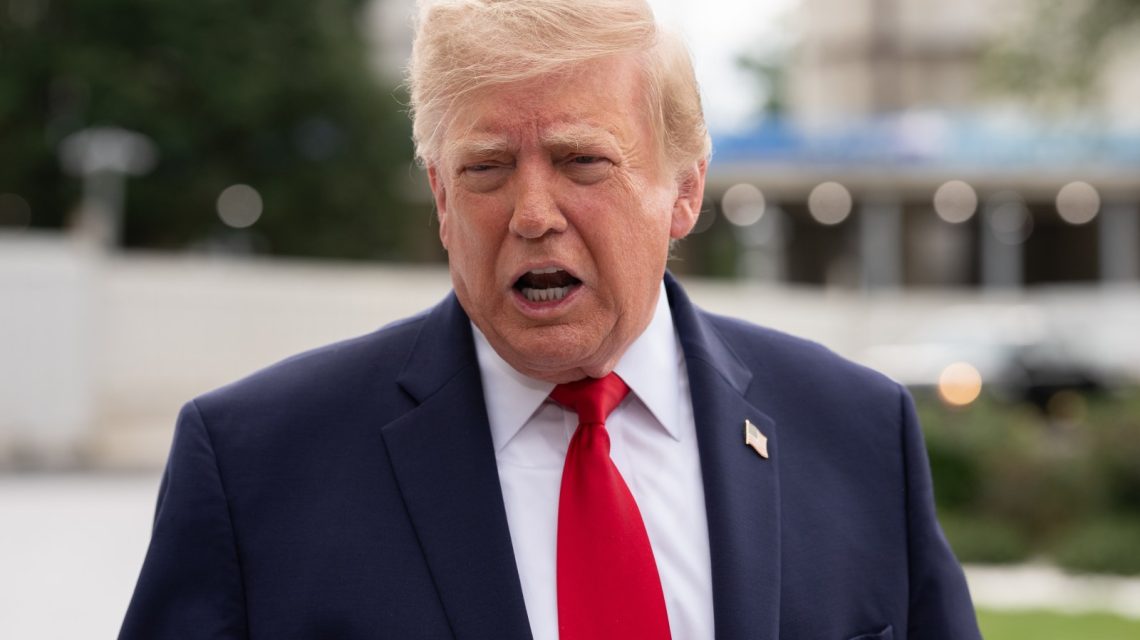
President Donald Trump announced on Saturday his rejection of Iran’s proposal to reopen the Strait of Hormuz and halt ongoing hostilities. He described the offer as unacceptable but acknowledged he remains open to future negotiations.
“They want to make a deal and I think that’s fine,” Trump commented before his departure from the White House. “I’d like to make a deal, too. But that deal would not be acceptable.”
The situation marks a diplomatic challenge between the United States, Israel, and Iran, affecting global energy markets and diminishing shipments through the vital oil transit route. Newsweek sought a response from the White House on Saturday morning.
Iran Proposes Deal to Reopen Strait
This week, Iranian officials revealed a proposal delivered through mediators. The plan aimed to reopen the Strait of Hormuz in seven days and resume discussions on Tehran’s nuclear ambitions.
In exchange, Iran requested relief from economic pressures and assurances concerning the ongoing conflict. Trump dismissed the proposal but highlighted Iran’s increasing economic difficulties.
“They want to make a deal to open the Hormuz Strait immediately because they’re losing so badly,” Trump remarked.
The waterway’s traffic has significantly decreased since the conflict intensified earlier in the year, impacting global oil supplies and creating economic concerns beyond the Middle East.
Iran Seeks New Nuclear Talks
Iranian Foreign Minister Abbas Araghchi stated on Friday that Tehran was open to renegotiating its nuclear program within the framework of a broader agreement.
The Iranian proposal entailed a schedule for reopening the Strait of Hormuz and reducing regional hostilities as a precursor to renewed negotiations.
Iranian President Masoud Pezeshkian expressed support for diplomatic solutions while at the United Nations General Assembly, though he held firm against succumbing to U.S. pressure.
The proposal emerged from indirect communications between U.S. and Iranian representatives at the annual leader summit in New York.
Trump’s Warning at United Nations
Trump’s refusal came shortly after issuing a stern warning to Iran at the United Nations General Assembly. He outlined that Tehran must choose between reaching an agreement with the United States or face “annihilation.”
The U.S. administration maintains that its military and economic strategies have bolstered its negotiation stance, presenting Iran’s overture as evidence of this approach’s effectiveness.
Prospects for Future Talks
Despite declining Iran’s latest offer, Trump indicated potential openness to additional diplomatic engagement.
“They want to make a deal, and I think that’s fine,” Trump reiterated. “I like making a deal too.”
The recent developments follow indirect discussions between U.S. and Iranian officials during the United Nations General Assembly. While Iranian representatives persist in signaling readiness for negotiations, the Trump administration continues to apply military and economic pressures.
On Saturday, Trump also refrained from commenting on the possibility of resumed military strikes post-November midterm elections.
 AI Concerns and International Relations: Bill Gates Urges Oversight Amidst Global Summit
  Europe’s Modern Warfare Preparedness and Democratic Stability
  Federal Appeals Court Decision Against Trump’s ‘Third-Country’ Deportation Policy
  Ed Sheeran’s Philadelphia Concert Amid Controversy
  U.S. Secures Strategic Control Over Greenland
  U.S. Security Agreement in Greenland Sparks Optimism and Concerns