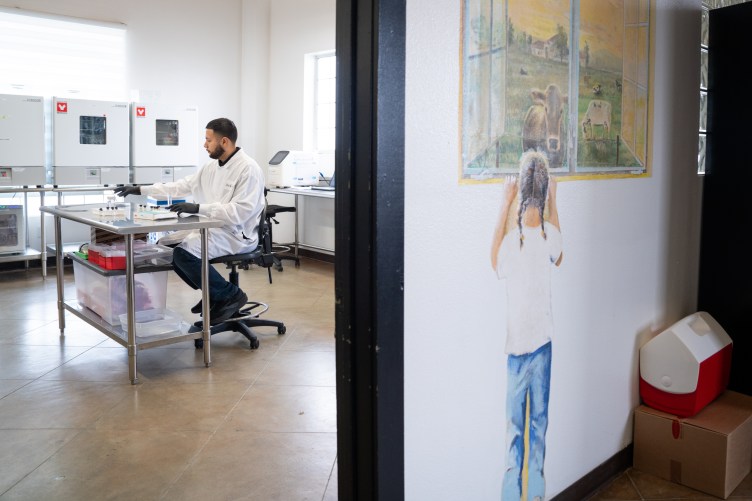
My unexpected journey into the world of raw milk began when I joined ProPublica. We released a story in early June focusing on Mark McAfee, who operates the largest raw milk dairy in the U.S. This extensive research followed months of examining how policies under the Trump administration altered federal health agencies. Our investigation revealed that many civil servants reported a fear-driven environment where science became politicized.
Raw milk is a case in point. Most health experts agree it lacks the proven nutritional advantages of pasteurized milk. Yet, Health Secretary Robert F. Kennedy Jr. has shown support for raw milk, toasting with it at the White House. McAfee, a long-time advocate, now sees raw milk in mainstream use, with over 10 million Americans consuming it and sales rising by 65% from 2023 to 2024. His farm earns roughly $30 million annually, despite being linked to numerous recalls and outbreaks resulting in hundreds of illnesses.
“I’m begging you to say: ‘This is not anti-science, this is extremely pro-science.’” — Mark McAfee
Raw milk’s increased popularity puzzled me. How did it thrive despite repeated cases of salmonella and E. coli? I spoke to McAfee for insights. Raw milk, unlike pasteurized variants, risks foodborne illnesses. Despite increased hygiene measures, harmful bacteria remain a threat in unpasteurized products. Extensive reviews fail to confirm claimed benefits of raw milk, and many health experts deem it unsafe. However, McAfee insists its consumer demand is based on health transformations shared by families.
In 2006, McAfee’s farm faced an E. coli outbreak affecting children, including Chris Martin, who suffered severe kidney damage. While McAfee introduced safety standards post-outbreak, illnesses continued. Regulators connected his farm to multiple incidents, including a large outbreak in 2023-2024 where over 170 people fell sick. Despite contesting these findings, over 233 people have been affected since 2006.
“We have a red-flag system here, where if there’s anything that gets really out of whack, they can immediately tag the milk.” — Mark McAfee
Claims of safe cheesemaking from contaminated milk surfaced during our dialogue. Federal agencies found that his farm often used suspect milk for cheese production, which requires a judge’s intervention to halt. Under the Trump administration, with Kennedy’s influence, such cases were reportedly deprioritized, and the effort against McAfee dwindled.
Influencers propelled McAfee’s message, causing government pressures to ease. Even as federal links connected his farm to subsequent outbreaks, McAfee denied responsibility, alleging his practices had improved. Ultimately, without enforcement, the FDA closed the 2024 outbreak investigation against his farm.
“If the FDA says something, do the opposite. It’s safer.” — Mark McAfee
Public distrust in regulatory bodies like the FDA partly fuels raw milk’s popularity. Despite ongoing scrutiny, McAfee continues to promote raw cheese. Although he asserts improvements in safety, past practices raise ongoing concerns about unverified claims on health benefits and safety assurance.
 Potential Impact of Changes to the National Vaccine Injury Compensation Program
  Living with Sickle Cell: The Glover Family’s Journey
  Living with Alzheimer’s: A Young Man’s Journey
  Understanding the Q-Collar: What Athletes Need to Know
  Medicaid Fraud Impacts Autism Services and Military Health Care Program
  Understanding Everyday Memory Lapses and Cognitive Health