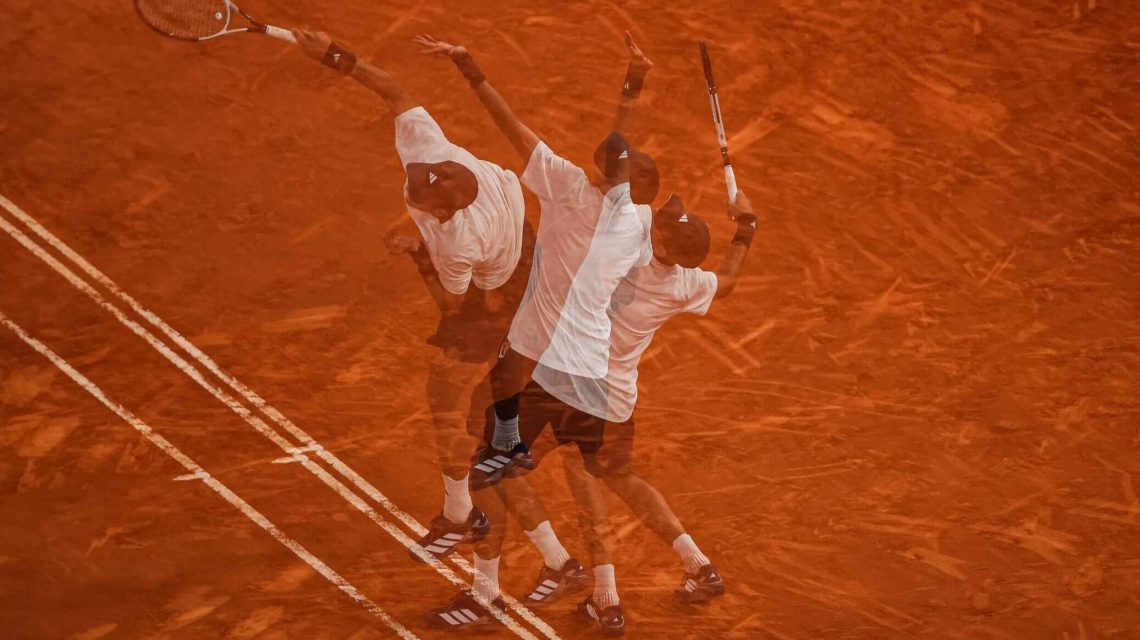
PARIS – The 2026 French Open has seen young players rise as prominent figures in men’s tennis, despite the absence of top competitors like Carlos Alcaraz, who missed the event due to a wrist injury, and Jannik Sinner, who dropped out after health issues and intense heat took their toll.
These emerging stars reflect the influence of Alcaraz and Sinner’s innovative playing styles. Among them is 19-year-old João Fonseca from Brazil, who impressed by matching Novak Djokovic’s skills with his versatile play. Similarly, Rafael Jódar, also 19, exhibits the aggressive and fearless style reminiscent of Alcaraz.
The youngest player at this forefront is Moïse Kouame, a 17-year-old Frenchman. He demonstrates a powerful forehand, a locked-wrist backhand, and strategic movement on the court. Kouame epitomizes the next wave, characterized by a swift and audacious approach to the game, following the template established by predecessors like Alcaraz and Sinner.
“My role model in tennis when I was younger was Rafael Nadal. Then in the last few years before I turned pro, I could say probably Carlos Alcaraz.” – Rafael Jódar
Young players like Fonseca, Jódar, and Kouame are not only inspired by icons such as Nadal, Roger Federer, and Djokovic but also by the strategies of Sinner and Alcaraz. These players have adapted to a sport that evolved rapidly, leaving some older professionals like Félix Auger-Aliassime and Casper Ruud to adjust their methods.
The tactics that served well against the Big Three included playing long rallies to set up winning shots. However, the arrival of Sinner and Alcaraz introduced dynamic changes, with split-second directional shifts and aggressive north-south play challenging that status quo. Their refined strokes offer both offensive and defensive capabilities, creating new demands on their opponents.
Auger-Aliassime explains the difference: “The defense also has become not defensive. You’ll play Carlos and Jannik and you’re coming to the net, and if you don’t approach well, they might hit a passing shot.”
This evolution is evident in various emerging players, like Jakub Menšík, who collapsed from cramps after a five-set victory but returned with impressive strength against Alex de Minaur. Others like Learner Tien and Alex Michelsen demonstrated resilience in rigorous matches, illustrating the ambitious drive of this next generation.
New contenders exhibit exceptional skills, which Michelsen attributes to their comprehensive understanding of professional tennis: “It just seems like they’re all capable of pretty much everything on the tennis court. They don’t have a lot of weaknesses.”
Rafael Jódar’s meteoric rise from outside the top 700 to the top 40 is a testament to the evolving dynamics in men’s tennis. His forehand and spin statistics highlight the technical excellence that characterizes the new wave of players. He explains his focus on adapting his game to various surfaces, like clay, to enhance his strengths.
Fonseca demonstrated his evolving playstyle by pushing Djokovic in a grueling match, emphasizing aggression with precision to maintain control. The physical advantage of youth plays a role, allowing for sustained performance in long contests.
These young talents face veteran competitors this Sunday in three generational clashes: Fonseca versus Casper Ruud, Jódar against Pablo Carreño Busta, and Menšík challenging Andrey Rublev. The ongoing generational battle will further test and refine these players as they continue to close the gap with established stars.
 Deion Sanders Enforces Discipline After Colorado’s Defeat to Northwestern
  Steve Lotysz: From Medinah’s Gates to Presidents Cup Artistry
  Calls Grow for Ireland’s Soccer Team to Boycott Matches Against Israel
  Is NHL Preseason Necessary?
  Impact of World Baseball Classic on Paul Skenes’ Performance
  Ronald Acuna Jr. Suffers Injury During Game Against Cincinnati Reds