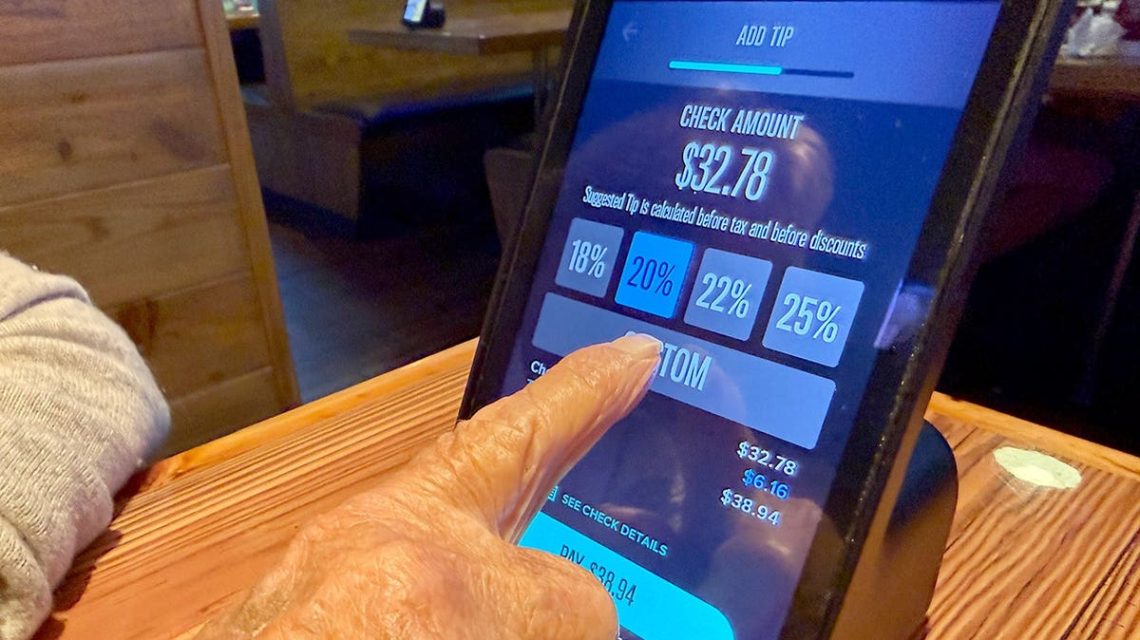
Tipping is a longstanding part of American culture, appreciated for rewarding exceptional service. Yet, recently, it seems to have shifted from an act of gratitude to a social obligation.
The rise of digital payment screens has amplified this experience. Many transactions now prompt you to tip, sometimes immediately after making a purchase. A simple thank you has increasingly become a financial question.
“The computer just wants to ask you a question.”
This familiar phrase often signals the appearance of tipping options. Instead of checking your satisfaction, screens ask for a tip — usually starting at 18% and going as high as 30%.
While tips are valuable for many hardworking employees, such as servers and delivery drivers, businesses seem to use them to offset labor costs. The pressure to tip has permeated everyday purchases, from coffee shops to stadium concessions, and more.
Digital screens are not neutral. They are designed to make declining tips awkward. Payments are structured to nudge you toward adding a gratuity, even in exchanges that involve minimal customer service.
Consumers face a dilemma. As expected tips increase, the response is often skepticism. People may hesitate to tip or decide to frequent those businesses less. This shift harms customers, workers, and the businesses enforcing these practices.
A simpler solution might lie in transparency. Restaurants and shops should charge what’s needed to provide services without relying on social pressure for added costs.
American generosity thrives in community support and helping those in need. True generosity loses value if it becomes an expectation, forced by a digital interface. Businesses should respect the choice to tip rather than impose it.
 Are Cats Outnumbering Dogs?
  Controversy Erupts After Tucker Carlson Questions Britain’s WWII Decision
  Jean-Pierre Criticizes Trump’s Messaging in Opinion Piece
  Miss Manners Column Sparks Debate
  Opinion: Direction of Political Figures and Forces
  1913: A Turning Point in U.S. Governance