For years, the notion of national security in the United States has been connected primarily to our military strength, like the aircraft and ships we build, and the brave individuals who defend us. Today, national security encompasses much more, including access to vital materials necessary not only for military systems but also for powering data centers, manufacturing advanced technologies, and sustaining economic industries.
Recently, the nation has grown alarmingly reliant on foreign sources—particularly China—for these critical materials. This dependency is a significant concern for national security.
“Corporate America’s reliance on China poses a threat to national security.”
The consequences of such dependence have surfaced before. During the COVID-19 pandemic, issues with overseas supply chains left American hospitals desperate for essential medical gear, like masks and gloves, primarily produced and distributed by China. This provided a stark warning that outsourcing production means outsourcing vital security.
Beyond medical supplies, the pandemic highlighted America’s vulnerability in terms of critical minerals. One example is graphite, crucial for rechargeable batteries in electric vehicles, energy systems, and numerous electronic devices. Graphite has applications across defense technologies, drones, advanced manufacturing, and infrastructure supporting artificial intelligence.
China has spent years securing dominant positions along critical mineral supply chains, from extraction and processing to manufacturing advanced materials. Recently, Beijing has displayed a willingness to limit exports of strategically crucial materials for geopolitical leverage. America needs to heed this message attentively.
No formidable nation should permit a competitor to wield control over materials essential for its economy or security. Although graphite is so crucial, the U.S. still depends on foreign sources, including China. This reliance is perplexing given the nation’s wealth in natural resources, notably in Alaska.
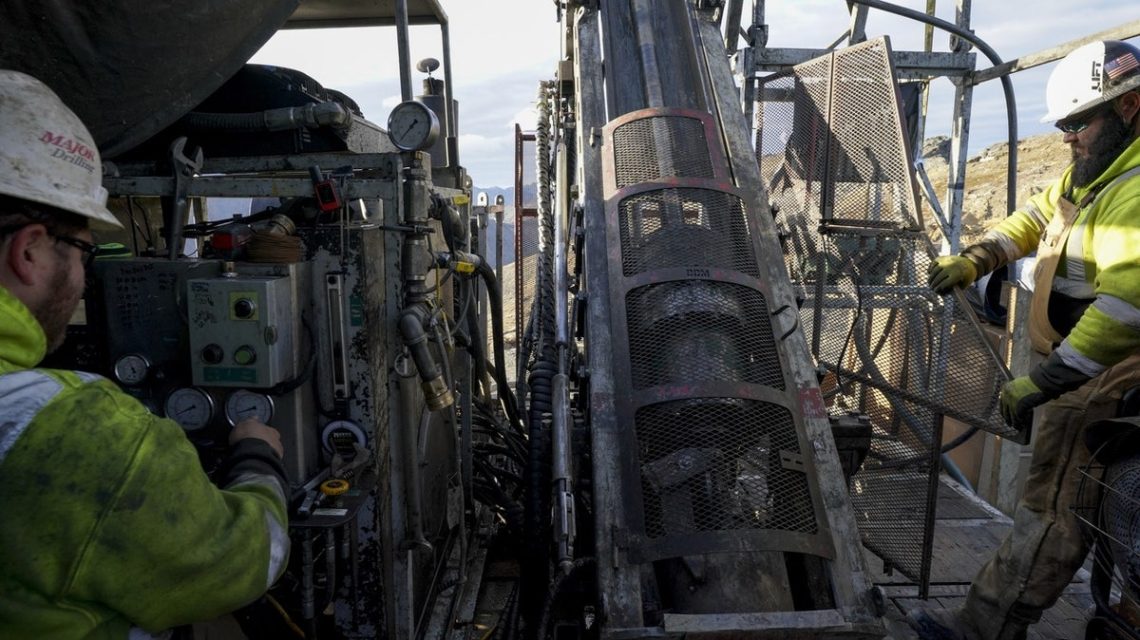
Alaska is rich in resources, containing 57 of the 60 minerals deemed critical to America’s economic and national security. The Graphite Creek site, located in Alaska, offers potential for a fully integrated domestic graphite supply chain.
“Graphite Creek could be the cornerstone for a domestic supply chain.”
The U.S. Geological Survey identifies Graphite Creek as the largest known graphite deposit in the nation and among the largest worldwide, marking it as a critical national security asset. However, merely extracting resources is not enough.
Replacing foreign mines while still relying on foreign processing—where China dominates—is inadequate. A secure supply chain should cover everything from extraction to processing and manufacturing advanced materials domestically.
The aim is clear: American resources, processed and produced domestically, serving American industries and national security.
Challenges arise not from what resources lie beneath, but from willingness and ability to develop them responsibly. Lengthy permit procedures, regulatory uncertainty, and limited investment in domestic processing have created obstacles over decades.
This reliance results in importing materials from nations with potentially lower standards for environmental, labor, and safety practices. Such actions are unsound for both environmental and national security policies.
America already possesses the necessary resources, expertise, workforce, and private capital to greatly reduce reliance on foreign critical minerals. What’s required is the determination to act.
“Now is the time to responsibly develop American resources and build domestic capacity.”
Building capacity for processing and manufacturing advanced materials domestically is vital. Efficient permitting, aligned with strong environmental safeguards, must be established.
Recognition of critical mineral importance is growing in Washington, but acknowledgment alone isn’t enough. Action is essential to prevent prolonged study on dependence while other nations strengthen control over mineral supply chains.
The vulnerability is undeniable. The location of resources is known. Technology exists to responsibly develop them.
No great nation should ask another for essential materials for defense or economic progress. Instead, it’s time to invest in domestic supply chains. Initiating efforts with the establishment of the large graphite mine in Alaska represents securing America’s future.
Victoria Coates serves as Vice President at the Heritage Foundation’s Kathryn and Shelby Cullom Davis Institute for National Security and Foreign Policy.
 DOJ and FBI Target Major Fraud Cases in Nationwide Crackdown
  Kimberly Guilfoyle Faces Defamation Lawsuit from Trump Donor
  Allegations of Political Intimidation Surface After Raid on Democratic Congresswoman’s Home
  Trump Criticizes Michigan Senate Candidate Abdul El-Sayed
  Research on Massacre Generation and Policy Views
  Trump’s Approval Among Non-MAGA Republicans Declines Amid Economic Concerns