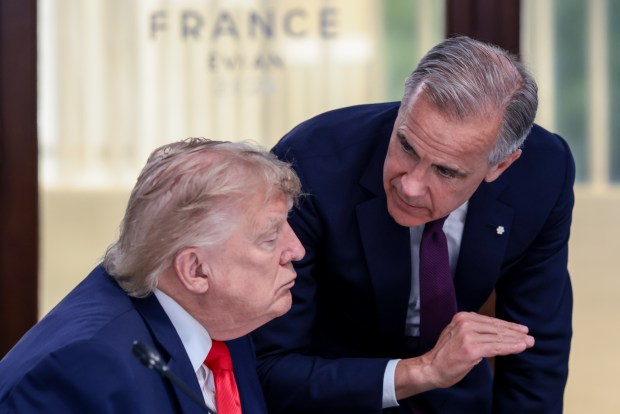
The United States is experiencing tension in its usually strong relationship with Canada, triggered by trade conflicts. President Donald Trump intensified this friction by proposing a 50% tariff on $20 billion of Canadian exports to the U.S. This led U.S. and Canadian officials to rush back to negotiations, aiming to prevent further discord between the two nations.
The Trump administration sought to address what it perceived as an imbalanced trade relationship. It insisted Canada accept more U.S. dairy products, return U.S. alcohol to Canadian shelves, and remove retaliatory tariffs on U.S. exports. In exchange, Canada requested a halt to the 50% tariffs and a reduction in duties on Canadian raw materials.
Despite potential for compromise, talks broke down at the last moment. U.S. officials accused Canada of introducing unexpected demands, while Canadian Prime Minister Mark Carney argued the U.S. attempted to undermine Canada’s sovereignty regarding trade agreements. Carney justified Canada’s withdrawal from talks, indicating a state of ‘trade war’ with the U.S.
Without resolution, Canada’s retaliatory tariffs towards the U.S. began on September 8. This trade conflict impacts both economies, given their integration. U.S. farmers face increased costs due to tariffs on Canadian fertilizer, potentially causing financial strain or necessitating federal aid. Canada, with an economy much smaller than the U.S., anticipates significant disruptions, particularly in its auto industry, which may result in 90,000 job losses.
Despite these challenges, Carney and many Canadians believe yielding to U.S. demands carries greater costs. Trump’s reputation in Canada is so poor that conceding to him is politically unfavorable. Carney’s firm stance against U.S. pressure enjoys broad support, even from political opponents.
This situation offers a lesson for U.S. officials who wish to hearken to it: persistent coercion can strengthen resistance rather than compliance. Nations are unwilling to comply with aggressive tactics and economic penalties. Alas, Trump seemingly overlooks or dismisses this insight, adhering to a simplistic belief that enough pressure will force concessions.
Trump has applied this principle throughout his second term, pressuring various countries with mixed success. His demands on Greenland led to European resistance and abandoned tariffs. Efforts with Iran to regain control over the Strait of Hormuz failed, deepening Iranian demands. In Brazil, the imposition of tariffs didn’t halt legal actions against Bolsonaro but instead encouraged Brazil’s deepening ties with China.
Canada, like others, refuses to succumb to pressure. The U.S. retains significant global influence, though it is not boundless. As history shows, unilateral aggression often invites defiance rather than submission.
Daniel DePetris is a fellow at Defense Priorities and a columnist specializing in foreign affairs for the Tribune.
You can submit letters to the editor here or via email at [email protected].
 Abdul El-Sayed and Jesse Watters Clash Over Key Issues in Michigan Senate Race
  Federal Surveillance Raises Concerns Over Privacy and Free Speech
  Challenges Faced by Wildfire Survivors in Spokane
  Setting the Stage for 9/11: Key Events from August 25-26, 2001
  China’s Response to U.S. Sanctions on Iran
  Major Jason Watson Faces Charges for Criticizing President Trump