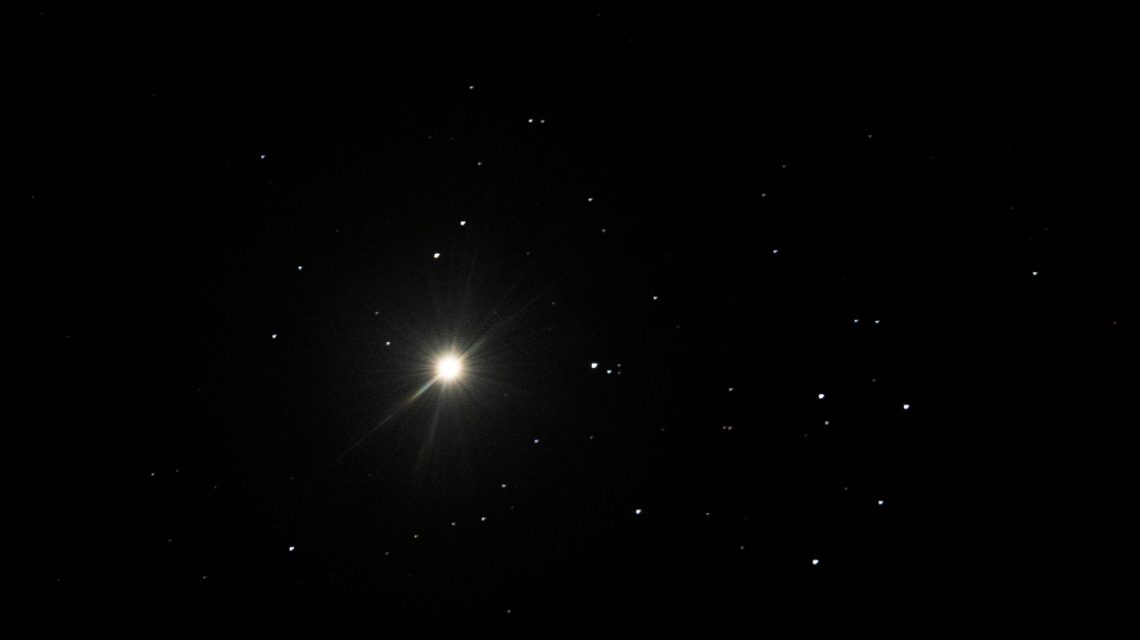
The planet Venus recently made a close appearance alongside the Pleiades star cluster. This celestial event happens roughly every eight years and was visible from Olympia, Washington on April 3, 2020. A subplot in Apple TV’s series “Star City” explores a fictional Soviet mission to Venus during the 1970s. This storyline mirrors a very real NASA proposal from the same era, which was part of the Apollo Applications Program.
NASA’s Apollo Applications Program aimed to use Apollo technology for various space missions. These included extended lunar stays and crewed space stations. One ambitious idea was a Venus flyby mission, considered even before Apollo 11’s moon landing. Bellcomm, a Bell Labs subsidiary, studied this mission plan for NASA. According to Kirk Sorenson, an aerospace engineer, the mission involved launching an Apollo spacecraft with a Saturn V rocket.
The proposal required launching the spaceship to low Earth orbit. The Environmental Support Module instead of a lunar module would provide equipment for the journey. Apollo would set course for Venus, using the Saturn V’s third stage, the S-IVB. Solar panels on the S-IVB would power the mission. Astronauts would adapt a fuel tank into living quarters, called a ‘wet workshop,’ using supplies in the environmental module.
Space historian Paul Drye documented this concept. It would take 123 days to reach Venus where the spacecraft would orbit at a 6,200-kilometer distance. The mission involved radar, spectroscopic, and photographic studies. Astronauts would deploy an orbiter and 14 probes to explore Venus’ atmosphere and surface. These probes included atmospheric, meteorological, crash-landing, and soft-landing types, each with specific research tasks.
Despite its bold vision, the Venus mission proposal did not progress. Congress cut NASA’s budget even prior to Apollo 11, leading to the cancellation of the last three moon missions. Skylab, the United States’ first space station, was the only success from the Apollo Applications project.
Since then, space agencies have sent multiple uncrewed missions to Venus, uncovering extreme conditions. The atmospheric pressure is nearly 90 times that of Earth’s, with surface temperatures nearing 880°F. Agencies now focus on the Moon and Mars for crewed exploration.
Theoretically, today’s technology, such as SpaceX’s Starship, could enable a crewed Venus flyby mission. Yet, without plans to land humans, the drive may be lacking. Mark R. Whittington, a space policy analyst, explores these themes in his works on space exploration challenges. Still, with advancements in technology, a human mission to Venus remains a distant yet intriguing possibility.
 Discovery of Tilcayo Tiger Cat, a New Wild Cat Species in Bolivia
  Ancient Egyptian Warhorse Burial Unearthed in Beheira
  Humpback Whale’s Grief Over Stillborn Calf Reveals Emotional Complexity
  Discovery of Massive Lunar Crater Sheds New Light on Moon’s Surface
  Tropical Depression Six Forms in the Atlantic Amid Quiet Hurricane Season
  Fat Bear Week: Celebrating Resilient Giants and Ecosystem Conservation