
Redistricting and the erosion of voting protections highlight a precarious situation for rights considered settled for generations. These issues stem from a choice made in 1964 between moral conviction and institutional permanence. The civil rights movement achieved major victories through moral advocacy and legislative action with the Civil Rights Act of 1964 and the Voting Rights Act of 1965. These acts, while significant, were statutory and not constitutional. Laws passed by Congress can be limited or repealed, leaving these rights vulnerable.
Women’s rights advocates recognized this issue earlier, as seen with the Equal Rights Amendment, introduced in 1923 and passed in 1972, but never ratified. Forces benefiting from statutory vulnerabilities blocked it then and do so now. This distinction is critical, as seen in the collapse of these protections over time. The Shelby County v. Holder decision weakened the Voting Rights Act, and redistricting maps are drawn to consolidate power before demographic shifts make this impossible. Protected classes exist based on legislation, not constitutional amendment, and can change with legislative decisions.
The 14th Amendment provided citizenship but not voting rights or equal access to public accommodations. Congress provided these protections, with the Warren Court affirming them boldly. However, subsequent courts have narrowed these protections, with the Roberts Court accelerating this trend. In 2013, the Supreme Court’s Shelby County v. Holder decision eliminated the federal oversight critical to enforcing voting rights, allowing discriminatory changes to voting laws.
This is the risk of statutory rights; they depend on judicial interpretation and legislative approval. Voting rights, civil rights protections, the Americans with Disabilities Act, marriage equality, reproductive rights, and women’s workplace protections depend on statutes and can be repealed. The mechanisms to remove protections one supports can also remove protections one opposes.
Both political parties have exploited statutory vulnerabilities without pushing for constitutional amendments to solidify these rights. This system keeps voters mobilized and dependent on elections and court decisions while promoting instability. Parties argue about threats to rights they claim to defend yet have not constitutionalized these protections.
The frequent electoral argument suggests voting for one party over another to protect rights, but voters are not told why their rights remain vulnerable. Elections matter, but protections rest on statutes susceptible to court decisions. Parties avoid constitutional amendments, preferring to engage in political maneuvering. The Framers, through Article Five, provided a mechanism for constitutional amendments to secure rights permanently, but its importance remains underrecognized.
The choice of 1964 cannot be reversed. Now, the focus is whether to make the decision that should have been made then. Both parties are aware of the constitutional amendment mechanism. The question is whether the American public will demand its use.
Yvonne Renée Davis, MS, MA, PC, is founder, president, and CEO of DAVISIntelligence, a strategic communications and crisis advisory firm. She served as a presidential appointee under former President George W. Bush and as a U.S. Department of State communications trainer. Her experience spans 68 countries and three presidential administrations.
Copyright 2026 Nexstar Media Inc. All rights reserved. This material may not be published, broadcast, rewritten, or redistributed.
 Trump Administration Seeks to Influence NIH Grantmaking
 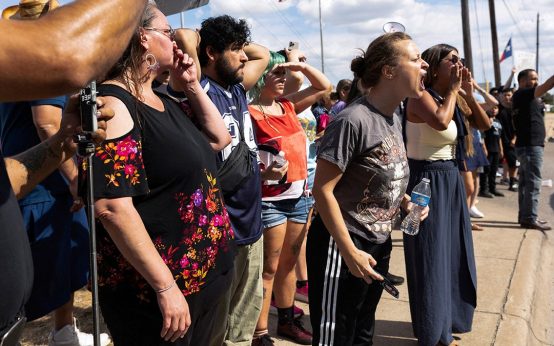 Protests in Austin: Analyzing the Coordination Behind Anti-ICE Demonstrations
  Controversy Surrounds Inglewood Mayor Amid Allegations
  White House Launches Trump TV Amidst Press Dispute
  Media Organizations Sue Trump Administration Over Press Access
  VP JD Vance Trails Potential Democratic Contenders in Early Polling for 2028 Election