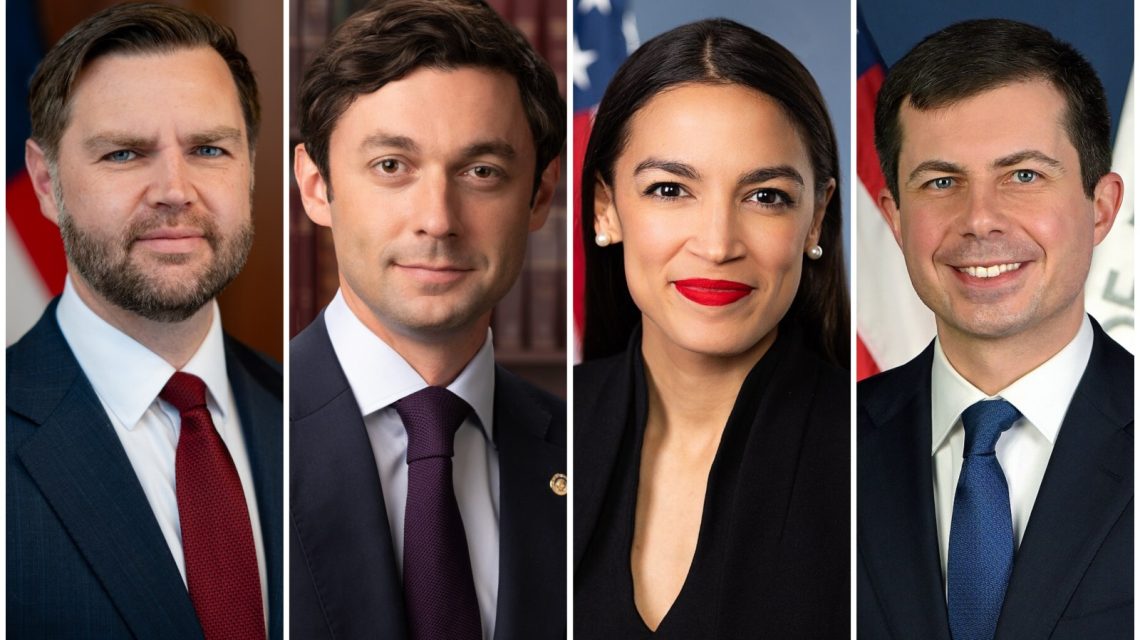
With the 2028 presidential election over two years away, Vice President JD Vance is behind several possible Democratic rivals in initial general election polling. He holds a slight lead over one. A polling average from Race to the WH analytics shows former Transportation Secretary Pete Buttigieg and Democratic Georgia Senator Jon Ossoff leading Vance in potential election matchups. Buttigieg leads with 48.5% against Vance’s 43.9%, while Ossoff shows a similar lead, 48.5% to 44.1%. Despite this, Ossoff has said he is not interested in running for president in 2028.
Former Vice President Kamala Harris also leads Vance at 48.3% compared to 44.4%. Democratic California Governor Gavin Newsom holds a narrower lead at 45.5% against Vance’s 43.6%. Democratic Representative Alexandria Ocasio-Cortez is the only candidate in the average who trails Vance, with Vance at 44.9% and Ocasio-Cortez at 42%. So far, no candidate from either party has officially entered the 2028 race. Buttigieg, Ossoff, Ocasio-Cortez, Harris, and Newsom are the most-polled names among Democrats. Vance has indicated he will discuss his presidential ambitions after the upcoming midterm elections.
Buttigieg Shows Strong Lead
Buttigieg has the most significant lead among the Democrats against Vance according to an Emerson survey. He is also gaining momentum, with 8% of voters undecided in the matchup. Notably, Buttigieg is the only Democrat maintaining a five-point lead over Secretary of State Marco Rubio, a Florida Republican and another potential 2028 contender. Meanwhile, Ossoff and Newsom’s leads narrow to three and two points over Rubio, respectively. Harris trails Rubio by five points, despite leading Vance. Last year, the situation was different as Vance led Buttigieg by a single point, 44% to 43%, with 13% undecided.
Emerson Executive Director Spencer Kimball noted that about 13% of the electorate remains persuadable. In hypothetical Democratic primary tracking, Buttigieg maintains a lead. Emerson’s survey showed him at 19% in July, while Quantus Insights recorded him at 25.7% in August. Ossoff was at 21.3%, and Ocasio-Cortez at 15.3%. A Saint Anselm College poll in New Hampshire had Buttigieg at 25%, leading potential candidates.
Ossoff Matches Buttigieg
Ossoff demonstrates a similar lead over Vance. He leads Rubio by three points as well. His national profile has risen recently, gaining more attention from major pollsters. The August Quantus Insights survey showed Ossoff at 21.3% among Democrats, ranking him third, behind Buttigieg. Among those leaning Democrat, Ossoff led with 33.5%.
The Georgia senator, currently running for Senate re-election, is seen as a competitive Democratic contender. Prediction markets also favor him, with Kalshi and Polymarket showing strong numbers for Ossoff among Democratic possibilities.
Vance and Ocasio-Cortez
Among those polled, Ocasio-Cortez is the only Democrat trailing Vance. In Emerson’s August survey, she lost both matchups against Vance and Rubio. Without undecided voters, the Quantus poll shows Vance at 51.9% and Ocasio-Cortez at 48.1%.
Voter demographics show Ocasio-Cortez leading among women, younger voters aged 18 to 29, Black, Hispanic, and Asian respondents. Vance leads among men, older voters, and those without a college degree. Ocasio-Cortez leads in urban areas as well. Earlier, a December poll by The Argument and Verasight had Ocasio-Cortez ahead, which she highlighted on social media.
Trends Over Time
Comparing past numbers, Buttigieg gained ground on Vance, and Newsom also saw improvement. Ocasio-Cortez’s slight increase is within past data’s margin of error. The undecided voter percentage has decreased since 2025, largely favoring Democrats. Ossoff was not included in previous polling.
Vance’s standing among Republican primary voters has shifted too. He went from 52% in Emerson’s February poll to 36% by May. Rubio’s support increased, shown when Vance and Rubio were tied in July. Spencer Kimball described this as a shift toward Rubio.
Vance has not detailed his future plans beyond the midterms. In June, he expressed a willingness to discuss future steps with his family. Rubio has expressed his support for Vance, stating that if Vance runs, he’ll back him. Donald Trump has praised both Vance and Rubio, even speculating about a ticket involving them.
The broader political context has changed. Democrats have been leading congressional ballots in Emerson’s surveys. Trump’s approval ratings have remained consistent.
Insights from Prediction Markets
Vance’s odds of securing the Republican nomination are strong on platforms like Kalshi and Polymarket, leading over Rubio. However, his chances of winning the presidency in 2028 are lower. Kalshi has him at 22% to 23%, Polymarket at 20.7% to 20.8%. These numbers have declined since prediction markets first opened. Vance’s initial pricing was 56% for nomination and 27% for the presidency. Rubio’s odds have tripled since then.
The prediction markets generally favor a Democratic win in 2028. Kalshi rates Democrats at 60% to Republicans at 40%. Polymarket has Democrats at 67% and Republicans at 34%.
 Rising Beef Prices: Causes and Policy Responses
  The Push for Permanent Daylight Saving Time
  Trump Visits New York Mayor Mamdani at Gracie Mansion
  Congressional Inaction Amid AI Concerns
  Zohran Mamdani Faces Backlash at Staten Island Event
  Legal Battle Over Media Ban at White House