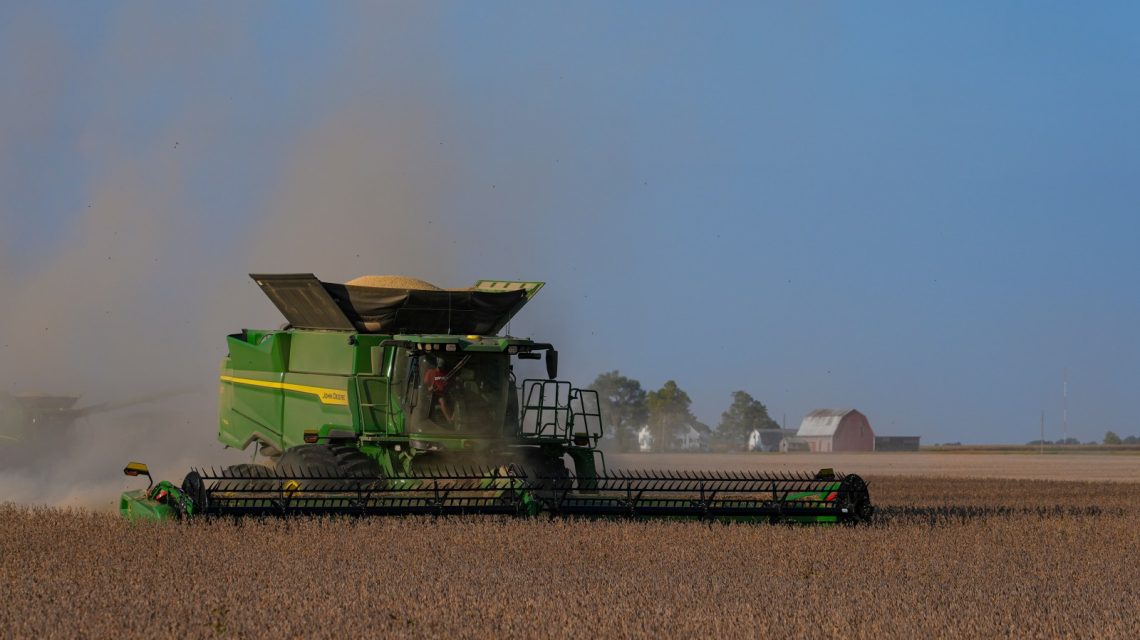
The Trump administration announced an $8 billion initiative to help farmers with increasing input costs, including diesel prices, which averaged over $6 per gallon nationally. The program, known as the Harvest Fuel Relief, aims to ease temporary market disruptions and increased input costs, as per the USDA.
Aaron Lehman, president of the Iowa Farmers Union, criticized the plan as a quick fix that does not address underlying policy issues causing farmers’ financial struggles. He emphasized the need for comprehensive support rather than temporary aid.
“Farmers never should have been put in this position,” he said. “A Band-Aid response now, two weeks before the election, doesn’t fix the problem.”
The Iowa Farmers Union, which supports Democratic candidates in the midterm elections, highlighted this concern. The USDA’s program, announced in the run-up to November elections, will channel funds through the Commodity Credit Corporation Charter Act, run by the Farm Service Agency.
Agriculture Secretary Brooke Rollins expressed optimism about the program’s impact, saying it would provide targeted relief during the harvest season to ensure farmers can continue their vital work.
“Today, I am proud to announce alongside President Trump more targeted relief is coming to our farmers through the Harvest Fuel Relief program,” Rollins stated.
The USDA clarified that assistance will be proportional, covering part of modeled losses for the 2026 crop year. It will use data from various agencies to determine payment rates, which are expected to be released in November.
Earlier this year, over 560,000 farmers received $12 billion through the Farmer Bridge Assistance payments. Rising diesel prices, influenced by global conflicts like the Iran war, compound the challenges for farmers, burning nearly $55 billion more on diesel since March, according to GasBuddy’s Patrick De Haan.
Larger farming states such as Texas, Iowa, and California face significant effects, highlighting the need for effective relief strategies. However, agricultural groups argue that another one-time payment does not ensure long-term stability.
Lehman advocated for addressing trade and military conflicts, reducing monopolies in agricultural inputs, and enhancing energy independence through sustainable alternatives.
“We need genuine efforts to help farmers now while fixing the real causes of our current situation,” Lehman stated.
Mark Williams from Boston University emphasized the program’s insufficiencies, describing it as insufficient to address the complexities of international energy disruptions and rising input costs. He called for a comprehensive energy policy as a stable resolution.
“These root causes of historic high diesel prices cannot be mollified through a rushed assistance program,” said Williams.
The USDA has yet to finalize details around payment rates and schedules, raising concerns about implementation and potential inequalities favoring large corporations over smaller family farms.
National Farmers Union President Rob Larew and National Corn Growers Association President Matt Frostic acknowledged the short-term benefits of the program but pushed for longer-term bipartisan solutions.
The announcement coincided with Trump’s campaign activities in support of Republican candidates, emphasizing the program’s political implications as agricultural issues become central to midterm debates.
 Revitalizing the Military Through Private Investment and Technology
 U.S. Experiences Shortest Press Secretary Tenure
 French Authorities Declare Curfews Amid Protests Over Living Costs
 Private Investment and Super Intelligence: Keys to Modernizing the Military
 The Challenges of the Press Secretary Role in the James S. Brady Press Briefing Room
 AI-Related Political Donations Under Scrutiny in Midterm Elections