White House Pushes for Tighter Restrictions
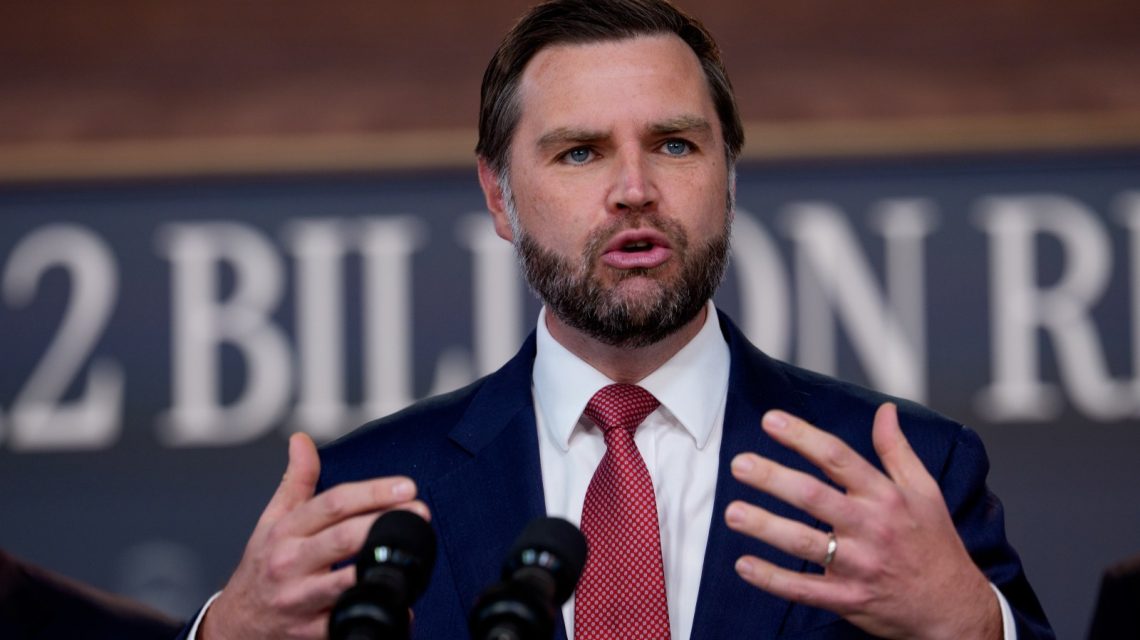
The Trump administration is exploring methods to curb companies from replacing American employees with foreign workers under the H-1B visa program. Vice President JD Vance, dubbed the administration’s “fraud czar,” highlighted ongoing efforts to scrutinize employers’ layoff patterns.
Vance stated, “We’re investigating various strategies to stop companies using H-1B visas from laying off numerous American workers.” He pointed out contradictions by saying, “Companies apply for H-1B visas claiming a worker shortage, yet they have laid off thousands of workers.”
Revisions to the H-1B Program
The administration has introduced changes to the visa system to tighten controls. These modifications include a weighted selection process favoring higher-paid roles, security fees for certain H-1B extensions, and removing a rule allowing foreign workers to remain in the U.S. for 60 days post-job loss.
Presidential Order on Immigration Scrutiny
President Donald Trump signed an executive order directing more scrutiny on H-1B petitions if U.S. workers face displacement. It instructs state, labor, and homeland security departments to consider layoffs of American workers when examining H-1B applications.
Increased Actions Against Employers
The Labor Department has taken measures against employers for alleged fraud involving the H-1B program. Cognizant, for instance, faced a suspension in filing new PERM applications, and Cloudera faced halted H-1B processing.
Additional sanctions affected five companies currently disqualified from H-1B participation: GowraTech LLC, Renotek Group LLC, Seeloz Inc., Sherwood at Mount Dora Inc., and Da Vinci at Hunters Creek Inc.
Proposed Fees and Legal Implications
The Department of Homeland Security proposed a $103,265 charge on cap-subject H-1B petitions, assuming that companies could manage the expense despite filing around 85,000 petitions annually.
This fee is separate from a $100,000 charge under a September 2025 order. Although deemed unlawful by a federal court, the decision was appealed, extending the requirement until September 21, 2027.
Balancing Domestic and Foreign Workforce
The administration aims to align the H-1B program with its original purpose of supplementing, not replacing, the domestic workforce. Lauren Bis from the White House remarked, “This fee aims to protect American workers from being replaced by cheaper foreign labor.”
Debate Over H-1B Usage
Technology firms have relied on H-1B visas for specialized foreign workers, sparking arguments over its use. Critics claim it disadvantages U.S. workers, while supporters see it as essential for recruiting skilled employees.
Former DHS official Adam Klein noted potential repercussions. He suggested increased difficulty in employing foreign talent in the U.S. may lead companies to locate abroad.
Legal Boundaries and Congressional Divide
Vance acknowledged legal constraints, saying the administration operates within legal limits. He emphasized the goal of the H-1B program to enrich the U.S. economy.
Congress remains divided, with members proposing eligibility reforms, visa restrictions, or supporting the continued recruitment of skilled foreign workers.
 Imitation in Execution Methods: A Critical Analysis
  U.S. Department of Education Rescinds Biden’s Title IX Rule
  Democratic Nominee in Kansas Calls for Climate-Conscious Decisions
  Georgia Woman Bids Farewell to Family Home Amid Infrastructure Dispute
  The President’s Shift Towards Big Government
  AOC Hosts Event at Cornell Amid Controversy