President Donald Trump announced a temporary halt to 50 percent tariffs on Canadian imports set to start on Wednesday. This pause lasts for three days and coincides with a tentative agreement between the U.S. and Canada, awaiting final documentation. The tariffs would have affected roughly $20 billion worth of Canadian goods, according to reports by the Associated Press.
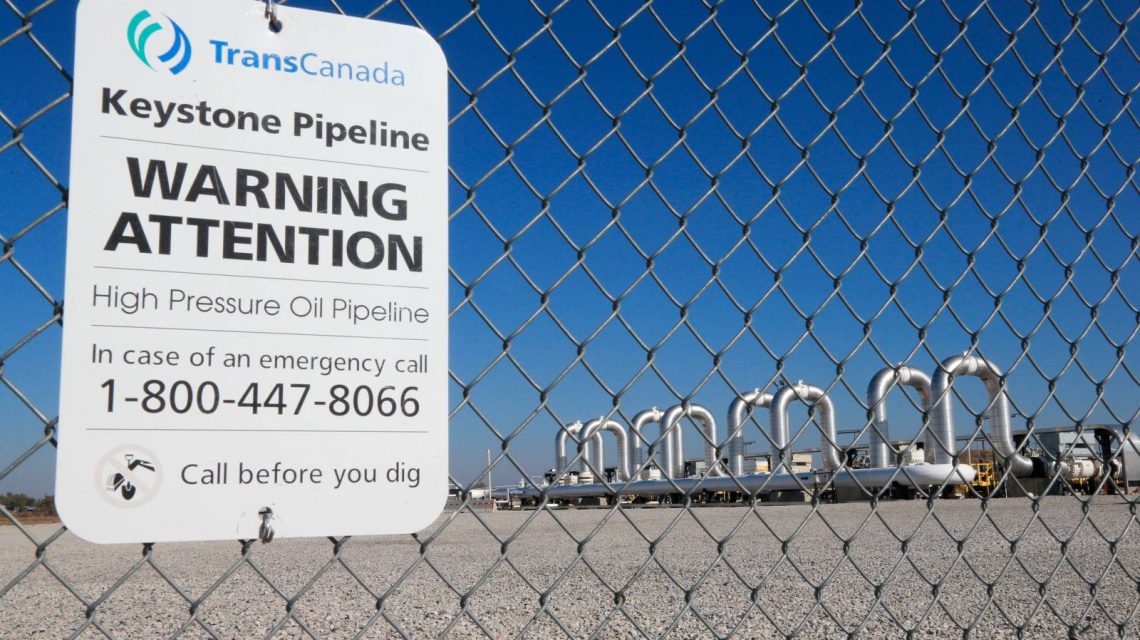
Trump indicated that the deal might lead to a revival of the Keystone XL Pipeline, a project canceled in 2021 under President Joe Biden. He hinted at this possibility, mentioning the pipeline could “be awoken from the grave.” Reviving the pipeline would represent another attempt by Trump to overturn Biden-era policies, although the project’s future involves overcoming regulatory and development hurdles.
Canadian Prime Minister Mark Carney confirmed progress in negotiations on social media. However, he did not declare a finalized deal, noting that officials will continue their efforts to finalize the work. Newsweek contacted the White House for comments following the announcement.
Understanding the Keystone XL Pipeline
The Keystone XL Pipeline emerged as a highly controversial energy infrastructure project in North American history. It fueled debates on climate change, energy security, employment, Indigenous rights, and U.S.-Canada relations.
Proposed by TransCanada Corporation, now TC Energy, in 2008, Keystone XL was meant to expand the existing Keystone Pipeline System that already transports crude oil from Alberta, Canada, into the United States. The expansion involved adding a new pipeline from Hardisty, Alberta, to Steele City, Nebraska, where it would link with pipelines reaching Gulf Coast refineries, as Canadian officials have noted. Proponents contended it would bolster North American energy independence and generate jobs. Opponents viewed it as symbolizing ongoing reliance on fossil fuels.
The pipeline was to transport up to 830,000 barrels of oil daily, Canadian officials stated. Concerns arose about potential spills along the route, which could affect sensitive areas like Nebraska’s Sandhills region and the Ogallala Aquifer, a major underground freshwater reserve in the U.S.
Since the pipeline crosses an international border, it required a presidential permit from the U.S. government. This requirement transformed the infrastructure project into a significant political issue. After extended reviews and delays, President Barack Obama rejected the project in November 2015. The project saw a resurgence when Trump took office in 2017. However, Biden revoked the cross-border permit on his first day in office in 2021.
Details on the US-Canada Deal
The United States Trade Representative reacted to Trump’s announcement by stating on X, “Congratulations Mr. President. The deal will include comprehensive market access for all American goods, economic security commitments, digital trade alignment, and many important provisions that will continue to protect our market and American workers, along with our Canadian partners.”
This development story will continue to be updated as more information becomes available.
For further details, Newsweek editors on this story can be reached through Edward T. Cummins.
 Michigan Senate Candidate Faces Scrutiny Over Family Ties
  Trump’s Diesel-Deal Feud with Zelensky Obscures a More Important Effort
  Democratic Endorsement Shift in Montana Senate Race
  Arizona Voters Prioritize Water Concerns in Upcoming Midterms
  Trump Links High Energy Costs to Ukraine, Suspends Russia Sanctions
  Analysis of Current Political News and Events