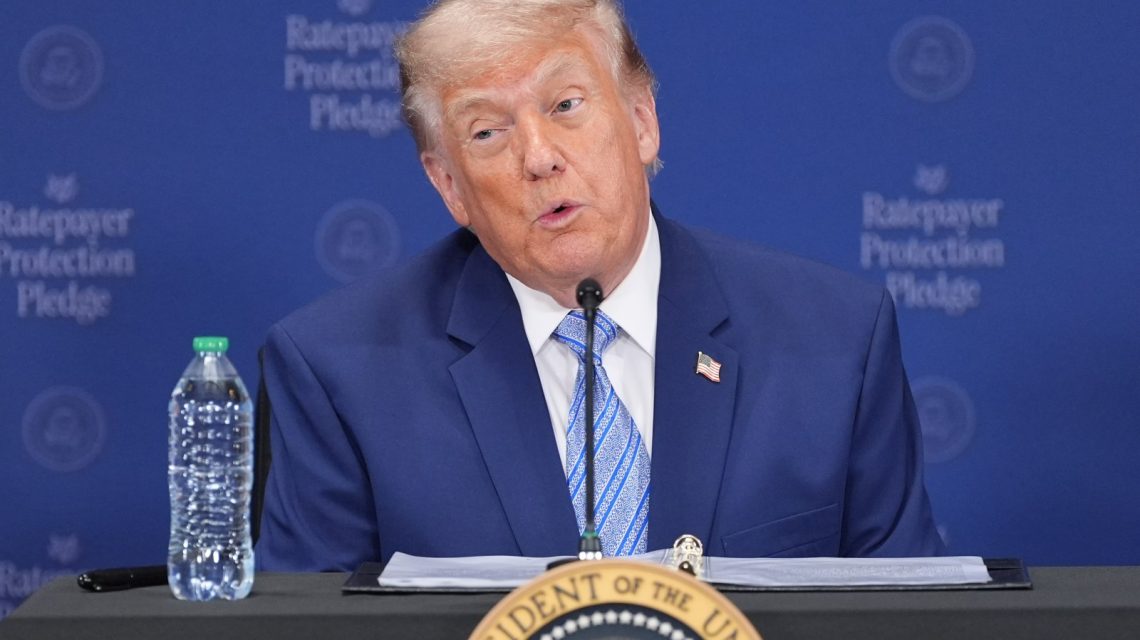
President Donald Trump announced on Thursday the imposition of new import duties ranging from 10 percent to 12.5 percent on goods from 60 trading partners. This move comes just before the expiration of earlier temporary tariffs following a Supreme Court ruling.
The administration claims these tariffs target countries inadequately prohibiting or enforcing bans on goods produced with forced labor. This action represents a significant trade measure in Trump’s second term.
The tariffs, effective from 12:01 a.m. Friday, will impact economies responsible for about 99 percent of U.S. imports, according to the Office of the U.S. Trade Representative. Officials argue that this measure aims to create fair competition for American workers by penalizing countries allowing products linked to forced labor within the supply chain. U.S. Trade Representative Jamieson Greer emphasized that the U.S. has consistently enforced restrictions on such goods, urging partners to mirror these efforts.
The new tariffs depend on Section 301 of the Trade Act of 1974, a trade tool permitting the president to address foreign practices deemed unfair or injurious to U.S. commerce.
This decision follows the Supreme Court’s dismissal of Trump’s prior attempt to apply wide-ranging global tariffs under the International Emergency Economic Powers Act, stating the law did not permit such duties. Consequently, the administration shifted to 10 percent worldwide tariffs initially under Section 122 of the Trade Act of 1974. These are set to end after 150 days, prompting the recent action relying on Section 301, which has withstood judicial scrutiny.
Officials indicate some countries received reduced tariffs for enhancing forced-labor enforcement lately. Countries showing commitment to prohibiting forced labor generally face a 10 percent tariff, while others encounter a 12.5 percent duty. Exceptions include oil, gas, fertilizer, and many goods eligible for duty-free status under the U.S.-Mexico-Canada Agreement.
The initiative is likely to spark discussion about Trump’s assertive trade policies, which could influence voters ahead of the November midterm elections.
10% Tariff Group (Countries adopting or committing to forced-labor restrictions):
- Argentina
- Bangladesh
- Cambodia
- Canada
- Ecuador
- El Salvador
- European Union
- Guatemala
- Indonesia
- Malaysia
- Mexico
- Pakistan
- Taiwan
- United Kingdom
12.5% Tariff Group:
- Algeria
- Angola
- Australia
- Bahamas
- Bahrain
- Brazil
- Chile
- China
- Colombia
- Costa Rica
- Dominican Republic
- Egypt
- Guyana
- Honduras
- Hong Kong
- India
- Iraq
- Israel
- Japan
- Jordan
- Kazakhstan
- Kuwait
- Libya
- Morocco
- New Zealand
- Nicaragua
- Nigeria
- Norway
- Oman
- Peru
- Philippines
- Qatar
- Russia
- Saudi Arabia
- Singapore
- South Africa
- South Korea
- Sri Lanka
- Switzerland
- Thailand
- Trinidad and Tobago
- Türkiye
- United Arab Emirates
- Uruguay
- Venezuela
- Vietnam
 Research on Massacre Generation and Policy Views
  El-Sayed Denies Ties to Muslim Brotherhood Amid Senate Campaign
  The Unacceptable Reality of the Death Penalty
  Travel and Diplomacy: Jared Kushner’s Envoy Role
  Texas Senate Race Highlights Data Center Debate Between Talarico and Paxton
  Susan Collins Faces Scrutiny Over Husband’s Lobbying Ties